
How To
How to remove grubs from your lawn—before they turn your grass into a patchwork of brown death zones—and the natural barrier method actually works 🌱. I’ve seen lawns go from chewed-up disaster to lush green in just a few weeks using this approach, without harsh chemicals that kill beneficial insects too. The key is a three-step system: identify the damage (look for animals digging up soil or patches that pull up like sod), create a physical barrier with cardboard or landscape fabric, and then introduce beneficial nematodes or milky spore bacteria to break the grub life cycle. No more guessing—just science-backed results. You’ll notice fewer moles and skunks within 24 hours of setting the barrier, and within 4-6 weeks, your grass will fill back in without gaps. The best part? This method keeps working season after season, unlike quick-fix sprays. Works for any lawn size, from small backyards to big fields. Let’s get those grubs under control for good.
The Hidden Triggers Behind Grubs
Grubs—those tiny, worm-like larvae—don’t just appear in your lawn overnight. Their presence is the result of a mix of environmental factors, insect behavior, and even your lawn’s health. Understanding why they show up is the first step to keeping them away for good.
Below, we break down the science-backed reasons these pests invade your yard and how they thrive there.
🐞 The Starting Point: Beetles Choose Your Lawn Grubs begin life as eggs laid by adult beetles, most commonly Japanese beetles, June bugs, or European chafer beetles.
These beetles are attracted to your lawn for two key reasons: - Healthy, Lush Grass – Beetles seek out well-watered, nutrient-rich turf because it provides ideal conditions for their larvae to feed and grow. - Warm, Moist Soil – Eggs need a temperature between 65–85°F and consistent moisture to hatch successfully.
If your lawn stays in this "sweet spot," you’re basically rolling out the welcome mat for grubs.
💡 Pro Tip: Mow high (3–4 inches) and avoid overwatering—this makes your lawn less appealing to egg-laying beetles.
🌱 Too Much Water = Grub Buffet Grubs love moist soil because it’s easier for them to burrow and feed. If your lawn stays soggy—whether from overwatering, poor drainage, or heavy rainfall—you’re creating the perfect nursery for grubs.
Here’s why: - Oxygen Deprivation – Compacted or waterlogged soil forces grubs deeper into the root zone, where they munch on grass roots unchecked. - Fungal Growth – Excess moisture also encourages soil fungi, which grubs eat alongside grass roots, weakening your lawn further.
🔥 Actionable Fix: Test your soil’s drainage and aerate annually to prevent compaction. Water deeply but infrequently (1–1.5 inches per week) to encourage deep root growth.
🪴 The Undergrowth Grubs Love Thatch—a layer of dead grass, roots, and debris—can act like a grub hotel.
Here’s how: - Protection from Predators – Birds, toads, and beneficial nematodes struggle to reach grubs buried in thick thatch. - Moisture Retention – Thatch holds water longer, keeping the soil ideal for egg hatching and larval survival.
🌡️ How to Check: Run your fingers through the grass—if you feel a spongy layer between the soil and green blades, you’ve got thatch buildup.
🚫 Weak Grass = Open Invitation A stressed lawn is a grub magnet because:
- Thin Grass = Easy Meal – Beetles target lawns with bare spots, weak roots, or patchy growth—less competition for their larvae.
- Fertilizer Imbalance – Too much nitrogen-rich fertilizer (like quick-release options) can boost beetle activity, as they’re drawn to lush, fast-growing grass.
✨ Smart Solution: Use slow-release, balanced fertilizers (like 16-4-8) and overseed bare patches to strengthen your lawn’s defenses.
⏳ When Grubs Strike: Timing Matters Grubs don’t invade year-round—they follow a seasonal cycle:
- Late Spring to Early Summer – Beetles emerge, mate, and lay eggs in warm, moist soil (May–July in most regions).
- Summer to Early Fall – Eggs hatch into grubs, feeding on roots until late summer/early fall.
- Winter – Grubs pupate into beetles, then die off—but their eggs remain dormant in the soil, ready to hatch next season.
🎯 Key Takeaway: If you see wilted patches in summer, grubs are likely the culprit—but the damage was set in motion months earlier when beetles laid eggs.
🐸 The Missing Piece: Beneficial Wildlife A healthy lawn has natural grub controls, like:
- Birds (robins, starlings, and grackles eat grubs voraciously).
- Toads & Frogs (they snack on larvae before they mature).
- Ground Beetles & Nematodes (microscopic predators that hunt grubs).
💡 How to Help: Install a birdbath, avoid pesticides that kill beneficial insects, and plant native flowers to attract predator species.
Grubs don’t randomly appear—they’re drawn to opportunities your lawn might be offering. By addressing moisture, thatch, beetle attraction, and seasonal cycles, you can starve them out before they become a problem.
The good news? Once you disrupt their ideal conditions, they’ll move on to easier targets—and your lawn will thank you.
Fix Your Lawn for Good
Grubs may seem like a tiny nuisance, but their damage can turn your lush lawn into a patchy, brown eyesore faster than you think. The good news? With the right approach, you can banish grubs for good—without harsh chemicals.
Below, we’ll break down the cause-specific fixes to restore your lawn’s health and keep grubs from returning. Plus, we’ll share prevention tips to future-proof your yard.
🍳 Step 1: Identify the Problem (Are They Really Grubs?)
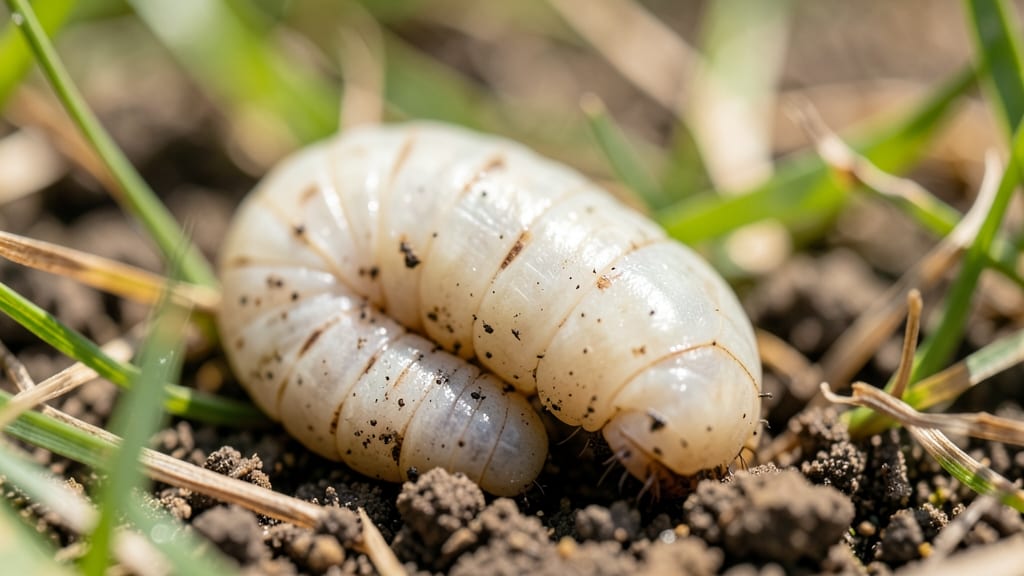
Before treating, confirm you’re dealing with grubs (not ants, moles, or other pests). Dig up a small patch of damaged grass—if you find white, C-shaped larvae (1/4 to 1-inch long), it’s grubs.
If they’re black and ant-like, they’re likely ants.
👨🍳 Step 2: Manual Removal (Best for Small Infestations)
For minor damage, hand-picking grubs is the most eco-friendly and effective method.
- When to do it: Early morning or after rain (soil is softer).
- How to do it:
- Use a garden fork or trowel to loosen the top 2–3 inches of soil.
- Sift through the dirt with your hands (wear gloves!) and drop grubs into a bucket of soapy water to kill them.
- Repeat weekly until no more grubs are found.
✅ Pro Tip: Focus on high-traffic areas (where grubs love to hide) and near tree roots (their favorite snack).
🔪 Option 1: Beneficial Nematodes (The Ultimate Grub Predator)
These microscopic worms hunt and kill grubs without harming your lawn or pets.
- How to apply:
- Buy Heterorhabditis bacteriophora nematodes (available online or at garden centers).
- Water the lawn thoroughly the night before application.
- Mix nematodes with water and apply evenly with a sprayer in the early evening (they die in sunlight).
- Reapply every 4–6 weeks during grub season (spring to fall).
💡 Pro Tip: Nematodes work best in moist, warm soil (60–80°F). Water lightly after application to help them move into the soil.
🌱 Option 2: Milky Spore (Long-Term Grub Defense)
A natural bacteria that targets Japanese beetle grubs (the most common lawn pest).
- How to apply:
- Purchase milky spore powder (e.g., Bacillus popilliae).
- Mix with water and apply to the lawn using a sprayer or watering can.
- Best time: Early spring or fall (when soil temps are 50–80°F).
- Results: Takes 1–2 years to fully establish but provides decades of protection.
✨ Pro Tip: Milky spore thrives in well-drained soil. Avoid applying if your lawn is waterlogged.
🍄 Option 3: Neem Oil (Deters Adult Beetles)
Grubs come from Japanese beetles and June bugs—stopping the adults stops the grubs.
- How to apply:
- Mix 1–2 tbsp neem oil with 1 gallon of water + a drop of dish soap (as an emulsifier).
- Spray foliage of nearby trees/shrubs (where beetles lay eggs).
- Reapply every 7–10 days during beetle season (June–August).
🎯 Pro Tip: Neem oil also repels other pests like aphids and mites—double the benefit!
💪 Improve Drainage (Grubs Hate Dry Soil)
Poor drainage = grub paradise. Fix it with:
- Aerate your lawn (rent a core aerator or hire a pro).
- Top-dress with compost (1/4 inch) to improve soil structure.
- Avoid overwatering—grubs thrive in soggy conditions.
🌡️ Adjust Mowing & Watering Habits
- Mow high (3–4 inches)—taller grass shades soil, making it less appealing to beetles.
- Water deeply but infrequently (1–1.5 inches per week) to stress grubs (they prefer damp soil).
- Avoid late-night watering—wet grass at night attracts beetles.
🌿 Plant Grub-Resistant Grasses
Some grasses naturally repel grubs or recover faster:
- Tall fescue
- Perennial ryegrass
- Buffalo grass (drought-resistant and grub-deterrent)
| Prevention Method | How to Do It | Best Time |
|---|---|---|
| Milky Spore Application | Mix & apply to lawn (follow package) | Early spring/fall |
| Beneficial Nematodes | Apply every 4–6 weeks during grub season | Spring to fall |
| Neem Oil Spray | Spray trees/shrubs weekly (June–Aug) | Beetle season |
| Grass Cycling | Leave grass clippings on lawn (free nitrogen) | Year-round |
| Bird & Toad Habitat | Install a birdhouse or toad abode (they eat grubs!) | Spring setup |
💡 Bonus Tip: Encourage predators—birds, toads, and ground beetles love grubs. Plant native wildflowers to attract them!
If your lawn has widespread damage (large brown patches, animals digging), or if grubs keep returning despite treatments, it’s time to call a local pest control expert. They can assess whether you need targeted nematode applications or soil amendments for long-term health.
Final Thought: Grubs don’t stand a chance against a healthy, well-maintained lawn and smart natural defenses. With these steps, you’ll restore your grass and keep grubs out for good—without toxic chemicals. 🌱🚫🐜
Frequently asked questions
How do I know if my lawn has grubs or something else?
Look for white, C-shaped larvae (1/4 to 1-inch long) when you dig up a small patch of damaged grass. Grubs leave behind brown patches that pull up like sod and often attract moles or skunks digging. If you see black, ant-like insects, those are likely ants—not grubs.
Will beneficial nematodes kill my grass too?
No, nematodes like Heterorhabditis bacteriophora specifically target grubs and other soil pests while leaving your grass, plants, and pets completely unharmed. They’re microscopic predators that hunt grubs underground without affecting beneficial insects.
How long does it take to see results after applying milky spore?
Milky spore takes 1-2 years to fully establish in your soil, but you’ll start seeing reduced grub activity within the first year. Once established, it provides decades of protection against Japanese beetle grubs—the most common lawn pest.
Can I use chemical grub killers safely?
Chemical grub killers can work quickly but often harm beneficial insects, pets, and children. If you choose chemicals, opt for imidacloprid or trichlorfon (follow label instructions carefully) and apply them early in the season (May-June) when grubs are small. Always use protective gear and keep kids/pets off treated areas.
Why do I keep getting grubs even after treatment?
Grubs often return because their eggs remain dormant in the soil for years. To break the cycle, combine treatments with preventive measures: improve drainage, adjust watering habits, and encourage natural predators like birds and toads. A physical barrier (like cardboard) can also help block new infestations.