
Lawn
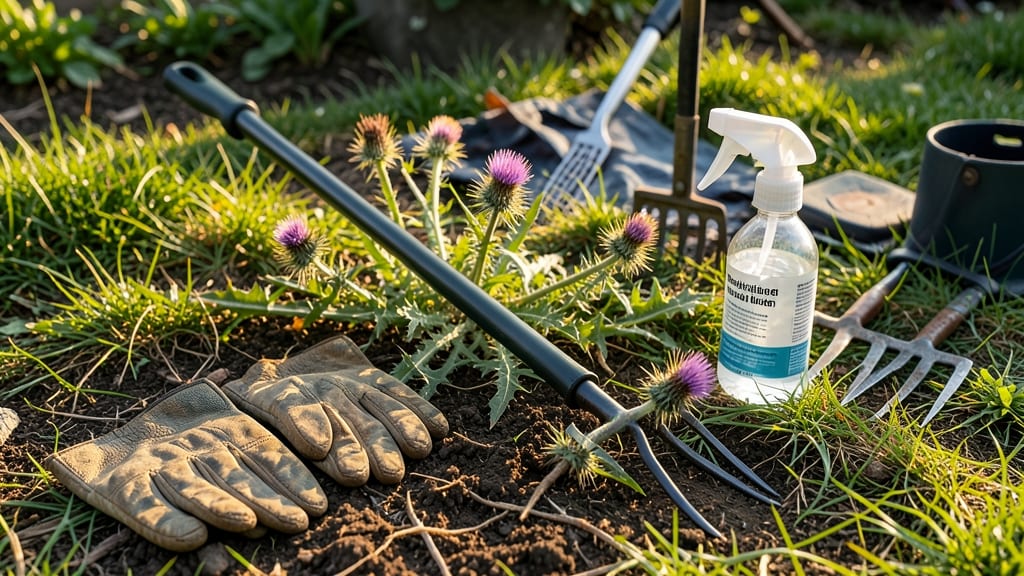
Precision pulling thistles saves your lawn from scratchy, spiky invaders. 🌱 I've battled these stubborn weeds for years, and the key is timing—pull them when the soil is moist but before they seed, or you'll be fighting them next year too.
One wrong move and those deep roots tangle with your grass, making them nearly impossible to remove later. The right tools make all the difference: a sturdy fork for deep roots, gloves to protect your hands, and a sharp knife for slicing through thick stems.
I swear by a dandelion digger for thistles—they grip the root better than regular weeding tools, and you can yank them out in one clean motion. Miss the root, and you'll be back in two weeks.
What you'll end up with is a lawn that feels soft underfoot, not like walking on a porcupine. The grass fills in faster once those thistle patches disappear, and you'll notice fewer weeds crowding your yard. Just don't skip the follow-up checks—thistle roots can hide deeper than you think.
This method works year-round, but early spring or fall gives you the best chance of success. The soil is softer then, and thistles are less aggressive. For stubborn patches, I'll share my go-to follow-up treatments in the next steps—some are chemical-free, others are faster, and all get results.
📚 In This Guide
- What you need
- Instructions
- Tips and common mistakes
- Wrapping up and next steps
What you need
- ● Garden gloves (1 pair) – Heavy-duty, long-cuffed gloves (e.g., FrogToggs or Warrior brand) to protect your hands from thistle spines and blisters.
- ● Hand weeder or dandelion digger (1-2) – A sturdy, long-handled tool (e.g., Fiskars or Radiah) for precision pulling without damaging grass roots.
- ● Garden fork (1) – A heavy-duty fork (tines spaced 1.5–2 inches apart) for deep-rooted thistles or stubborn patches.
- ● Hoe (1) – A stirrup hoe (e.g., Amish-style) or oscillating hoe to slice thistles at the base before they seed.
- ● Pruners or shears (1 pair) – Sharp, bypass pruners (e.g., Felco) to trim thistle stems at ground level.
- ● Trash bags (2–3) – Heavy-duty bags (13-gallon or larger) for hauling out debris and spent thistles.
- ○ Watering can or hose – For wetting soil before pulling (optional but helpful for loosening roots).
- ○ Vinegar solution (optional but effective) – Mix 1 gallon white vinegar (5% acetic acid), 1 cup salt, and 1 tbsp dish soap in a spray bottle for spot treatment.
- ● Corn gluten meal (1–2 lbs) – Natural pre-emergent to prevent thistle seeds from sprouting (apply in early spring/fall).
- ● Mulch or straw (1–2 bags) – Spread over treated areas to suppress regrowth and protect soil.
- ● Knee pads – For comfort during long sessions (especially on hard or uneven ground).
- ● Sunscreen & hat – If working in direct sunlight for extended periods.
Step-by-step instructions for removing thistles from your lawn
Thistles don't stand a chance with this method—just your hands, a little patience, and the right timing.
🪴 Step 1: Gather Your Tools and Scout the Lawn
First, grab a pair of thick gardening gloves (thistle spines pierce through most fabric) and a hand fork or weeder with a narrow head. I also like to have a small trash bag handy for disposal. Walk your lawn slowly—look for the distinctive prickly, spiky leaves and purple or pink flower stalks that mark thistle locations.
Real talk: thistles grow deep roots, so don’t skimp on tool quality. A cheap weeder will bend when you hit resistance. I’ve found that a d-handle weeder gives me the leverage I need without straining my back. Mark stubborn patches with a spray paint dot if you’ll need to revisit them later.
✂️ Step 2: Pull at the Right Time for Maximum Success
Timing is everything. The best window is early spring or fall when soil is moist but not soggy. In summer, thistles are tougher and deeper-rooted. Water the area 24 hours before pulling—this loosens the soil and makes roots easier to extract. You’ll know you’ve timed it right when the soil feels damp 1-2 inches below the surface.
Here’s the thing—don’t pull when the lawn is dry. The roots will snap off, and you’ll leave behind fragments that regrow. I like to pull in the early morning when the ground is cool and thistles are still pliable. Grab the base of the plant just below the soil line and wiggle firmly. You’ll feel resistance as you hit the taproot—keep going until the whole plant pops out.
💧 Step 3: Remove Every Fragment to Prevent Regrowth
This is the moment that matters: inspect every pulled thistle. Even a 1-inch root fragment left behind will sprout into a new plant. Shake the plant over your trash bag to check for broken roots—if you see any, dig deeper with your weeder to extract the rest. For stubborn roots, I use the fork to pry around the base until the soil loosens enough to pull cleanly.
Don’t compost thistles—they’ll regrow in your compost pile. Double-bag them and throw them in the trash. If you miss a fragment, you’ll know because new thistles will pop up in the same spot within 2-4 weeks. That’s your signal to go back and dig deeper.
☀️ Step 4: Fill the Holes and Prevent Future Growth
After pulling, fill the holes with fresh topsoil or compost to encourage grass regrowth. Pack it down lightly with your foot or a tamper. For large patches, I spread a thin layer of mulch or straw to suppress any remaining thistle seeds in the soil. This also shades out new seedlings before they germinate.
To keep thistles from returning, maintain your lawn aggressively. Mow regularly at 3-4 inches tall—taller grass outcompetes weeds. Overseed bare spots in early fall to thicken the turf. If thistles keep coming back, they’re likely spreading from seeds in your soil. In that case, consider a pre-emergent herbicide in late winter to block germination.
⏰ Step 5: Monitor and Repeat as Needed
Check your lawn every 2 weeks for new thistles. Young plants are easier to pull than established ones. If you spot a small rosette (the circular cluster of leaves at ground level), grab it immediately—it hasn’t developed deep roots yet. For larger patches, repeat the process in 6-8 weeks to catch any survivors.
I know it seems tedious, but consistency wins. After two full seasons of vigilance, most lawns stay thistle-free. The key is persistence—thistles are tough, but they’re no match for a determined gardener. Once your lawn is clear, enjoy the satisfaction of a smooth, weed-free surface underfoot.
Tips & tricks for precision thistle removal
A few well-timed tricks can make all the difference between a frustrating battle and a lawn you'll actually enjoy walking on.
Tool Selection Matters: I learned this the hard way after ruining three gloves trying to pull thistles with cheap tools. Invest in a d-handle weeder—it gives you the leverage to extract those deep taproots without straining your back. For stubborn patches, add a hand fork to your kit. The narrow head lets you pry around the base when wiggling doesn't work. And always wear gloves—thistle spines pierce through most fabric, and you'll thank yourself later.
Timing Secret: The 24-hour watering rule before pulling is non-negotiable. I've tried pulling dry soil, and it's like trying to pull a tooth—just gives you broken roots. Water the area thoroughly the day before, then check soil moisture by pressing your finger 1-2 inches down. It should feel damp like a wrung-out sponge, not dry or muddy. Early morning pulls work best because the ground is cool and the thistles are still pliable.
Root Inspection System: This is where most people fail—skipping the root check. After pulling, shake each thistle over your trash bag. Look for any white root fragments. If you see even a 1-inch piece, dig deeper with your fork. I've seen thistles regrow from fragments as small as a pencil eraser. Pro tip: Keep a small trash bag with you while you work to avoid dropping plants in the grass where they can root again.
Prevention Strategy: After pulling, don't just leave holes—fill them with a mix of topsoil and compost to encourage grass regrowth. For large patches, spread a thin layer of mulch or straw to suppress any remaining thistle seeds. I've found that maintaining grass at 3-4 inches tall is the best natural defense. Thicker grass crowds out weeds before they get established. And if you're dealing with persistent thistle seeds, consider a pre-emergent herbicide in late winter—it blocks germination before new plants even appear.
Pro Tips for Get Rid Of Thistles In Lawn
- A few well-timed tricks can make all the difference between a frustrating battle and a lawn you'll actually enjoy wal...
- Tool Selection Matters: I learned this the hard way after ruining three gloves trying to pull thistles with cheap too...
- Timing Secret: The 24-hour watering rule before pulling is non-negotiable. I've tried pulling dry soil, and it's like...
Frequently asked questions
Got questions about tackling thistles in your lawn?
You’re not alone—these pesky invaders can be stubborn! Here are answers to the most common concerns, from timing tricks to tool swaps, so you can reclaim your grass with confidence.
When is the best time to pull thistles?
The ideal window is early spring or fall, when soil is moist but not waterlogged. Thistles are young, easier to uproot, and less likely to resprout. Avoid mid-summer—heat-stressed plants may regrow from deep roots. Pro tip: Pull after rain for effortless removal!
What if thistles keep coming back?
Persistent thistles often mean deep roots or seeds in the soil. Dig deeper (3–4 inches) to break roots, or apply a corn gluten meal pre-emergent in early spring to block new seedlings. For stubborn patches, spot-treat with vinegar-based herbicide (10% acetic acid) on sunny days. Patience pays off—consistency beats one-time pulls!
Can I use a weed burner or herbicide instead?
Yes! For large areas, a propane weed burner (like a Weed Torch) works fast—just target thistles after mowing to avoid burning grass. For chemicals, glyphosate-free options like iron-based herbicides are safer for pets/kids. Always follow label instructions and avoid windy days to prevent drift. Test a small patch first!
Will killing thistles harm my grass?
Not if you’re precise! Manual pulling or spot-treating with selective herbicides (like 2,4-D) targets thistles without damaging turfgrass. Over-application of broadleaf killers can stress grass, so water thoroughly after treatment to help recovery. Healthy lawns bounce back—focus on aerating and overseeding bare spots post-treatment.
How long until my lawn looks normal again?
With proper care, 2–4 weeks is typical for thistle-free grass. Young grass fills gaps faster, so overseed bare areas immediately after removal. For severe infestations, expect 3–6 months for full recovery, especially if soil was compacted. Monitor moisture—deep watering (1 inch/week) speeds up regrowth!
| Quick Fix? | Long-Term Solution? |
|---|---|
| Manual pulling + vinegar spray | Corn gluten pre-emergent + overseeding |
| Weed burner (spot treatment) | Improve soil health (compost + aeration) |
Wrapping up and next steps
Say goodbye to those stubborn thistles once and for all! With the right tools, techniques, and a little persistence, you can reclaim your lawn and enjoy a lush, thistle-free space.
Start by pulling early and often, applying natural or chemical solutions as needed, and preventing regrowth with proper lawn care.
Ready to transform your yard? Grab your gloves, pick a sunny day, and roll up your sleeves—your perfect lawn is just a few pulls away! 🌱✨