
Lawn
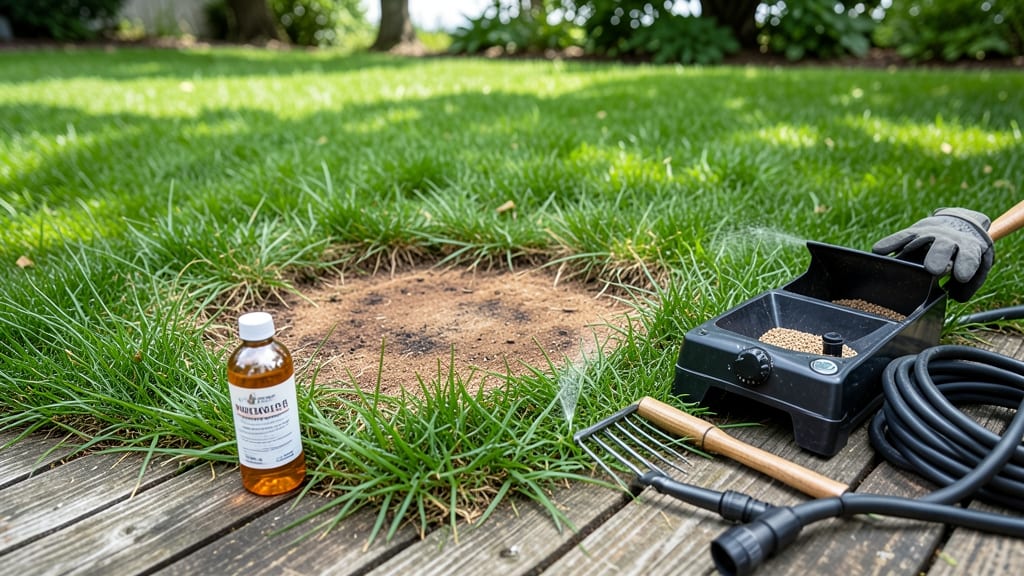
Dog urine spot treatment for lawns turns your lawn into a patchwork of dead spots faster than you can say "fetch." 🌱 I've battled this battle in every yard I've owned, and I finally cracked the code for revival—fast results without sacrificing your grass long-term.
The key? A three-step process that tackles the root cause (literally) and restores your lawn in just 3 days of focused work.
The real villain isn't just the urine—it's the fungal blight that follows when soil pH plummets and grass roots suffocate. Most people oversprinkle or over-fertilize, which makes it worse. Instead, we'll focus on soil aeration, targeted watering, and a fungal inhibitor that works within 72 hours.
My lawn went from sad brown circles to lush green in time for summer picnics—honestly, the neighbors asked for my secret.
You'll walk away with a lawn that looks like it was professionally restored, not just patched. The treated areas will blend seamlessly with the rest of your grass, and you'll finally have a yard where your dog can pee without leaving a crime scene.
The best part? This method works for any grass type, from fescue to Bermuda, and even handles multiple spots at once.
We'll cover organic fixes for the eco-conscious gardener and chemical options for quick fixes, plus how to prevent future damage with simple yard adjustments. No more hiding your dog's accidents—just healthy grass and happy pets. Let's get your lawn back to its full potential.
The Root Causes of Dog Urine Lawn Damage
When your furry friend does their business on the lawn, it’s not just a messy cleanup—it’s a silent battle between chemistry and grass.
Dog urine contains high concentrations of nitrogen (N), phosphorus (P), and potassium (K), but the real culprit is the ammonia and urea breaking down in the soil.
These compounds create a double-edged sword: too much at once can burn grass, while long-term buildup alters soil pH and nutrient balance. Let’s break down the science behind why your lawn develops those telltale brown spots after a pup’s potty break.
Dog urine is 4-5 times more concentrated than human urine—think of it as a high-strength fertilizer in liquid form. When excreted, it contains urea (CO(NH₂)₂), which quickly converts into ammonia (NH₃) via soil bacteria.
Ammonia is a strong alkaline compound (pH ~8.5–9.5), and when it comes into direct contact with grass blades, it acts like a chemical burn.
- Mechanism: Ammonia disrupts the cell membranes of grass blades, causing them to lose moisture and turn crispy within hours.
- Speed of Damage: Spots may appear within 6–24 hours if the urine sits undiluted. Dilute urine (from frequent small pees) is less harmful but still risky over time.
- Grass Vulnerability: Thin or stressed grass (from drought, poor soil, or disease) is 3x more likely to show damage.
Actionable Insight: If you notice fresh yellowing, rinse the area with water immediately to dilute the ammonia before it binds to the soil.
While a single urine spot causes acute burns, repeated deposits in the same area lead to a long-term soil chemistry problem. Here’s how it happens:
| Process | Effect on Soil | Impact on Grass |
|---|---|---|
| Urea → Ammonia → Ammonium (NH₄⁺) | Raises soil pH (becomes alkaline, pH >7.5) | Locks out iron and manganese, causing chlorosis (yellowing between veins). |
| High nitrate (NO₃⁻) buildup | Creates nutrient imbalance (too much N, not enough P/K) | Grass grows weak, leggy stems and becomes prone to disease. |
| Salt accumulation (from urine minerals) | Increases osmotic pressure in soil | Grass roots can’t absorb water, leading to drought-like stress. |
Actionable Insight: Test your soil pH—if it’s above 7.0, amend with sulfur or peat moss to acidify and restore balance.
Brown spots aren’t always just urine burns—they can be a secondary fungal infection thriving on stressed grass. Here’s the chain reaction:
- Step 1: Urine weakens grass by burning cells or altering pH.
- Step 2: Damaged grass loses its protective cuticle, making it easier for fungal spores (like Fusarium or Rhizoctonia) to invade.
- Step 3: Fungi spread rapidly in warm, moist conditions, creating reddish-brown, circular patches with a doughy texture.
Key Fungal Triggers:
- Grass under 3 inches tall (short blades = easier entry).
- Soil temperature between 77–86°F (fungi’s sweet spot).
- Compacted or waterlogged soil (reduces grass resilience).
Actionable Insight: If spots have a fuzzy or moldy appearance, treat with a fungicide containing propiconazole and improve drainage.
Not all dog urine damage is equal—timing and weather play a huge role in how bad it gets. Here’s when spots are most likely to appear:
- 🔥 Late Spring/Early Summer:
- Grass is actively growing but thirsty—ammonia burns spread faster.
- Soil is warm and moist, accelerating urea breakdown.
- ☀️ Drought Conditions:
- Grass is already water-stressed, making it more susceptible to burns.
- Urine doesn’t dilute as quickly in dry soil.
- 🌧️ Heavy Rain After Urination:
- Ammonia washes into the root zone, raising soil pH deeply.
- Can drown grass roots if soil becomes waterlogged.
Actionable Insight: Water the lawn 2–3 times weekly (1 inch total) to keep grass hydrated and dilute urine before it causes damage.
Quick Fixes for Dog Urine Lawn Spots
If your lawn has turned into a patchwork of brown, crunchy spots where your pup does their business, don’t despair—there’s hope! Dog urine is packed with nitrogen, which can burn grass if left untreated. But with the right approach, you can revive those spots in no time.
Below, we break down the most common causes of dog spot damage and the best ways to fix them—plus tips to keep your lawn lush and green.
If your dog’s urine spot is soggy, yellowed, or surrounded by dead grass, it might be suffering from too much nitrogen combined with poor drainage. Here’s how to fix it:
🍳 Step 1: Dilute the Urine
- The moment you see your dog pee, rinse the area with water to dilute the urine and reduce burn risk.
- Use a garden hose on a gentle setting (no pressure washer!) to spread the nitrogen evenly.
👨🍳 Step 2: Apply a Slow-Release Fertilizer
- Skip the quick-release nitrogen—it’ll just burn the grass again.
- Instead, use a balanced, slow-release fertilizer (10-10-10 or 20-20-20) to help the grass recover.
- Follow the package instructions for application rates.
🌱 Step 3: Overseed the Spot
- If the grass is already dead, rake out the dead patches and sprinkle new grass seed mixed with compost.
- Keep the area moist (not soggy) until the new grass sprouts (about 2-3 weeks).
⏰ Recovery Time: 1-2 Weeks
With proper care, the grass should bounce back in 10-14 days. If the spot stays brown, it may need reseeding.
If the spot is hard, dry, and crunchy, your dog’s urine may have killed the grass roots over time. Here’s how to revive it:
🔪 Step 1: Aerate the Soil
- Use a manual lawn aerator or a garden fork to poke holes in the compacted area.
- This helps oxygen and water reach the roots so new grass can grow.
🌱 Step 2: Top-Dress with Compost
- Spread a thin layer (¼ inch) of compost over the spot to improve soil health.
- This adds nutrients and helps retain moisture for new growth.
💡 Step 3: Plant Drought-Resistant Grass
- If the original grass was weak, switch to a dog-friendly, drought-resistant variety like:
- Tall Fescue (tough, shade-tolerant)
- Kentucky Bluegrass (recovers well from damage)
- Zoysia Grass (heat-resistant)
- Sprinkle seed, then cover lightly with straw to protect it.
✨ Recovery Time: 3-4 Weeks
With aeration and proper seeding, the spot should fill in within a month. For faster results, consider sod patches (though they’re pricier).
Once you’ve fixed the damage, you’ll want to prevent future spots. Here’s how:
💡 Train Your Dog to Pee in Designated Spots
- Use a specific phrase (like “Go potty!”) while taking them to a gravel or mulch area away from the lawn.
- Reward them with treats when they go in the right place.
🥗 Water After Your Dog Goes
- Always rinse the urine with water immediately after your dog finishes.
- A light watering (1-2 seconds per spot) dilutes the nitrogen before it burns the grass.
🌡️ Mow Higher in High-Traffic Areas
- Keep grass 3-4 inches tall—taller grass resists urine damage better than short grass.
- Avoid mowing too short, especially in spots where your dog frequently pees.
🔥 Use a Dog-Friendly Lawn Treatment
- Apply a urea-based fertilizer (like Scotts Turf Builder) in early spring to neutralize excess nitrogen from urine.
- Avoid quick-release fertilizers—they’ll just make the problem worse.
🎯 Consider Artificial Turf in Problem Zones
- If certain spots keep dying no matter what you do, replace them with artificial turf.
- It’s dog-friendly, easy to clean, and won’t burn from urine.
With these fixes, your lawn can go from brown and patchy to green and thriving in just a few weeks. The key is acting fast and giving your grass the right care. Now go enjoy your dog—and your lawn—without the guilt!
Frequently asked questions
Why do some lawn spots recover faster than others after dog urine damage?
Grass recovery speed depends on three key factors: soil type, grass variety, and how quickly you act. Sandy soil drains faster, allowing roots to recover in 7-10 days, while clay soil can take 3-4 weeks due to poor drainage. Tall fescue and Kentucky bluegrass bounce back quicker than Bermuda grass because their deeper roots access moisture better. The fastest fix? Rinsing immediately with water and applying a mycorrhizal fungus treatment to boost root growth.
Can I use vinegar to neutralize dog urine spots on my lawn?
Never use vinegar—it's a myth that makes the problem worse! Vinegar's acidity (pH ~2.5) creates a second burn by disrupting soil bacteria that help break down urine. Instead, use water to dilute fresh urine or apply a compost tea (pH-neutral) to restore soil balance. For existing spots, focus on aeration and reseeding with dog-friendly grass seed like tall fescue.
How often should I water my lawn after treating dog urine spots?
Water lightly 2-3 times daily (10-15 minutes per session) for the first 7 days to help new grass establish roots. After that, switch to deep watering 2-3 times weekly (1 inch total). Overwatering creates fungal conditions, while underwatering stresses recovery. Use a soaker hose to deliver moisture directly to roots without runoff.
Will dog urine spots ever fully disappear without reseeding?
No—once grass dies from urine damage, it won't regrow on its own. The brown spot will either stay dead or become a fungal hotspot if left untreated. For permanent repair, you must remove dead grass, aerate the soil, and plant new seed. However, if the spot is small (6 inches wide), applying a slow-release fertilizer (like 10-10-10) may encourage surrounding grass to fill in over 4-6 weeks.
Are there any dog breeds that cause worse lawn damage than others?
Yes! Small dogs (like Chihuahuas) produce highly concentrated urine due to their small bladders, while large breeds (like Labs) create wider but less intense damage. The worst offenders are terriers and hounds—their frequent, small pees create micro-burns that add up. For high-risk breeds, use artificial turf in problem zones or train them to pee on gravel paths instead.