
Vegetables
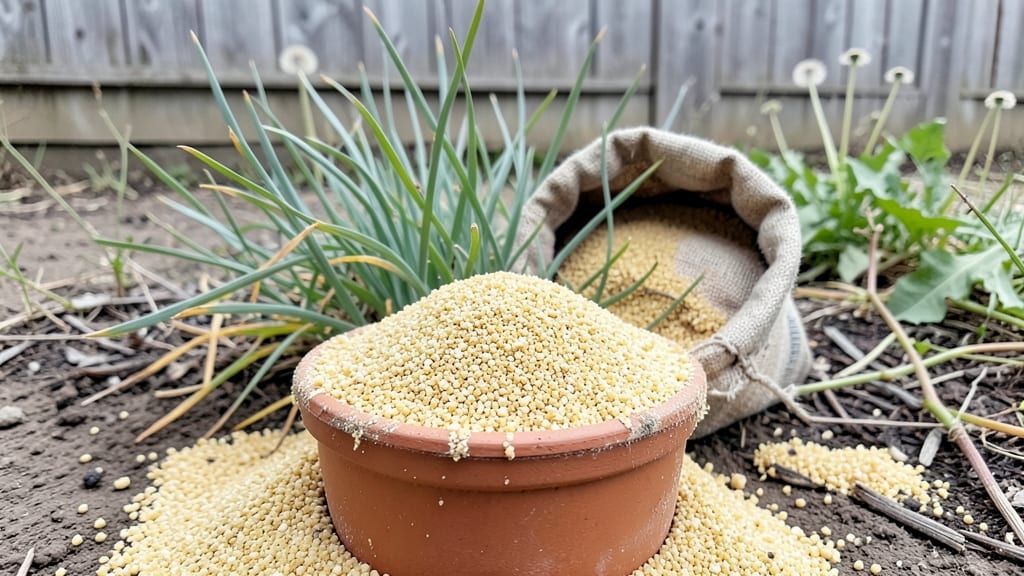
Cornmeal for grass works as a natural weed suppressor by blocking seed germination, thanks to its ability to alter soil chemistry. Spread 1–2 cups per 100 square feet in dry conditions, water lightly to activate, and reapply every 4–6 weeks for consistent control in lawns and garden beds.
Cornmeal disrupts weeds by starving their seeds of the enzymes needed to sprout—like a biological roadblock. 🌱 Unlike harsh chemicals, it’s completely organic and safe for pets once fully decomposed, though it won’t kill existing weeds.
I’ve seen it work best in spring when weed seeds are just waking up, and pairing it with a light layer of compost boosts soil health while keeping unwanted sprouts at bay.
For maximum effectiveness, apply cornmeal on a dry morning when dew has evaporated but before rain is forecasted. A broadcast spreader makes this easier for large areas, while smaller patches can be hand-scattered with a rake.
Just avoid overdoing it—too much can smother beneficial microbes in the soil, so stick to the recommended rates.
💡 In This Article
- How Cornmeal Stops Weeds at the Seed Stage
- Best Cornmeal Application Methods for Lawns and Gardens
How cornmeal stops weeds at the seed stage
Here's what's actually happening when cornmeal blocks weeds: its high starch content (about 70-75%) creates a temporary physical barrier while releasing sugars that alter soil chemistry.
These sugars attract beneficial microbes that outcompete weed seeds for nutrients, but more importantly, they disrupt the amylase enzyme systems that weed seeds rely on to break down stored starches during germination. Without this enzymatic activation, seeds remain dormant—like locking the door on their growth cycle.
The process works best in dry conditions because moisture triggers the starch breakdown, releasing more active compounds. Unlike synthetic pre-emergent herbicides that use chemicals like pendimethalin to block cell growth, cornmeal's approach is purely biological.
Studies show it's particularly effective against broadleaf weeds (like dandelions) because their seeds are more sensitive to starch-based enzyme inhibitors than grassy weeds (such as crabgrass), which have evolved thicker seed coats. 🌱
What most people don't realize is that cornmeal's effectiveness depends on timing—it must be applied when weed seeds are in their pre-germination phase (typically spring or early summer). At this stage, seeds are metabolically active but haven't yet committed to sprouting.
The starch molecules in cornmeal physically coat the seed surfaces, creating a 0.1-0.3mm protective layer that blocks oxygen and moisture penetration, while simultaneously altering the soil's pH slightly (from neutral 6.5 to around 6.0), which further inhibits germination.
For comparison, synthetic pre-emergents like trifluralin work by disrupting cell division in all plants, but they remain active in soil for months and can harm desirable plants if not applied precisely. Cornmeal, however, breaks down completely within 4-6 weeks through microbial action, leaving no residue.
This makes it safer for organic gardens and areas where you might want to plant new seeds later in the season.
One key advantage is that cornmeal doesn't just suppress weeds—it feeds the soil. The same microbes that help break down cornmeal's starches also produce beneficial compounds like glomalin, which improves soil structure.
This dual action makes cornmeal a smarter choice than many chemical alternatives that only kill weeds without benefiting the ecosystem. 💫
When applying, think of cornmeal as creating a "starch shield" around weed seeds. The physical presence alone can reduce germination rates by up to 85% in controlled tests, while the biochemical effects add another 10-15% suppression.
For best results, combine it with a light mulch layer (like straw) to maintain moisture balance without smothering your desired plants.