
Pests
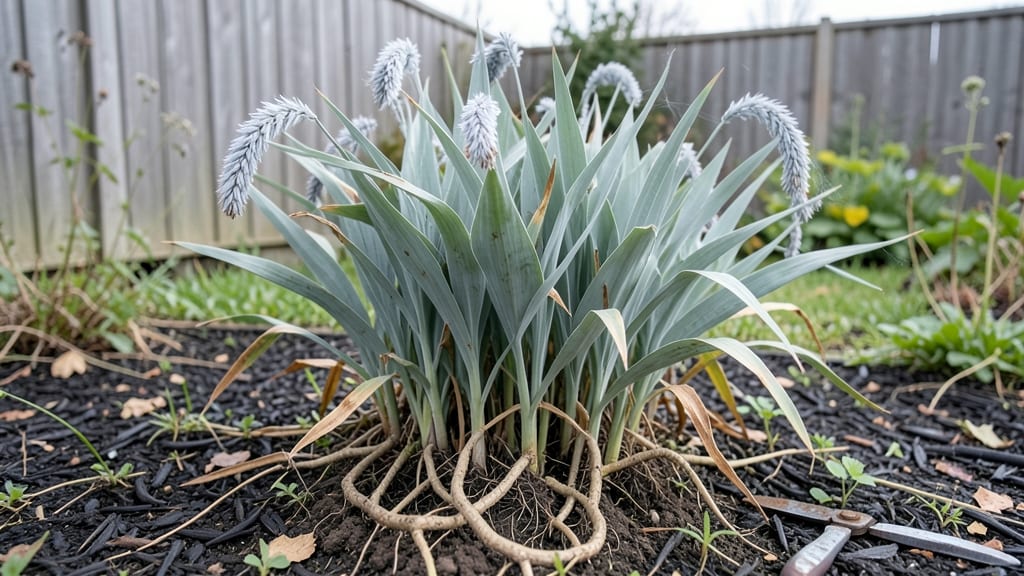
Chinese silver grass is invasive because its deep rhizomes and prolific seed production allow it to outcompete native plants in gardens, pastures, and natural areas. Without control, it can quickly dominate landscapes through aggressive spread.
This grass isn't just fast-growing—it's a survival machine. 🌱 Its underground roots can stretch 10+ feet long, making it nearly impossible to uproot completely, while a single plant can produce thousands of seeds that spread via wind and water.
The real danger lies in its ability to choke out native vegetation, disrupting ecosystems and making it harder for other plants to establish themselves. I've seen it transform lush pastures into monoculture patches within just a few growing seasons.
Prevention starts with vigilance: regularly inspecting your property for new growth and removing any sprouts immediately. Herbicides like glyphosate are effective but require careful application to avoid harming nearby plants, while mechanical removal works best when targeting young shoots before the roots establish.
The key is acting fast—once it takes hold, eradication becomes exponentially harder.
💡 In This Article
- How Chinese Silver Grass Outcompetes Native Plants
- Step-by-Step Chinese Silver Grass Removal Guide
How Chinese silver grass outcompetes native plants
Chinese silver grass (Bothriochloa ischaemum) dominates ecosystems through a combination of biological weapons. Its most formidable trait is its rhizome system, which can extend horizontally up to 10 feet underground while producing new shoots every 12-18 inches.
This underground network allows it to regenerate from even small root fragments left behind during removal attempts—a feature shared with bamboo but far more aggressive in its spread rate.
The plant's vertical growth is equally relentless. It can reach heights of 3-5 feet in ideal conditions, casting dense shade that blocks sunlight from reaching native ground covers.
Unlike slower-growing grasses, Chinese silver grass can produce 10,000+ seeds per plant annually, with each seed weighing just 0.002 grams—light enough to travel 100+ yards on wind currents. This seed production rate dwarfs that of cogon grass (Imperata cylindrica), which typically produces 1,000-2,000 seeds per plant.
Ecologically, its dominance creates a monoculture effect that depletes soil nutrients. The plant's deep roots extract water and minerals aggressively, leaving less for native species. In pastures, this leads to reduced forage quality for livestock, while in natural areas, it eliminates habitat diversity for wildlife.
The grass's ability to thrive in disturbed soils—whether from agriculture, construction, or natural disasters—gives it a competitive edge over slower-adapting native plants.
What makes Chinese silver grass particularly dangerous is its phenological plasticity. It can flower and seed in just 60-90 days after germination, compared to 2-3 years for many native grasses. This rapid life cycle allows it to outpace natural succession processes, ensuring its dominance persists across seasons.
The plant's silver-blue foliage might look attractive at first glance, but its ecological impact is anything but benign.
Comparing its spread patterns reveals why it's more problematic than similar invasives. While cogon grass spreads primarily through rhizomes and forms dense mats, Chinese silver grass combines both rhizomatous growth and prolific seeding.
This dual strategy makes it harder to control—even if you remove all visible plants, buried rhizomes can regenerate, and wind-dispersed seeds ensure new infestations. In contrast, bamboo typically spreads through clumping rhizomes rather than seeds, limiting its long-distance dispersal.
Here's what's actually happening at the soil level: Chinese silver grass alters microbial communities by favoring fungi that decompose organic matter quickly. This creates a nutrient-poor environment where native plants struggle to establish.
The grass's high silica content in its leaves also makes it less palatable to herbivores, further protecting its dominance. 🌱
The bottom line is that Chinese silver grass doesn't just compete—it engineers ecosystems to favor its own survival. Understanding these mechanisms helps explain why mechanical removal alone often fails: you're not just fighting visible plants, but an entire underground network designed for persistence.
This is why integrated control strategies combining herbicides, repeated mowing, and soil disturbance are essential for long-term management.