
Lawn
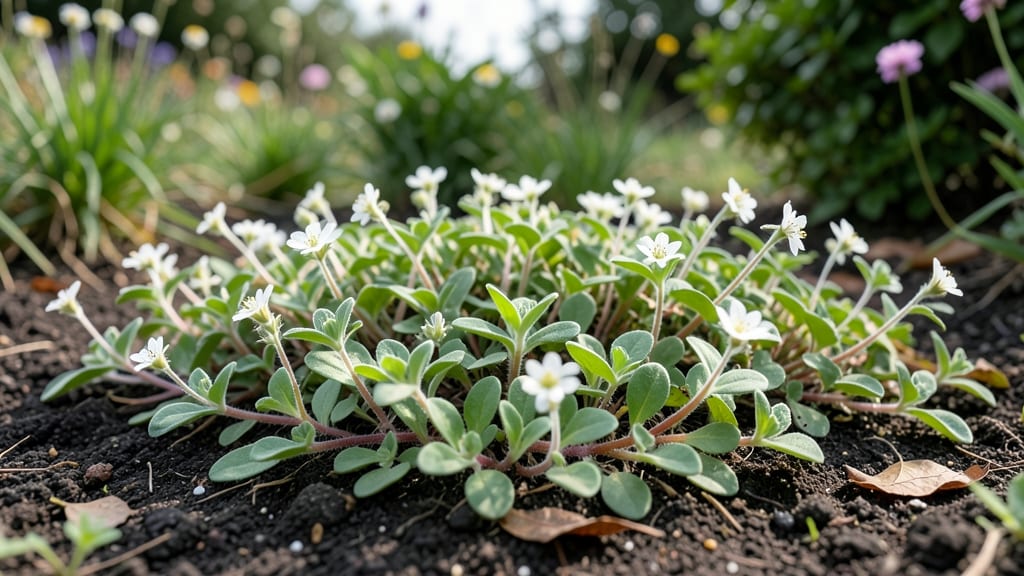
Spotting chickweed in lawn pictures of your grass before it spreads like wildfire is the first step to reclaiming that lush green carpet. 🌱 This little weed might look innocent with its tiny oval leaves and delicate stems, but it multiplies fast—especially in cool, damp weather.
The key is catching it early when it’s still scattered, not when it’s smothering your grass in a thick mat.
Chickweed’s leaves grow in pairs along the stem and form a sort of "V" shape, while its stems are smooth and often branch out. The flowers? Tiny white blooms that pop up in spring, giving it a deceptive charm.
Compare it to clover (round leaves, trifoliate) or dandelions (toothed leaves, yellow flowers)—chickweed’s smooth edges and sprawling habit make it stand out once you know what to look for.
Here’s the good news: you don’t need chemicals to tackle it. Pulling it by hand when the soil is moist works, or smother it with a thick layer of mulch or cardboard.
For larger patches, a vinegar-based spray (3% acetic acid) does the job without harming your grass—just be precise, because chickweed’s stubborn roots can regrow if you miss any.
Think of it this way: chickweed might be harmless to grass, but it’s a nuisance that steals nutrients and water. The faster you act, the easier it is to keep your lawn healthy and weed-free. A little vigilance now saves hours of cleanup later.
How Chickweed Invades Your Lawn
If you’ve ever spotted lush, vibrant green patches in your lawn and wondered, "Why is chickweed taking over?"—you’re not alone. This resilient weed thrives in conditions that many homeowners unknowingly create.
Understanding the root causes (literally!) helps you tackle it before it spreads like wildfire. Let’s break down the science behind why chickweed loves your lawn so much.
Chickweed (Stellaria media) is a master of low-maintenance survival, especially in compacted or poorly draining soil. Here’s why:
- Compacted Soil = Stress for Grass, Boost for Weeds Heavy foot traffic, machinery, or even natural soil settling create a dense, hardened layer that prevents water and air from reaching grass roots. Chickweed, however, thrives in these conditions because its shallow roots don’t need deep soil penetration. Instead, it spreads horizontally via stolons (creeping stems), smothering grass in compacted areas.
- Overly Moist or Waterlogged Spots Chickweed loves consistent moisture but hates drought. If your lawn has:
- Low spots where water pools after rain
- Irrigation systems that oversaturate certain areas
- Clay-heavy soil that traps water ...chickweed will seize the opportunity. It germinates quickly in damp soil and forms dense mats that outcompete struggling grass.
- 💡 Pro Tip: Test your soil’s compaction by pressing a screwdriver into the ground. If it won’t go past 1–2 inches, your lawn is a chickweed magnet. Aerate in fall to loosen soil and improve drainage—this starves chickweed of its favorite conditions.
Chickweed is a shade-tolerant opportunist, meaning it thrives where grass struggles:
- Thin or Patchy Grass Bare spots—from disease, drought, or poor seeding—leave exposed soil, which chickweed colonizes within days. Its seeds germinate in as little as 3 days under ideal conditions, while grass seeds take weeks to establish.
- Dappled or Full Shade Most lawn grasses (like Kentucky bluegrass or fescue) need 4–6 hours of sunlight daily. Chickweed, however, grows well in partial to full shade, making it a common nuisance under trees or along fences. It even outcompetes shade-tolerant grasses like fine fescue by growing faster.
- 🌡️ Temperature Sweet Spot Chickweed germinates best in cool to moderate temperatures (50–75°F). That’s why it often appears in early spring or fall—when grass is slow to grow but chickweed is aggressive. If your lawn is struggling in these seasons, chickweed will fill the gap.
Chickweed doesn’t need rich soil to thrive—it’s a low-nutrient survivor. But imbalances in your lawn’s fertility can tip the scales in its favor:
- Over-Fertilization with Nitrogen Too much nitrogen (common in fast-release fertilizers) can burn grass roots, weakening them while chickweed’s shallow system absorbs excess nutrients. It’s like giving your lawn a sugar rush—grass gets a temporary boost, but chickweed gets a permanent foothold.
- Lack of Potassium or Phosphorus Chickweed tolerates low potassium (K) and phosphorus (P), which are critical for grass root strength and disease resistance. If your soil test shows deficiencies, grass struggles to recover from stress, while chickweed keeps growing.
- 🎯 Actionable Fix: Get a soil test (DIY kits are cheap!) and amend with balanced fertilizer (e.g., 10-10-10) or compost to improve grass resilience. Chickweed will still pop up, but a healthier lawn will outcompete it over time.
Any disruption to your lawn’s ecosystem—whether from construction, aeration, or overseeding—creates the perfect chickweed buffet:
- Seedbed Creation Chickweed seeds lie dormant in the soil for years but germinate when exposed to light and moisture. Tilling, dethatching, or even vigorous raking can unearth buried seeds, triggering a sudden chickweed explosion.
- Overseeding Failures If you overseed a bare lawn but the new grass takes 3+ weeks to germinate, chickweed will fill the gaps first. It’s a speed demon compared to slow-growing grass seeds.
- 🔥 Post-Renovation Vulnerability After core aeration or topdressing, chickweed can invade freshly disturbed areas because:
- The soil is loose and easy for seeds to lodge.
- Grass recovery is delayed while chickweed spreads via stolons.
- ⏰ Quick Solution: If you’re renovating, pre-treat with a pre-emergent herbicide (like prodiamine) 2–4 weeks before overseeding to block chickweed seeds. Then, water lightly but frequently to help grass outcompete weeds.
Now that you know why chickweed moves in, the next step is how to kick it out for good. The key? Disrupt its favorite conditions—whether that’s improving drainage, thickening grass, or adjusting your mowing habits. Stay tuned!
How to solve it
Spotting chickweed early is half the battle—now it’s time to tackle it before it takes over your lawn. Chickweed thrives in moist, shaded areas and spreads quickly, but with the right approach, you can eliminate it effectively while keeping your grass healthy.
Below are targeted solutions based on the root causes of chickweed infestations, from manual removal to long-term prevention. Let’s get your lawn back in shape! 🌱💪
If your lawn is already struggling with bare spots or weak grass, chickweed will seize the opportunity to invade. The fix? Strengthen your turf first—chickweed won’t stand a chance against dense, healthy grass.
Step 1: 🔥 Reseed or Overseed Bare Spots
- How: Fill thin areas with a high-quality grass seed blend suited to your climate (cool-season grasses like Kentucky bluegrass or fescue work well).
- When: Late summer or early fall for best results.
- Pro Tip: 💡 Use a starter fertilizer to help seeds germinate faster and outcompete chickweed.
Step 2: 👨🍳 Improve Soil Health
- How: Test your soil’s pH and nutrient levels.
Chickweed loves compacted or nutrient-poor soil. - Fix: Aerate your lawn in the fall to relieve compaction, then top-dress with compost or a slow-release fertilizer. - Pro Tip: 🌡️ Aim for a pH of 6.0–7.0—chickweed struggles in slightly acidic to neutral soil.
Step 3: ⏰ Mow Higher to Shade Out Weeds
- How: Set your mower to 3–4 inches. Taller grass blocks sunlight, which chickweed needs to grow.
- Bonus: Leave grass clippings on the lawn (grasscycling) to return nutrients to the soil.
Moisture-loving chickweed often pops up in shady spots or after heavy rain. Drainage and sunlight control are key here.
Step 1: 🌧️ Fix Drainage Issues
- How: If water pools in certain areas, create gentle slopes or install French drains to redirect excess moisture.
- Quick Fix: For small spots, rake out the soggy soil and mix in sand or perlite to improve drainage.
Step 2: 🌞 Increase Sunlight Exposure
- How: Trim back overhanging tree branches or shrubs to let more sunlight reach the lawn.
- Alternative: If shading is unavoidable (e.g., large trees), opt for shade-tolerant grass varieties like fine fescue.
Step 3: 🔪 Pull or Smother Chickweed in Wet Spots
- Manual Removal: 👩🌾 Pull chickweed when the soil is damp (it comes out easier). Use a weeding tool or your hands—just be patient!
- Smothering: Lay down cardboard or thick mulch over infested areas to block sunlight.
Keep it moist for 4–6 weeks to kill chickweed roots.
Foot traffic, pet urine, or construction can create openings for chickweed. Repair the damage and restore your lawn’s resilience.
Step 1: 🚧 Repair Compacted or Damaged Areas
- How: For compacted soil, rent a core aerator to pull out small plugs of soil.
Fill the holes with a mix of topsoil and compost. - For Pet Urine Burns: Water the affected area immediately to dilute the urine, then overseed with a pet-friendly grass seed.
Step 2: 🛡️ Apply a Pre-Emergent Herbicide (If Needed)
- When: Use a non-selective herbicide like glyphosate only on bare soil (not where grass is growing). Follow up with reseeding.
- Organic Option: Corn gluten meal (applied in early spring) can prevent weed seeds from germinating.
Step 3: 🌿 Encourage Grass Growth with Fertilizer
- How: Use a balanced fertilizer (10-10-10 or similar) to promote thick grass growth. Chickweed can’t compete with a lush lawn!
- Schedule: Fertilize in early spring and fall for best results.
An ounce of prevention is worth a pound of chickweed! Follow these habits to keep your lawn weed-free long-term.
- 💡 Mow regularly—never cut more than 1/3 of the grass blade at once to avoid stressing the turf.
- 🌡️ Water deeply but infrequently—aim for 1–1.5 inches per week to encourage deep root growth and reduce moisture-loving weeds.
- 🎯 Dethatch annually if your lawn has a thick layer of thatch (over ½ inch), as it traps moisture and invites weeds.
- 🚫 Avoid over-fertilizing with nitrogen—it can lead to weak roots and more weed opportunities.
- 🌱 Plant ground covers in high-traffic or shady areas where grass struggles (e.g., clover or creeping thyme).
With these strategies, you’ll not only remove existing chickweed but also create an environment where it can’t return. A healthy lawn is the best weed deterrent—so roll up your sleeves and get to work! 🛠️🌿
Frequently asked questions
How can I tell if those tiny green patches are chickweed vs. clover?
Chickweed has smooth, oval leaves growing in pairs along the stem (forming a "V" shape), while clover leaves are trifoliate (three-leaf clusters) with a distinct round shape. Chickweed stems are thin and sprawling, while clover forms dense mats with white flower heads. Look for these differences: chickweed leaves are 1/4-inch long with no teeth, while clover leaves have serrated edges.
Is chickweed harmful to my grass or pets?
Chickweed isn't toxic to grass or pets, but it competes for water and nutrients, weakening your lawn. While pets can safely nibble on it, the real issue is its aggressive spread—it can smother grass and create bare spots where weeds like crabgrass move in. The key is removing it before it forms dense mats.
When is the best time to pull chickweed by hand?
Pull chickweed when the soil is moist but not soggy—early morning after dew has dried is ideal. Aim for spring or fall when the ground is soft but not frozen. Avoid pulling in hot, dry weather—chickweed's shallow roots make it easier to remove when conditions are right.
Will vinegar really kill chickweed without harming my lawn?
Yes, but use 3% acetic acid vinegar carefully—it kills chickweed but can also damage grass if overapplied. Spot-treat only the chickweed (avoid grass blades) on a dry, sunny day. For large areas, mix 1 gallon vinegar + 1 cup dish soap and apply with a spray bottle. Test a small patch first!
Why does chickweed keep coming back after I remove it?
Chickweed seeds can lie dormant in soil for years—any disturbance (raking, aerating) can trigger new growth. To break the cycle: improve drainage, overseed bare spots, and maintain 3–4 inch grass height to block sunlight. Consistent lawn care prevents regrowth by starving chickweed of its favorite conditions.