
Watering
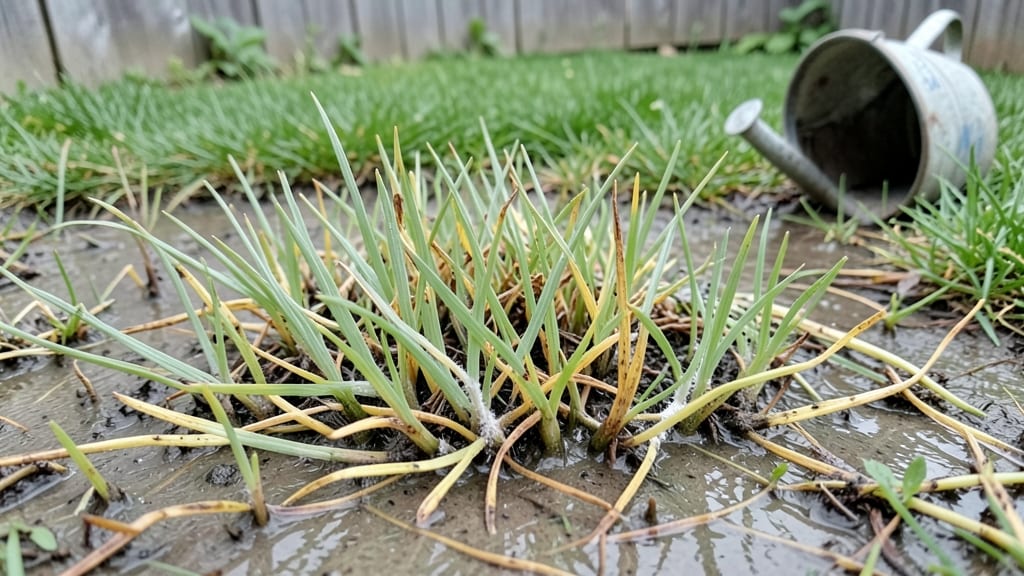
Overwatered grass can recover if caught early, but severe damage may require weeks or months to reverse. Reduce watering immediately, improve drainage, and aerate soil to help roots breathe and revive yellowing or spongy patches.
Grass recovery depends on how quickly you act—roots suffocate when deprived of oxygen, and fungal infections thrive in soggy soil. 🌱 I’ve seen lawns bounce back in just a few weeks with proper care, but chronic overwatering can lead to permanent dead patches.
The key is restoring airflow to the roots by reducing water and loosening compacted soil, which helps revive weakened blades.
For best results, test your soil’s drainage first—amending with organic matter like compost can make a huge difference. Over time, choosing drought-tolerant grass varieties suited to your climate will also help prevent future issues.
💡 In This Article
- How Overwatering Damages Grass Roots and Soil
- Step-by-Step Grass Recovery After Overwatering
How overwatering damages grass roots and soil
Here's what's actually happening below the surface: when grass gets too much water, the soil becomes saturated and oxygen levels plummet. Roots need oxygen to respire—just like we need air to breathe—and without it, they suffocate.
This process starts within 24-48 hours of excessive watering, causing roots to turn brown and die back. The damage isn't just about drowning; it's about cutting off the grass's lifeline to essential gases.
The real trouble begins when waterlogged soil creates the perfect breeding ground for pathogens. Fungal infections like Rhizoctonia or Pythium thrive in soggy conditions, attacking roots and crowns. You'll notice this as a foul, musty odor or slimy patches when you lift the grass.
These fungi don't just weaken plants—they can kill them outright by blocking nutrient uptake. The worst part? Even after you stop overwatering, these pathogens can persist in the soil for months.
Chemically, overwatering also leaches vital nutrients from the soil. Essential minerals like nitrogen, phosphorus, and potassium—what grass needs to stay green and strong—dissolve and wash away with excess water. This nutrient loss makes recovery even harder because the grass lacks the building blocks to repair itself.
You might see yellowing blades first, but beneath the surface, the root system is starving for these critical elements.
What most people don't realize is how quickly soil compacts under constant moisture. Water breaks down soil structure, causing particles to pack tightly together. This creates a waterlogged barrier that prevents both air and water from reaching deeper roots.
The result? Grass blades may look alive on top while the root zone below is effectively dead. This is why even after you stop overwatering, some areas might remain stubbornly brown and spongy for weeks.
Look for these visual clues to identify overwatering damage: blades that feel mushy when pressed, a darkening of the soil color (indicating anaerobic conditions), or a rubbery texture when you pull up a small section.
The grass might also develop a grayish tint rather than the healthy green, signaling poor oxygen exchange. In severe cases, you'll see circular dead patches where the soil has essentially suffocated the grass entirely.
This damage cascades because grass is interconnected. When roots weaken, the entire plant becomes vulnerable to stress, pests, and disease. The good news? Grass is resilient—if you catch the problem early and take corrective action, the roots can often regenerate.
But the longer you wait, the more permanent the damage becomes, as the soil ecosystem itself gets disrupted.