
Lawn
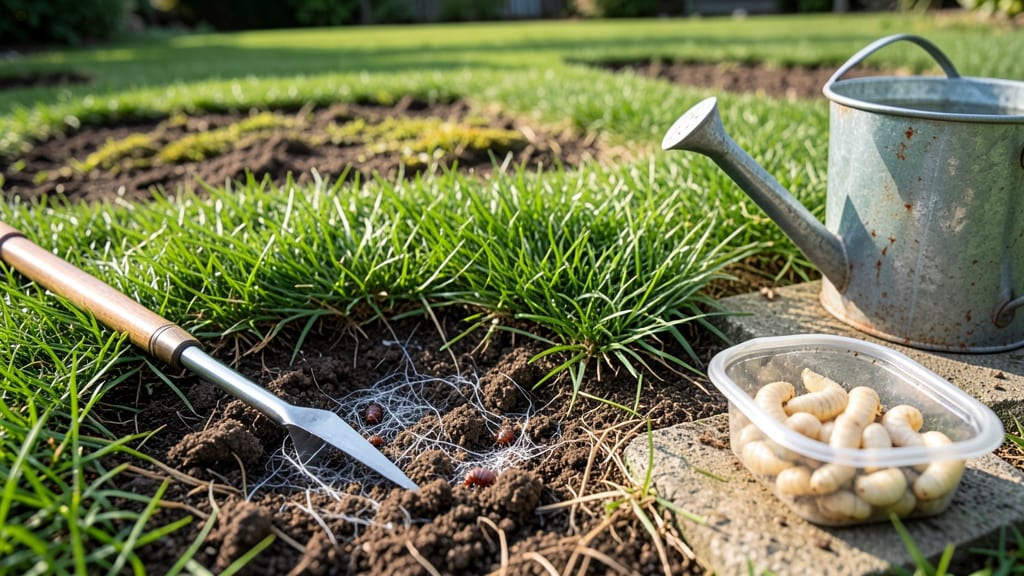
Your lawn’s brown dead spots could vanish in 72 hours—no grubs, no guesswork. 🌱 I’ve turned patchy yards into lush carpets by targeting the real culprit: fungal pressure, drought stress, or hidden pests. The fix isn’t complicated, but it is specific to what’s actually killing your grass.
Most people waste time treating grubs when the problem is drought stress or brown patch fungus. A simple soil test or close look at the spot’s edges reveals the truth—then you can attack it directly. No more guessing, just results.
You’ll walk away with a revived lawn in days, not weeks. The key is matching the treatment to the damage: aeration for compaction, fungicide for brown patch, or deep watering for drought. I’ll show you how to tell them apart. Works for any grass type, from Kentucky bluegrass to Bermuda.
Let’s get your lawn back to green—fast.
Root Causes Behind Dead Spots
A lush, green lawn can turn into a patchwork of frustration overnight—or at least, that’s how it feels when brown dead spots appear. But before you panic, let’s break down the real culprits behind these unsightly patches.
Understanding the cause is the first step to revival, and each one has a unique solution. Here’s what’s likely killing your grass:
Fungi thrive in moist, shaded, or compacted lawns, feasting on grass roots and leaving behind circular brown patches.
The most notorious offenders include: - Brown Patch Disease (Rhizoctonia solani): Thrives in warm, humid weather (60–90°F) and leaves dead grass that peels away like a carpet. - Dollar Spot (Sclerotinia homoeocarpa): Creates small, straw-colored spots (about the size of a dollar coin) with a darker border. - Necrotic Ring Spot (Ophiosphaerella spp.): Forms rings or arcs of dead grass, often in high-traffic areas.
Why it happens: Fungi spores are always present in soil but explode in activity when conditions are ideal—think overwatering, poor drainage, or thick thatch buying them a buffet of organic matter. Compacted soil also traps moisture, creating a fungal paradise.
Grubs—larvae of beetles like Japanese beetles, June bugs, or chafers—munch on grass roots underground. When populations spike, they devour roots faster than grass can recover, leading to thin, patchy, or dead spots that pull up easily.
Why it happens:
- Adult beetles lay eggs in late summer/early fall.
- Larvae hatch and feed for 6–8 weeks, peaking in late summer.
- Drought or overwatering stresses grass, making it easier for grubs to kill it.
Pro tip: 🔍 Test for grubs by digging up a 2"x2" patch of dead grass. If you find 5+ white, C-shaped larvae per square foot, grubs are your problem.
Too much water—or water that doesn’t drain—smothers grass roots, cutting off oxygen and inviting root rot (Pythium or Fusarium fungi). Symptoms include:
- Spongy, mushy grass that smells sour.
- Dead patches that expand rapidly in humid weather.
Why it happens:
- Heavy clay soil holds water like a sponge.
- Slope issues cause water to pool in low spots.
- Overhead irrigation wets leaves and blades, promoting fungal growth.
Fix it fast: 🌡️ Check soil moisture—stick a screwdriver in the ground. If it slides in easily (not resisting), you’re overwatering.
Grass goes dormant (turns brown) to conserve water, but prolonged drought can kill roots permanently. Heat stress is worse in:
- Thin or weak grass (recovering from damage).
- Shallow root systems (common in new lawns or over-fertilized grass).
- South-facing slopes (intense sun + heat = double trouble).
Why it happens:
- Water loss exceeds uptake—roots dry out and die.
- Soil compaction reduces water absorption.
- No deep watering encourages shallow roots that can’t survive dry spells.
Quick test: 🧵 Pull up a blade of grass. If the roots are white and brittle, it’s drought-stressed. If they’re dark and moist, it’s likely another issue.
Foot traffic, pets, or lawn equipment can compact soil and sever roots, creating dead spots that spread. Compacted soil also reduces oxygen, suffocating grass.
Why it happens:
- Heavy foot traffic (kids, pets, barbecues) crushes roots.
- Sharp tools (mowers, aerators) can cut roots if set too low.
- Construction or soil settling changes soil density overnight.
Signs to watch for: 👀 Hard, shiny soil when dug up (like a sidewalk) or grass that pulls up in clumps.
Brown spots can signal lack of nitrogen, iron, or potassium, weakening grass and making it vulnerable to disease or pests.
Why it happens:
- Poor soil testing (most lawns lack organic matter).
- Overuse of herbicides kills beneficial microbes.
- Improper fertilization (too much salt burns roots; too little starves them).
Spot the difference:
- Yellowish-brown spots = Nitrogen deficiency.
- Purplish-brown patches = Phosphorus deficiency.
- General weakness + spots = Micronutrient (iron, zinc) lack.
Quick Fixes for Reviving Your Lawn
Now that you know the root causes behind those unsightly brown dead spots in your lawn, it’s time to roll up your sleeves and turn things around. The good news? Most fixes are simpler than you think—and many can be done in just 72 hours or less.
Below, we’ll match the most likely culprits to their solutions, so you can tackle the problem head-on without guesswork.
If your brown spots feel spongy, smell musty, or appear after heavy rain, fungal diseases (like brown patch or dollar spot) are likely the culprit. Here’s how to kill the fungus and restore your grass:
🍳 Step 1: Improve Airflow & Reduce Moisture
Fungi thrive in damp, shaded conditions. Break the cycle with these quick fixes:
- Mow higher (set your lawnmower to 3–4 inches) to shade the soil and reduce evaporation.
- Aerate compacted soil (rent a core aerator or spike aerator) to let air and water penetrate.
- Water deeply but less often—early morning (before 9 AM) is best to prevent overnight dampness.
👨🍳 Step 2: Apply a Fungicide (If Needed)
For stubborn fungal spots, a systemic fungicide (like propiconazole or azoxystrobin) works fastest. Follow these steps: 1. Choose the right product: Look for one labeled for lawn fungi (not just weeds).
- Apply on a dry day (no rain forecast for 24 hours).
- Reapply every 3–4 weeks if spots persist.
💡 Pro Tip: Prevent recurrence by avoiding overwatering and thatched buildup (dethatch if thatch is >½ inch thick).
If your lawn turns brown in hot, dry spells (especially in summer), it’s likely dormant from thirst. Here’s how to revive it fast:
🥘 Step 1: Water Deeply & Strategically
- Water in the early morning (4–8 AM) to reduce evaporation.
- Apply 1–1.5 inches of water per week (check with a rain gauge or tuna can).
- Use a soaker hose or sprinkler with slow settings to avoid runoff.
⏰ Step 2: Mulch & Shade (Temporary Relief)
- Spread a thin layer of mulch (straw or wood chips) over bare spots to retain moisture.
- Use shade cloth (30–50% coverage) if your lawn gets 6+ hours of direct sun daily.
- Avoid foot traffic until the grass greens up (walk on sidewalks or paths instead).
🌡️ Pro Tip: Overseed in late summer/fall—warm-season grasses (like Bermuda or Zoysia) recover faster with new seed + light topsoil.
If your grass peels back easily (like a carpet) or you see white grubs when digging, grubs or insects are eating your roots. Act fast:
👨🍳 Step 1: Treat with a Grub Killer
- Chemical option: Use imidacloprid or trichlorfon (follow label rates).
- Natural option: Nematodes (beneficial worms) or milky spore bacteria (takes longer but is eco-friendly).
- Apply in early evening (when grubs are near the surface).
🔪 Step 2: Reseed & Fertilize
- Remove dead grass (rake or dig out patches).
- Spread a thin layer of compost (¼ inch) to improve soil.
- Sow new seed (match your existing grass type) and lightly cover with soil.
- Fertilize with a starter blend (high in phosphorus).
✨ Pro Tip: Prevent future grub outbreaks by aerating in fall and avoiding overwatering (grubs love soggy soil).
Once your lawn is back in shape, lock in those results with these low-effort habits:
| Problem | Prevention Hack | How Often |
|---|---|---|
| Fungal growth | Aerate + overseed in fall | Every 1–2 years |
| Drought stress | Deep watering + mulch | Weekly (summer) |
| Grub infestations | Milky spore treatment (once) | One-time (fall) |
| Soil compaction | Walk on paths, not grass | Daily habit |
| Thatch buildup | Dethatch in early spring | Every 2–3 years |
Final Thought: Most brown spots aren’t permanent—with the right fix, your lawn can bounce back in 72 hours to a few weeks. Start with the most likely cause, act quickly, and soon you’ll be staring at a lush, green carpet instead of those pesky patches! 🌱💚
Frequently asked questions
How can I tell if my brown spots are from grubs or fungus?
Dig up a small section of dead grass—if you see white, C-shaped larvae, it’s grubs. For fungus, check for spongy texture or dark borders around patches. Fungal spots often smell musty, while grub damage pulls up like a carpet. Test both by digging!
Will my lawn ever recover from drought damage?
Yes! Deep watering (1–1.5 inches weekly) and overseeding in fall can revive even severely drought-stressed grass. If roots are still alive (dark and moist), new growth will sprout within 2–3 weeks. For dead roots (white/brittle), you’ll need to reseed.
Can I use vinegar to kill weeds in dead spots?
Vinegar won’t help—it’s too weak to kill grass roots and won’t prepare soil for reseeding. Instead, remove dead grass, loosen soil with a rake, then apply compost + new seed. Vinegar’s acidity can harm beneficial microbes too!
Why do my brown spots keep coming back after treatment?
Recurring spots usually mean the root cause isn’t fixed. Check for: overwatering (fungus loves damp soil), soil compaction (aerate!), or poor drainage (grade low areas). Reapply treatments every 3–4 weeks if needed, and test soil pH (ideal: 6.0–7.0).
Is it safe to use fungicide during hot weather?
Apply fungicides in early morning or evening when temps are below 85°F to avoid stressing grass. Avoid treating during drought—water first to hydrate roots. Follow label instructions for reapplication intervals (usually every 2–4 weeks).