
Landscaping
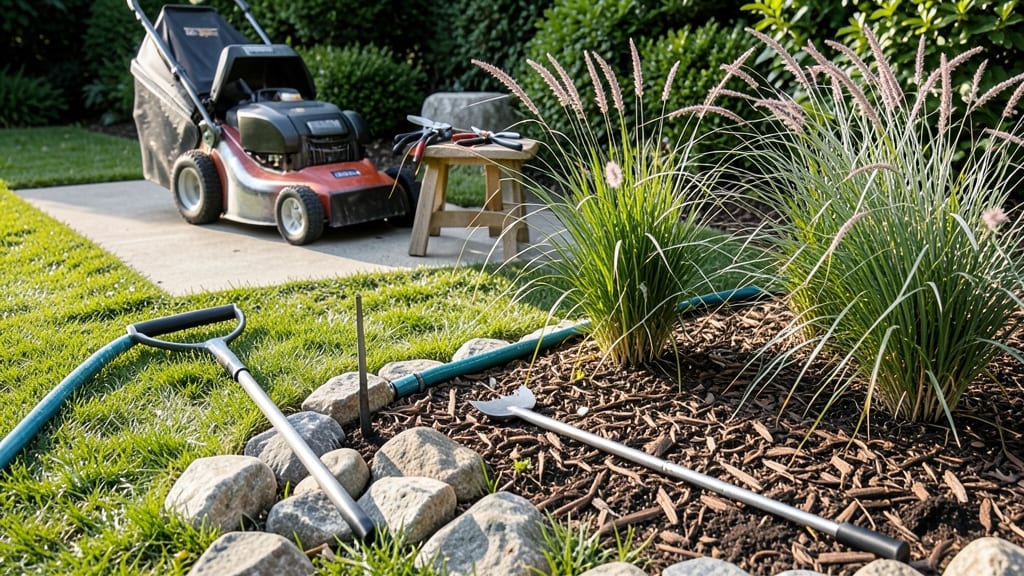
Transforming your yard into the absolute lawn care and landscaping masterpiece it deserves starts with strategic planning and intentional design. 🌿 I’ve spent years perfecting this approach—balancing seasonal color, practical maintenance, and that "wow" factor your neighbors will notice (and envy).
The secret isn’t just mowing or mulching—it’s layering plants that bloom at different times, shaping hedges to frame your home, and trimming strategically to highlight your yard’s best features. My front yard now stays vibrant from spring daffodils to winter holly, with minimal extra work.
You’ll end up with a space that feels intentional, not just maintained—think soft lighting from evergreens in winter, fragrant blooms in summer, and a lawn so green it makes you want to kick off your shoes and relax.
The best part? Most of these tricks take under 2 hours a week once you get the rhythm.
Works for any yard size, from tight city lots to sprawling suburban plots. Here’s how to make it happen without breaking the bank or your back.
Why it happens
Even the most meticulously maintained lawns can face challenges—brown patches, uneven growth, or stubborn weeds—that leave homeowners scratching their heads. Understanding the why behind these issues is the first step to fixing them for good.
Below, we break down the most common culprits, backed by science, so you can address them with precision.
🌱 Poor Soil Health: The Silent Saboteur
Healthy grass starts with healthy soil, but many lawns suffer from compacted, nutrient-deficient, or pH-imbalanced soil. Here’s how it happens:
- Compaction: Heavy foot traffic, pets, or machinery crushes soil particles, reducing pore space. This blocks oxygen and water, suffocating roots. Test it: Press your thumb into the soil—if it doesn’t penetrate easily, compaction is likely.
- Nutrient Deficiency: Over time, soil loses essential nutrients like nitrogen, phosphorus, and potassium. Synthetic fertilizers can mask the issue temporarily, but organic matter (like compost) is key for long-term health.
- pH Imbalance: Grass thrives in slightly acidic soil (pH 6.0–7.0). Soil testing reveals if your lawn is too alkaline (limestone-heavy areas) or acidic (peaty soils), both of which hinder nutrient uptake.
Actionable Fix: Aerate in fall (core aeration removes plugs, relieving compaction), apply a balanced slow-release fertilizer, and top-dress with ¼-inch compost. For pH issues, amend with sulfur (to lower pH) or lime (to raise it) based on test results.
☀️ Environmental Stress: When Nature Turns Against You
Lawns are living ecosystems, and extreme conditions can push them past their limits. Here’s what’s really happening:
- Drought or Overwatering: Grass roots need consistent moisture but suffocate in waterlogged soil. Signs: Wilting (underwatering) or yellowing (overwatering). Deep, infrequent watering (1–1.5 inches per week) encourages deep root growth.
- Heat Stress: Temperatures above 90°F cause grass to go dormant (a survival mechanism). Brown patches may appear but aren’t dead—just resting. Solution: Raise mower height to 3–4 inches to shade roots and reduce water loss.
- Fungal Attacks: Warm, humid weather + thick thatch = perfect conditions for diseases like brown patch or dollar spot. Fungi thrive in poor air circulation and excess moisture.
Actionable Fix: Water early morning (before 9 AM) to reduce evaporation and fungal spores. Mow regularly (never remove more than ⅓ of blade height) and apply fungicidal treatments if outbreaks occur. For prevention, dethatch annually to improve airflow.
🪰 Improper Mowing Techniques: The Slow-Motion Killer
Mowing seems simple, but wrong habits can weaken grass over time. Here’s the science:
- Cutting Too Short: Grass blades need 2–3 inches of length to photosynthesize efficiently. Shorter grass = less energy to recover, leading to stress and weed invasion.
- Dull Blades: A sharp mower blade tears grass; a dull one crushes it, creating jagged edges that invite disease. Test: Run your hand along the blade—if it feels rough, sharpen it.
- Mowing Patterns: Always changing directions can create soil compaction ruts. Stick to a consistent pattern (e.g., side-to-side one week, up-and-down the next) to distribute wear.
Actionable Fix: Adjust mower height to 3–4 inches for cool-season grasses (like Kentucky bluegrass) and 2–3 inches for warm-season (like Bermuda). Sharpen blades annually or use a mower with a mulching kit to recycle clippings as fertilizer.
🐜 Pest & Weed Invasion: The Unseen Battle
Weeds and pests don’t just appear—they exploit weaknesses in your lawn. Here’s how:
- Grubs & Insects: Japanese beetles, chinch bugs, and grubs (larvae of beetles) feed on roots, causing irregular brown patches that pull up easily. They thrive in thatchy, moist soil.
- Weed Seeds: Cracks in soil (from compaction or drought) let weed seeds germinate. Dandelions and clover, for example, spread via wind and thrive in low-mow, high-sun areas.
- Animal Damage: Rabbits, deer, and even voles gnaw on grass or dig up roots, leaving behind ragged, uneven patches.
Actionable Fix:
Problem
Solution
Grubs
Apply beneficial nematodes or milky spore bacteria in early summer. Encourage birds (natural predators) with shallow water sources.
Weeds
Spot-treat with vinegar-based herbicides (for broadleaf weeds) or pre-emergent in early spring. Overseed bare spots with dense grass varieties like perennial ryegrass.
Animal Damage
Use repellent plants (like marigolds or lavender) or install physical barriers (chicken wire around young plants). Avoid overwatering to deter burrowing.
Fixing Common Lawn & Landscape Woes
Revitalizing your outdoor space starts with addressing the root causes of common issues—whether it’s patchy grass, overgrown shrubs, or stubborn weeds. Below, we break down practical, step-by-step solutions tailored to each problem, plus prevention tips to keep your yard looking pristine all year.
Cause: Poor soil, over/underwatering, or heavy foot traffic. Fix: 🔥 Step 1: Test & Amend Soil
- Grab a soil sample and test for pH (ideal: 6.0–7.0). If acidic, apply lime; if alkaline, use sulfur.
- Add compost (2–3 inches) and till it into the top 4–6 inches of soil for nutrients.
🍳 Step 2: Overseed Strategically
- Choose drought-resistant grass (e.g., tall fescue or Bermuda) that matches your climate.
- Best time to overseed: Early fall (cool-season grasses) or late spring (warm-season grasses).
- Spread seed evenly with a broadcast spreader, then lightly rake and water daily (keep soil moist for 2–3 weeks).
👨🍳 Step 3: Fertilize & Water Right
- Apply a slow-release fertilizer (high in nitrogen) 4–6 weeks after seeding.
- Water deeply 2–3 times per week (1–1.5 inches per session) to encourage root growth.
✨ Prevention Tip: Aerate your lawn once a year (spring or fall) to reduce compaction and improve airflow.
Cause: Neglect, improper pruning, or seasonal growth spurts. Fix: 🔪 Step 1: Prune for Shape & Health
- When to trim: Late winter (dormant season) for most shrubs; early summer for flowering plants.
- Use clean, sharp shears and cut at a 45-degree angle just above a leaf node.
- Remove dead, crossing, or diseased branches first to improve airflow.
⏰ Step 2: Follow the "Rule of Thirds"
- For formal hedges, trim 1/3 of new growth in stages (don’t cut more than 1/3 at once).
- For informal shapes, step back and prune to maintain natural lines.
💡 Pro Tip: Wear gloves and safety goggles—some shrubs (like boxwood or holly) have thorns!
Cause: Bare soil, poor mulching, or compacted turf. Fix: 🌡️ Step 1: Manual Removal (Best for Small Patches)
- Pull weeds early (before they seed) using a weed puller or digging fork.
- For deep-rooted weeds (e.g., dandelions), dig down 6+ inches to remove the entire root.
🎯 Step 2: Pre-Emergent & Post-Emergent Treatments
- Pre-emergent herbicide (e.g., corn gluten meal) in early spring stops weeds before they sprout.
- Post-emergent (selective herbicides like 2,4-D) targets broadleaf weeds—apply on calm days to avoid drift.
✨ Prevention Tip: Mulch 3–4 inches deep with wood chips or straw to block sunlight and retain moisture, making it harder for weeds to take root.
Cause: Seasonal shedding from trees and shrubs. Fix: 🍃 Step 1: Rake or Blow Regularly
- Weekly raking prevents leaf buildup, which smothers grass and attracts pests.
- Use a leaf blower for large areas—never leave piles to decompose (they create thatch).
🔄 Step 2: Mulch Leaves for Soil Health
- Shred leaves with a mulcher and spread them lightly (¼ inch) over lawns—they decompose into free fertilizer!
💡 Pro Tip: Collect fallen leaves to compost or use as natural mulch in garden beds.
Cause: Heavy foot traffic, machinery, or clay-heavy soil. Fix: 🔧 Step 1: Aerate Deeply
- Rent a core aerator (spike aerators don’t work well) and run it vertically over the lawn.
- Best time: Early fall or spring when soil is moist but not soggy.
💧 Step 2: Top-Dress with Sand & Compost
- Mix equal parts sand and compost, then spread ¼ inch over aerated holes.
- Lightly rake in and water thoroughly to help nutrients sink into the soil.
🌡️ Prevention Tip: Avoid walking on wet grass and limit heavy equipment use in the same spots.
Cause: Fungal spores, insects, or stressed plants. Fix: 🐛 Step 1: Identify the Culprit
- Fungal diseases (e.g., brown patch) appear as circular dead spots—treat with fungicide (copper-based).
- Insects (grubs, chinch bugs) leave chewed grass or tunnels—use beneficial nematodes or insecticidal soap.
🌿 Step 2: Improve Plant Health
- Water deeply but less frequently (early morning is best) to reduce fungal growth.
- Rotate crops (if growing veggies) and remove infected plants immediately.
✨ Prevention Tip: Diversify your landscape—planting pest-resistant species (e.g., daylilies instead of roses) reduces vulnerabilities.
Final Thought: A little consistent care goes a long way! By tackling issues early and following these simple, science-backed fixes, your lawn and landscape will stay lush, healthy, and low-maintenance year-round. 🌟
Frequently asked questions about perfecting your outdoor space
How often should I trim my hedges for the best shape?
For most shrubs, trim 2-3 times per year—once in late winter (dormant season), again after spring growth, and a final light trim in early summer. Never cut more than 1/3 of new growth at once, or you risk stressing the plant. Flowering shrubs should be pruned right after blooming to maintain their shape.
What's the best way to fix compacted lawn soil?
Start with core aeration in spring or fall when soil is moist. Then top-dress with a ¼-inch layer of sand and compost mix to improve drainage and nutrients. For severe compaction, consider renting a manual aerator or using a garden fork to create holes every 3-6 inches. Water deeply afterward to help nutrients sink in.
Can I use the same mulch for both flower beds and vegetable gardens?
Not ideal! Flower beds benefit from wood chips or straw (3-4 inches deep) to suppress weeds and retain moisture, while vegetable gardens need compost or leaf mold that breaks down quickly to enrich soil. Avoid dyed mulches—they can harm plants and contaminate soil. For vegetable gardens, use organic mulches that won't introduce chemicals.
How do I prevent weeds from taking over my lawn?
Combine pre-emergent herbicide in early spring with consistent mulching (3-4 inches) to block sunlight. For existing weeds, pull them early (before they seed) or spot-treat with vinegar-based herbicides for organic control. Overseeding with dense grass varieties like perennial ryegrass also helps crowd out weeds naturally.
What's the most time-saving landscaping tip for busy homeowners?
Invest in mulching mowers that recycle grass clippings as fertilizer and drip irrigation systems for automatic watering. Group plants with similar water needs together, and choose drought-resistant varieties like lavender or sedum to reduce maintenance. A 2-hour weekly routine of light raking, mulch checks, and quick trims keeps most yards looking pristine with minimal effort.