
Lawn
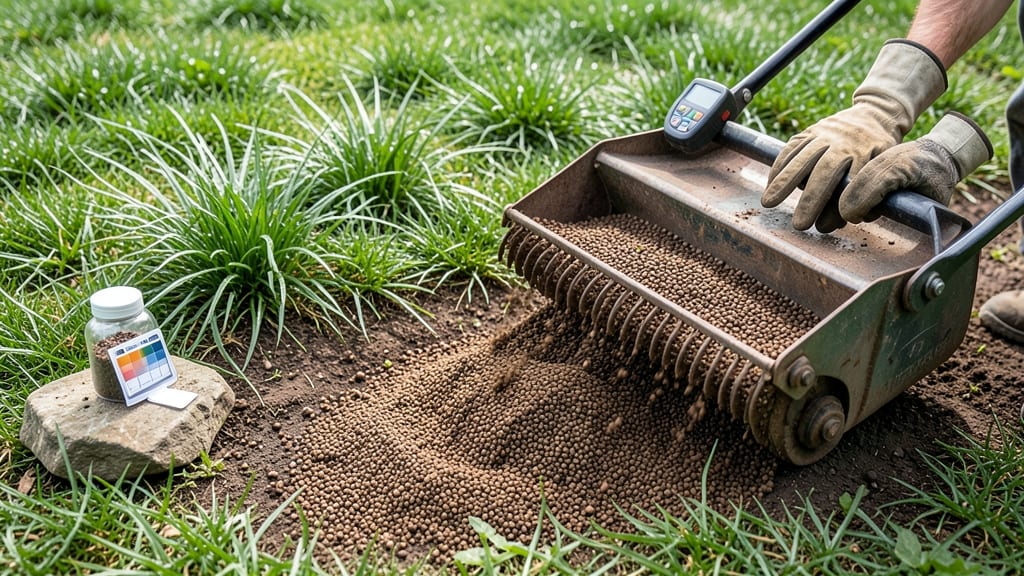
Fertilizing your Utah lawn at the right time is the key to a thick, green carpet that survives the state’s extreme seasons—cool-season grasses need early spring and fall feeding, while warm-season varieties thrive with late spring/summer care.
Here’s the problem: Utah’s dramatic shifts from scorching summers to freezing winters mean fertilizing too early or too late can waste money and even harm your grass. Skip the guesswork and learn the exact months to feed your lawn based on your grass type and local microclimate.
Whether you’re growing Kentucky bluegrass in the Wasatch Front or Bermuda grass in St. George, timing matters more than the fertilizer itself. Below, I break down the best months for each grass type, how to adjust for Utah’s high desert vs. mountain regions, and what to avoid during monsoon season.
You’ll also discover how to prep your soil, water correctly after fertilizing, and recognize when your lawn is telling you, “Enough!” Let’s get your Utah lawn looking its best without overdoing it.
Utah’s cool-season fertilizing schedule: best months for fescue, bluegrass, and ryegrass
Utah’s cool-season grasses—like Kentucky bluegrass, fine fescue, and ryegrass—thrive when fertilized at precise times tied to soil temperatures and growth cycles. Unlike warm-season grasses, these varieties grow best when days are cooler, making early spring and fall your prime fertilization windows.
Missing these timing cues can leave your lawn weak, yellow, or susceptible to weeds.
In Utah’s high desert (e.g., Salt Lake Valley) and mountain regions (e.g., Park City), soil warms up 2-4 weeks later than in warmer valleys like St. George. This delay shifts fertilization schedules, so I’ll break down adjustments for both zones.
For example, high-elevation areas often see their first spring feeding in late April, while lower elevations can start as early as mid-March.
Your cool-season lawn needs 3-4 feedings per year, but the timing is non-negotiable. Apply fertilizer when grass is actively growing but before extreme heat or cold sets in.
Over-fertilizing in summer burns roots, while skipping fall applications weakens winter resilience. Let’s dive into the exact months and what to do in each phase.
Your first fertilization should happen in late March to early April for lowland Utah or late April for mountain regions. This is your pre-emergence kickstart, where you apply a high-nitrogen fertilizer (like 24-0-5) to wake up dormant roots.
Think of it as a spring wake-up call for your grass. Water deeply after application to help nutrients penetrate the soil.
By mid-May, your grass should be actively growing, and it’s time for your second feeding. Use a balanced fertilizer (e.g., 20-5-10) to support leaf growth and root development. This is when you’ll see the most visible results—darker green blades and thicker turf.
In high desert areas, hold off until early June if soil temps stay below 60°F.
Don’t skip the fall fertilization, which is just as critical as spring. Your third feeding should occur in late August to early September, when soil temps are still warm but days are shortening.
This root-building phase strengthens your lawn’s ability to survive winter. Use a low-nitrogen, high-potassium blend (like 15-0-30) to encourage deep root growth.
For mountain regions, advance your fall feeding by 2 weeks—aim for mid-August—since cooler nights slow growth earlier. In contrast, high desert zones can delay until early September due to slower soil cooling. Always water 1 inch per week after fertilizing to prevent burn and ensure nutrient absorption.
One common mistake I see is fertilizing in summer. Utah’s heat causes fertilizer to burn grass and stresses roots, making your lawn more vulnerable to drought. Instead, focus
Warm-season grass fertilizing in Utah: bermudagrass, buffalo grass, and zoysia timing
Utah’s warm-season grasses—bermudagrass, buffalo grass, and zoysia—thrive in the state’s hot, dry summers but need precise fertilization timing to avoid stress. Unlike cool-season grasses, these varieties go dormant in winter, so feeding them at the wrong time can lead to nutrient burn or wasted fertilizer.
My approach focuses on late spring kickstarts, summer maintenance, and fall prep to align with Utah’s monsoon patterns and temperature swings.
For bermudagrass and zoysia, the growing season kicks off in late May when soil temps hit 65°F. Buffalo grass, being more drought-tolerant, starts slightly later in early June.
Skipping early-season fertilization can leave your lawn thin and vulnerable to weeds, while overdoing it during Utah’s July monsoons risks runoff and root damage. I’ve learned the hard way—timing is everything in Utah’s unpredictable climate.
One mistake I see often is fertilizing zoysia too early in spring. This grass needs consistent warmth to activate—applying fertilizer before soil temps hit 65°F can stunt growth. Instead, I test soil temps with a soil thermometer (available at local nurseries) and wait for confirmation before feeding.
For buffalo grass, which is native to Utah, I reduce nitrogen by 50% to match its low-maintenance nature.
Utah’s monsoon season (July-August) adds another layer of complexity. Heavy rains can wash away fertilizer, so I switch to water-soluble granules or liquid feeds applied after storms. Always water in ½ inch of water post-fertilization to activate nutrients without causing runoff.
Pro tip: Use a rain gauge to track monsoon totals—if you’ve had 2+ inches in a week, hold off on feeding.
Preparing for winter is just as critical. In late August, I apply a potassium-rich fertilizer to strengthen cell walls against freeze-thaw cycles. For bermudagrass, which is less cold-hardy, I add a winter mulch of straw (2-3 inches) to insulate roots.
By October 1st, all fertilization stops—this gives grasses time to harden off before Utah’s first frost, which can hit as early as mid-October in northern regions.
Remember, Utah’s alkaline soils (pH 7.5-8.5) can lock out nutrients. If your grass looks yellow despite fertilizing, test your soil and amend with sulfur or iron supplements. For most warm-season grasses, a pH of 6.0-7.0 is ideal—this small adjustment can make all the difference in nutrient uptake.
When in doubt, follow Utah State University Extension guidelines, which align perfectly with these timing principles.