
Lawn
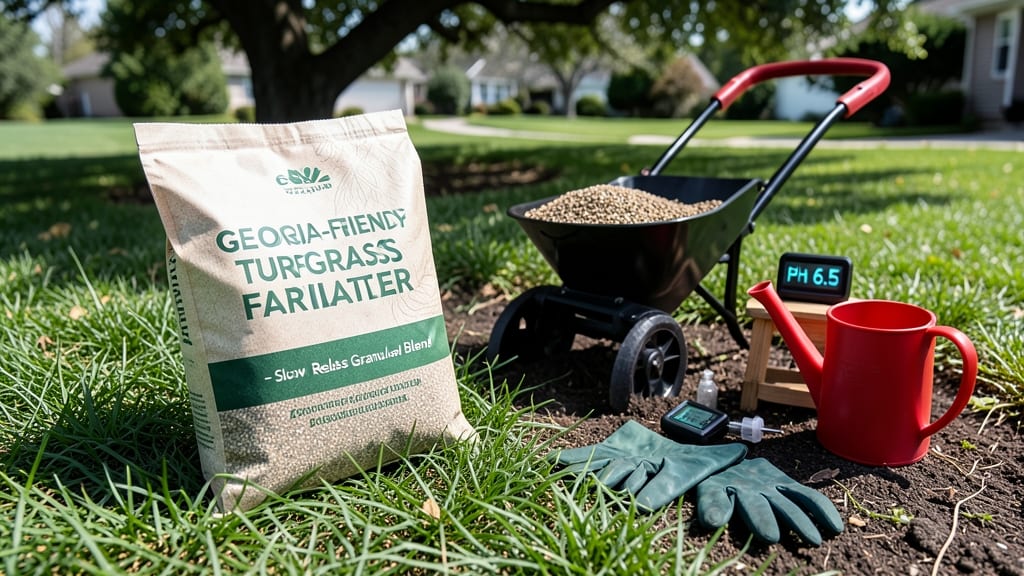
Fertilizing your lawn in Georgia at the right times can transform a patchy, struggling yard into a lush, vibrant green carpet—but miss the window, and you’ll waste money on weak results or even harm your grass.
Georgia’s humid subtropical climate means your 🌱 lawn grass has specific needs that shift with the seasons. Too early, and the fertilizer burns delicate roots; too late, and your grass won’t have the nutrients it needs to thrive.
The key is understanding the month-by-month triggers that align with Georgia’s 7a-8b zones, from the first warm days of spring to the crisp air of fall.
In this guide, I’ll break down the exact timing for fertilizing, including when to apply pre-emergent vs. post-emergent treatments, how to adjust for drought or heavy rain, and which types of fertilizer work best for Georgia’s soil.
Whether you’re in the Piedmont or the coastal plains, you’ll leave with a clear schedule tailored to your yard.
Ready to skip the guesswork? Let’s dive into the step-by-step plan that keeps your lawn looking its best year-round.
Georgia’s fertilization timeline: month-by-month schedule by climate Zone
Georgia’s climate varies dramatically between its northern and southern regions, so your fertilization strategy must adapt to Zone 7b-8a (North Georgia) or Zone 8a-9a (South Georgia). In colder northern areas, grasses wake up earlier in spring, while southern lawns stay active longer into fall.
The key is aligning applications with soil temperatures (55°F+ for cool-season grasses, 65°F+ for warm-season) and avoiding extreme heat or drought periods.
For both regions, I recommend starting with a soil test in late winter to check pH (ideal: 6.0–7.0) and nutrient levels.
Northern Georgia’s clay-heavy soils often need extra phosphorus, while southern lawns benefit from potassium to handle humidity. Pre-emergent herbicides should go down 4–6 weeks before warm-season grasses (like Bermuda) germinate—typically late February in South Georgia and early March in North Georgia.
Here’s how to sync your fertilization with Georgia’s two distinct climates, using temperature and seasonal triggers as your guide:
| Month | North Georgia (7b-8a) | South Georgia (8a-9a) | Temperature Trigger | Fertilizer Type |
|---|---|---|---|---|
| February | Pre-emergent (late Feb) | Pre-emergent (mid-Feb) | Soil temps 55°F+ | Granular pre-emergent |
| March | Spring green-up (late March) | Spring green-up (early March) | Daytime temps 60°F+ | High-nitrogen (30-0-4) |
| April | Second feeding (mid-April) | Second feeding (late March) | Grass actively growing | Slow-release (24-0-10) |
| May | Light feed (early May) | Transition to summer (late April) | Before summer heat | Low-nitrogen (10-0-20) |
| June-August | Skip (dormancy) | Light feed (September) | Temps >85°F | Avoid fertilizing |
| September | Fall root growth (early Sept) | Fall root growth (late Aug) | Daytime temps 75°F+ | High-potassium (10-0-20) |
| October | Final feeding (mid-Oct) | Final feeding (early Oct) | Before first frost | Winterizer (20-0-10) |
In North Georgia (Zone 7b-8a), cool-season grasses like tall fescue dominate, so focus on spring and fall feedings when soil temperatures hover between 55°F–75°F. The critical window is March–May for green-up and September–October for root strengthening. Avoid fertilizing when daytime highs exceed 85°F—your grass will burn.
For South Georgia (Zone 8a-9a), warm-season grasses like Bermuda and Zoysia rule, meaning you’ll shift to a late spring and early fall schedule.
Start pre-emergent in mid-February to stop crabgrass, then apply your first fertilizer when soil temps hit 65°F. The September feeding is non-negotiable—it preps roots for winter dormancy in the humid south.
Pro tip: Use a soil thermometer to track temperatures—this is your best predictor of when to fertilize.
In North Georgia, wait until soil temps consistently stay above 55°F for 5 days; in South Georgia, aim for 65°F. Rainfall matters too: Apply fertilizer 24–48 hours before a predicted downpour to help nutrients absorb.
One common mistake?
Signs your Georgia lawn needs fertilizer (and when to skip it)
Your Georgia lawn sends clear signals when it’s hungry for nutrients. Yellowing patches, thin or patchy growth, and increased weeds are all red flags that your grass isn’t getting what it needs.
But before grabbing the fertilizer, check if the issue is soil compaction, poor watering, or seasonal dormancy—not just a lack of nutrients.
Georgia’s humid climate and clay-heavy soils mean nutrients wash away quickly, especially after heavy rains. If your lawn looks lighter green than neighbors' or recovers slowly after mowing, it’s likely time to feed it.
But timing matters—applying fertilizer at the wrong time can burn grass or encourage weak growth before winter.
⚠️ When to Skip Fertilizing in Georgia
❌ Avoid fertilizing during these conditions:
- Drought stress: Grass won’t absorb nutrients effectively.
- Heavy rainfall: Nutrients will wash away before roots can use them.
- Extreme heat (90°F+): Risk of fertilizer burn increases.
- Winter dormancy: Grass isn’t actively growing in North Georgia (Dec-Feb).
Wait for stable weather—ideal temps are 50-85°F with no rain in forecast.
If your lawn shows dark green but spongy patches, it might be suffering from fungal disease like brown patch or dollar spot—not a nutrient deficiency. In this case, skip fertilizer and treat with a fungicide instead.
Georgia’s warm, wet springs create perfect conditions for these issues, so always inspect closely before fertilizing.
Weed surges are another clue your lawn is nutrient-deficient. Weeds thrive when grass lacks nitrogen or iron, so a balanced fertilizer (like 30-0-4) can restore equilibrium. But wait until weeds are actively growing—typically March-April or September—to apply pre-emergent herbicides alongside fertilizer for best results.
For cool-season grasses (like tall fescue), fertilize in early spring (March) and fall (October). Warm-season grasses (like Bermuda or Zoysia) need feeding in late spring (May) and early summer (June).
Always test soil pH first—Georgia’s clay soils often need lime (to raise pH) or sulfur (to lower pH) before fertilizer will work.
Pro tip: Walk your lawn in the morning after dew dries. If you see dull, limp blades that don’t spring back, it’s a sign of low potassium or stress. Pair fertilizer with core aeration to help roots access nutrients—especially in high-traffic areas where soil compacts easily.