
Lawn
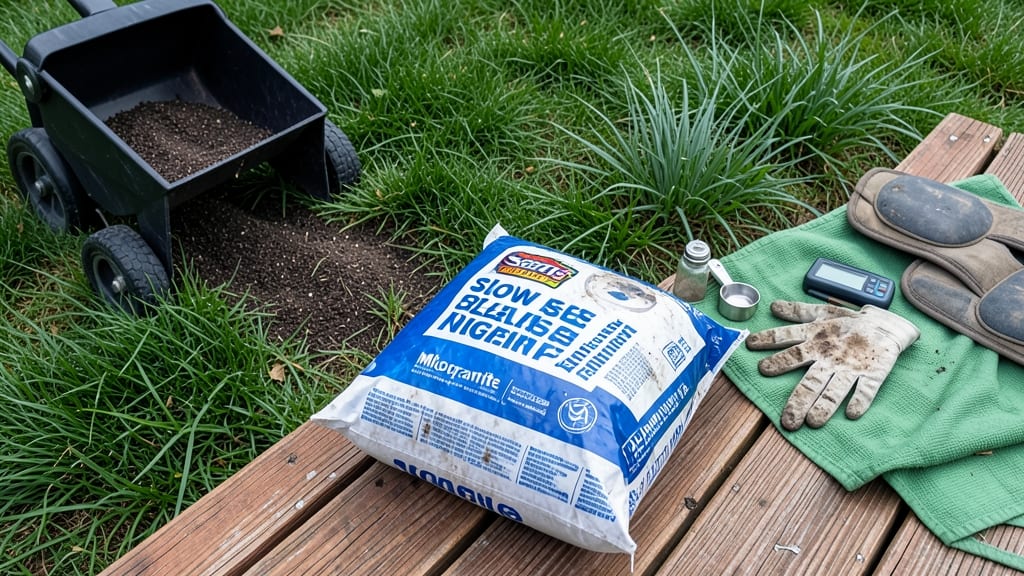
Fertilizing your lawn in Colorado at the right time—spring and fall—is the key to a thick, green carpet that survives the state’s dry air and altitude swings.
Skip the summer heat or you’ll end up with brown patches and wasted dollars. Colorado’s diverse climate zones mean what works in Denver won’t cut it for Colorado Springs or the Western Slope, so timing matters more than most gardeners realize.
Below, I break down the best months for your specific region, how to read your grass’s signals (yes, it’s talking to you), and why a soil test could save you from over-fertilizing.
Ready to feed your lawn the right way? Let’s get started with a schedule that matches your microclimate.
Colorado fertilization timeline by climate zone and grass type
Colorado’s three distinct climate zones—Front Range, Western Slope, and Mountain regions—each require unique fertilization timing to support healthy grass growth.
The Front Range (Denver, Colorado Springs) thrives with cool-season grasses like Kentucky bluegrass and fescue, while the Western Slope (Grand Junction, Durango) often features Bermuda grass or buffalo grass adapted to drier conditions. Mountain lawns (above 7,000 ft) need adjustments for shorter growing seasons and cooler temps.
Timing is critical: fertilizing at the wrong time can burn grass, attract pests, or waste resources. For example, summer fertilization in the Front Range stresses lawns already struggling with heat and drought.
Meanwhile, high-altitude areas may need an earlier spring start to compensate for a shorter growing season. Let’s break it down by season and zone to keep your lawn lush year-round.
🌱 Key Rule: Always test your soil’s pH (6.0-7.5 ideal) before fertilizing. Colorado’s thin, alkaline soils often need amendments like sulfur or lime to optimize nutrient uptake. Skip this step, and your fertilizer money goes to waste.
Below is your zone-specific fertilization schedule, tailored for cool-season (Front Range) and warm-season (Western Slope) grasses. Mountain regions follow Front Range timing but with earlier spring and later fall adjustments due to altitude.
For the Front Range, your cool-season grasses wake up in spring and need a high-nitrogen feed in late April to early May.
This kickstarts growth after winter dormancy. June is your last summer feed—avoid fertilizing in July and August, as heat stress makes grass vulnerable to burn and disease. Instead, focus on deep watering (1 inch per week) to support root growth.
In fall, switch to a winterizer fertilizer (low nitrogen, high potassium) in late September to strengthen roots for winter.
This is non-negotiable for Front Range lawns—skipping it leaves grass weak for early freezes. Microclimate matters: Lawns in Colorado Springs (higher elevation) may need fertilization 1-2 weeks earlier than Denver due to cooler temps.
The Western Slope follows a different rhythm. Warm-season grasses like Bermuda grass don’t need spring fertilization—they stay dormant until soil temps hit 65°F+. Instead, feed in June and August to fuel rapid growth during hot months. Fall fertilization is unnecessary; these grasses go dormant by October.
Focus on drought-resistant varieties like buffalo grass to reduce water needs.
Mountain regions (think Estes Park or Leadville) require earlier spring and later fall adjustments. Start fertilizing in early May (2 weeks ahead of Front Range) to compensate for a shorter growing season.
Limit summer feeds to June only, and apply a winterizer in early October before first frost. Altitude tip: Use slow
Signs your Colorado lawn needs fertilizer (and when to avoid it)
Your Colorado lawn sends clear signals when it's hungry for nutrients. Yellow patches that don't green up after mowing or slow recovery from foot traffic are classic signs your grass needs fertilizer. These symptoms often appear in cool-season grasses like Kentucky Bluegrass or Fescue, which dominate Colorado lawns.
Another red flag is weed invasion, especially crabgrass or dandelions, which thrive when your lawn is nutrient-deficient. If weeds are taking over, your grass is struggling to compete. Colorado's thin, alkaline soils often lack essential nutrients like nitrogen and potassium, making fertilization crucial for healthy growth.
⚠️ callout-warning ⚠️
⚠️ When NOT to Fertilize Your Colorado Lawn
Avoid fertilizing during these critical periods:
- Drought conditions – Never fertilize when your lawn is stressed by dry spells. Colorado's unpredictable weather makes this a common mistake.
- Recent seeding – Wait 6-8 weeks after overseeding to avoid burning new grass.
- Extreme temperatures – Skip fertilization during heatwaves (90°F+) or early freezes (below 32°F).
- Hail damage – Wait until new growth appears (usually 2-3 weeks) before applying fertilizer.
Pro Tip: Test soil pH before fertilizing—Colorado's alkaline soils often need sulfur or iron supplements.
Timing matters just as much as the signs. In Colorado, late spring (May-June) and early fall (September) are ideal windows for fertilization. These periods align with your lawn's natural growth cycles, helping it store nutrients for winter or recover from summer dormancy.
Pay attention to grass blade color—healthy Colorado lawns should be deep green, not pale or yellowish. If your grass looks thin or patchy, it's often a sign of nutrient deficiency or compaction.
Aerating before fertilizing can help roots absorb nutrients more effectively, especially in high-traffic areas.
For mountain regions (USDA Zones 5-6), fertilize 2-3 weeks earlier than Front Range areas to account for cooler temperatures. High-altitude lawns grow more slowly, so light applications every 8-10 weeks work better than heavy spring feedings.
Remember: Over-fertilizing can harm your lawn, causing burnt patches or excessive thatch buildup. Always follow the 1 lb per 100 sqft guideline and water thoroughly after application to activate nutrients. Colorado's low humidity means you'll need to water deeply and frequently to prevent fertilizer burn.