
Lawn
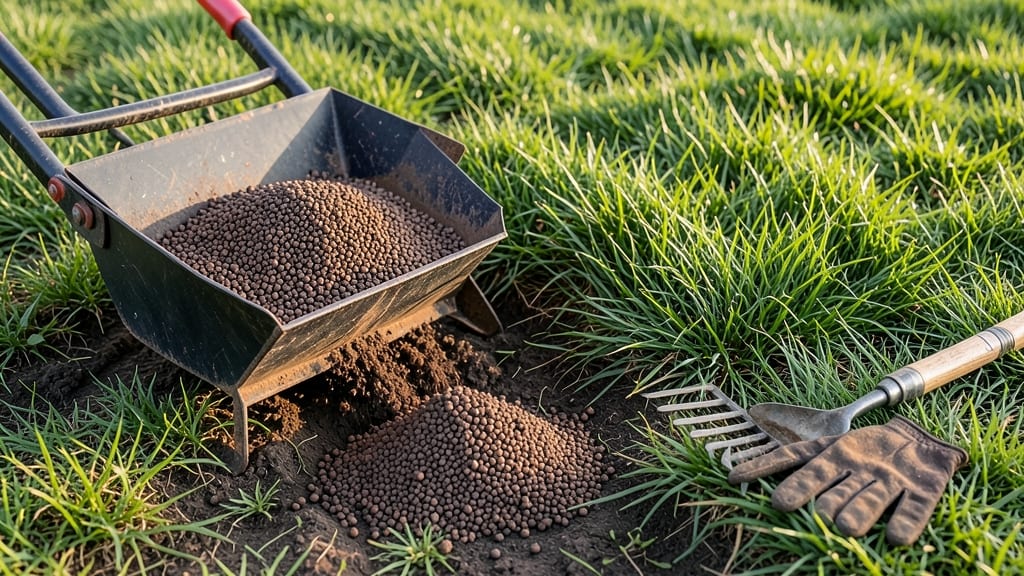
To fertilize your lawn in fall, time it by grass type and climate: cool-season grasses (like Kentucky bluegrass) need feeding in early fall (late August to mid-October), while warm-season grasses (like Bermuda) should get their final dose by late September. Northern regions should aim for September, while Southern zones can extend to October or November.
Fall fertilization works because cool-season grasses grow actively until frost, allowing them to store nutrients for winter survival. 🌱 Warm-season grasses, however, enter dormancy earlier and need their final feeding before shutting down. I always check my local frost dates—this helps me adjust timing for early or late freezes.
For example, if your area gets an unexpected early frost in October, shift your feeding to September to avoid stressing the grass.
Your climate zone plays a bigger role than you might think. In USDA Zones 3-5, aim for September fertilization, while Zones 6-8 can wait until October. Southern zones (9-10) often have milder winters, so November works best.
Pro tip: soil temperature matters more than calendar dates—wait until it drops below 70°F but before hard freezes hit.
💡 In This Article
- Fall Fertilization Timing for Cool-Season vs Warm-Season Grasses
- Climate Zone Fertilizer Schedule: Northern vs Southern Lawn Care
Fall fertilization timing for cool-season vs warm-season grasses
Cool-season grasses like Kentucky bluegrass, fescue, and ryegrass thrive in cooler temperatures, which is why they need fall fertilization. When temperatures drop to 60-70°F in late summer, these grasses enter their second growth cycle of the year. This is their last chance to absorb nutrients before winter dormancy.
The ideal timing is 6-8 weeks before the first frost, allowing them to store carbohydrates and nitrogen in their roots—think of it like a grassy bear preparing for hibernation. 🌿
Warm-season grasses, such as Bermuda, Zoysia, and St. Augustine, behave differently. They grow best in hot weather and go dormant when temperatures fall below 50°F. Their final fertilization should happen 4-6 weeks before dormancy, typically by late September.
This timing ensures they have enough nutrients to strengthen their root systems before shutting down. For example, Bermuda grass in Zone 8 might need feeding by September 15, while the same grass in Zone 9 could wait until October 1.
The key difference lies in how each grass type responds to temperature shifts. Cool-season grasses continue growing until frost, while warm-season grasses slow down as days grow shorter. This biological clock is why timing matters so much—miss the window, and your grass won’t store enough energy to survive winter.
For instance, applying fertilizer too late in fall risks burning the grass before it can absorb nutrients, while applying too early might encourage weak growth vulnerable to cold stress. 🌡️
Soil temperature is your best guide. Use a soil thermometer to check when it drops to 65°F—this is the sweet spot for cool-season grasses to start their fall growth spurt. For warm-season grasses, aim for 70°F or slightly cooler, signaling their dormancy phase.
Pro tip: If your area experiences early freezes, adjust your schedule by 2-3 weeks earlier. I’ve seen lawns in Zone 5 suffer from late fertilization when unexpected frost hit in early October.
Another factor is the type of fertilizer you use. Cool-season grasses benefit from a high-nitrogen blend (like 24-0-6) to promote growth, while warm-season grasses need a balanced or low-nitrogen formula (like 10-10-10) to encourage root development without excessive top growth.
The right fertilizer type, combined with proper timing, can make the difference between a lush spring lawn and one struggling to recover. 💡
Don’t overlook the role of rainfall or irrigation. If your area experiences drought in early fall, water deeply after fertilizing to help nutrients penetrate the soil. Conversely, if heavy rains are forecast, delay fertilization to avoid washing away nutrients.
I once saw a neighbor’s lawn turn yellow after fertilizing right before a downpour—always check the weather forecast! 🌧️