
Lawn
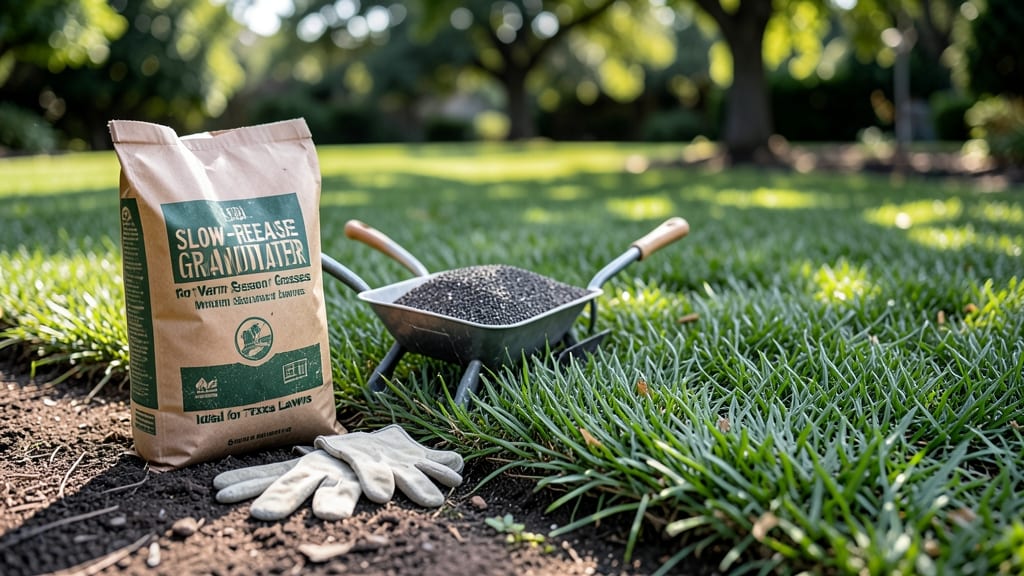
To fertilize your lawn in Texas, time it by grass type and heat zone: cool-season grasses (like Bermuda) should be fed in early spring (March) and late summer (August), while warm-season grasses (like St. Augustine) respond best to fertilization in April-May and September-October. Your Texas heat zone (8a-10b) determines exact timing adjustments.
Texas lawns thrive when fertilization aligns with their natural growth cycles. Cool-season grasses like Bermuda and Zoysia grow actively in spring and fall, so feeding in March and August supports their peak seasons.
Warm-season grasses such as St. Augustine and Centipede, however, prefer the warmer months, making April-May and September-October ideal for nutrient boosts. 🌱 The heat zone also plays a role—northern Texas (8a) may need earlier spring applications, while southern Texas (10b) can extend summer feeding slightly.
Always pair fertilization with soil testing to avoid over-fertilizing, which can harm your lawn.
For best results, use a slow-release fertilizer in spring to provide steady nutrients as your grass wakes up from dormancy. In late summer, opt for a balanced formula (16-4-8 or similar) to help grasses recover from heat stress.
Pre-emergent herbicides should be applied in February-March to prevent weeds before they sprout, but avoid fertilizing right after—wait at least 2-3 weeks to let the soil settle.
💡 In This Article
- Texas Grass Types and Their Ideal Fertilization Timing
- Step-by-Step Texas Lawn Fertilization Schedule by Month
Texas grass types and their ideal fertilization timing
Texas lawns are divided into two main categories: cool-season grasses and warm-season grasses, each with distinct growth patterns that dictate when they need nutrients.
Cool-season grasses like Bermuda, Zoysia, and Buffalo grass thrive when temperatures drop below 80°F, making early spring (March) and late summer (August) their most active growth periods. This is when roots establish deeply and blades recover from winter dormancy or summer heat stress.
Warm-season grasses such as St. Augustine, Centipede, and carpetgrass, however, peak during the hottest months (April-May and September-October) when soil temperatures exceed 70°F, aligning with their natural dormancy in cooler seasons.
The science behind this timing lies in photosynthesis efficiency and root activity. Cool-season grasses photosynthesize most effectively in cooler weather, while warm-season varieties rely on higher temperatures to trigger rapid cell division.
For example, Bermuda grass can grow up to 0.5 inches per day during peak spring months when fertilized correctly, whereas St. Augustine grows more slowly but benefits from summer feeding to combat heat-induced stress.
Your Texas heat zone (8a-10b) further refines these windows—northern Texas lawns may need fertilization 2-3 weeks earlier than southern counterparts due to cooler spring temperatures.
Here’s how to match fertilization to your grass type:
- Cool-season grasses (Bermuda, Zoysia): Apply half the annual fertilizer in March (early spring) and the remaining half in August (late summer) to avoid burning roots during heat spikes.
- Warm-season grasses (St. Augustine, Centipede): Split applications into April-May (pre-summer growth) and September-October (post-summer recovery) to sync with their active cycles.
- Transition zones (e.g., Dallas/Fort Worth): Use a slow-release fertilizer (e.g., 16-4-8) in March to bridge cool and warm-season needs, reducing stress on grass adapting to temperature shifts.
Overlooking these cycles can lead to fertilizer burn (visible as yellow or brown patches) or wasted nutrients if applied during dormancy. For instance, fertilizing St. Augustine in January forces the grass to grow when it’s naturally dormant, draining energy reserves and weakening its resilience to Texas heat.
Conversely, feeding Bermuda in July risks salt buildup in the soil, as high temperatures accelerate nutrient breakdown and reduce root absorption.
Soil temperature is your best indicator—use a soil thermometer to confirm when it reaches 65°F+ for warm-season grasses or 55-65°F for cool-season varieties before applying fertilizer. This precision ensures nutrients align with root activity, maximizing uptake and minimizing waste. 🌡️