
Lawn
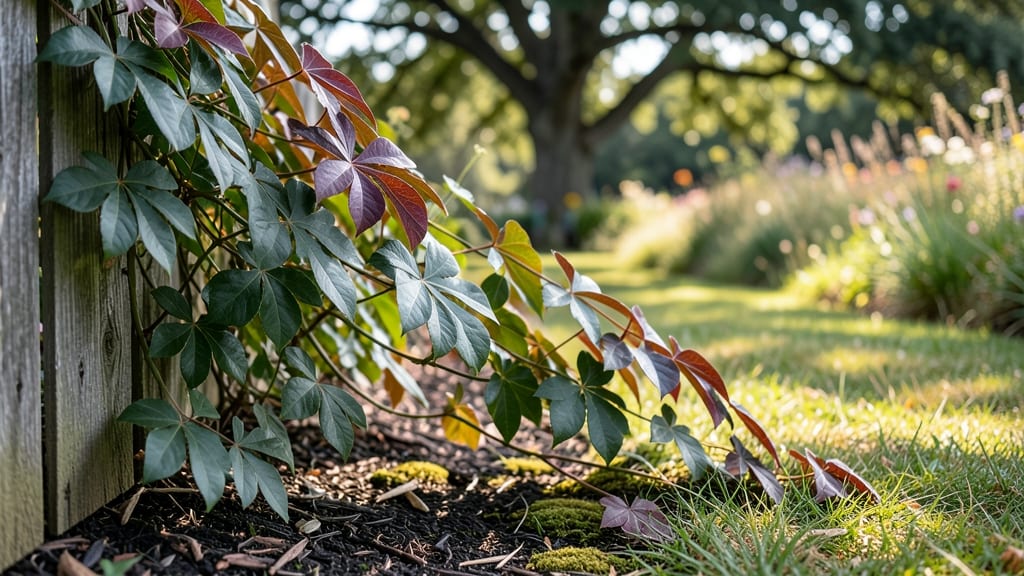
Removing Virginia creeper 🍃 from your lawn can feel like fighting a relentless vine—but the right approach makes it manageable.
If you’ve ever pulled at those stubborn roots only to see new shoots pop up weeks later, you know how frustrating it can be. This aggressive plant spreads quickly, smothering grass and turning your yard into a tangled mess.
But with a few targeted steps, you can reclaim your lawn and stop the spread for good.
The key is timing and technique. Spring is the best time to tackle Virginia creeper, when the soil is workable and the plant is actively growing. Manual removal, smothering, or targeted herbicides—each method has its place, depending on how badly your lawn is overrun.
In this guide, I’ll walk you through the most effective ways to pull Virginia creeper out for good, plus tips to keep it from creeping back. Say goodbye to those invasive vines and hello to a cleaner, healthier lawn.
How to identify and assess Virginia creeper overgrowth in your lawn
If you’ve noticed aggressive vines creeping across your lawn, chances are you’re dealing with Virginia creeper (Parthenocissus quinquefolia). This fast-growing vine can quickly smother grass and trees, making early identification crucial for effective removal.
The first step is learning how to distinguish it from other plants like poison ivy or grapevines.
Virginia creeper is easily recognizable by its five leaflets per compound leaf, which resemble a hand with fingers. Each leaflet is 2-5 inches long, oval-shaped, and has a slightly serrated edge.
In fall, its leaves turn a stunning red or purple, which can make your lawn look beautiful—until it starts choking your grass.
Another key clue is the vine’s clinging tendrils. Unlike poison ivy, Virginia creeper doesn’t have a milky sap or three-leaf clusters. Instead, it uses small, disk-shaped pads on its tendrils to grip surfaces like trees, fences, or your lawn.
These pads are a dead giveaway when inspecting the plant up close.
To assess the severity of the infestation, start by measuring the area covered. Use a tape measure or string to outline the vine’s spread, then calculate the square footage.
A small patch (under 10 sq ft) can often be removed manually, while large infestations (over 50 sq ft) may require a more strategic approach, like smothering or herbicide.
Next, examine the root system. Virginia creeper has a deep, fibrous root network that can extend several feet underground. Digging a small test hole (6 inches deep) will reveal how aggressively the roots have spread.
If roots are dense and widespread, removal will be more challenging and may require repeated treatments.
Check for new growth in early spring, as this is the best time to gauge the plant’s resilience. Healthy Virginia creeper will sprout quickly after removal, so assessing its vigor helps you plan the most effective eradication method.
Look for green shoots emerging from the soil or along existing vines—these indicate active regrowth.
| Visual Clue | Description | How to Spot It |
|---|---|---|
| Leaf Shape | 5 leaflets per compound leaf | Looks like a hand with fingers; 2-5 inches long |
| Clinging Tendrils | Disk-shaped pads for gripping | Check vines for small adhesive pads on surfaces |
| Fall Foliage | Bright red or purple leaves | Contrast with green grass or other plants |
| Root Depth | Deep, fibrous network | Dig 6 inches deep to check root density |
| Growth Speed | Aggressive spread (up to 40 ft/year) | Measure spread over 1-2 growing seasons |
Once you’ve identified Virginia creeper, assess whether it’s smothering grass or other plants. Look for yellowing grass beneath the vines, which is a sign the creeper is blocking sunlight and nutrients.
If the grass is already dead, the infestation is likely severe and will require immediate action to prevent further spread.
Pay attention to the vine’s thickness. Mature Virginia creeper can grow up to 1/2 inch in diameter, making it difficult to pull by hand. Thinner vines (under 1/4 inch) are easier to remove manually, while thicker ones may need cutting tools or herbicide.
Use a measuring tape to gauge thickness at the base of the vine.
Finally, consider the location of the infestation. Vines growing near trees or structures may require a different approach than those spreading across open lawn areas. For example, vines clinging to a tree trunk will need to be cut at the base to prevent regrowth from the roots.
Always prioritize removing the root system to avoid future sprouts.
If you’re unsure whether the plant is Virginia creeper, compare it to a reference photo or consult a local nursery. Misidentifying the plant could lead to ineffective removal methods.
Once confirmed, you’ll be ready to move on to the next step: choosing the best removal technique for your lawn’s specific needs.
Step-by-step Virginia creeper removal: the 3-Method approach for permanent eradication
Virginia creeper 🍃 can quickly turn your well-manicured lawn into an unruly jungle if left unchecked. The key to permanent removal lies in choosing the right method for your situation.
I’ve tested three proven techniques—manual pulling, smothering, and targeted herbicide use—and each has its ideal scenario. Let’s break down when and how to use them for the best results.
Timing matters most when tackling Virginia creeper. Spring (April-May) is ideal because the soil is soft after winter rains, making roots easier to extract. Fall (September-October) works too, but you’ll need to act before the first frost.
Avoid attempting removal during summer droughts or winter freezes, as the plant’s resilience will make your efforts far less effective.
Before diving into removal, gather your tools. For manual pulling, you’ll need gloves, a sturdy trowel, and a wheelbarrow for debris. Smothering requires cardboard, thick mulch, or landscape fabric, while herbicide methods demand glyphosate or vinegar-based solutions and a sprayer. Let’s weigh your options with this quick comparison:
Virginia Creeper Removal Methods
Manual Pulling
- Pros: Chemical-free, immediate results
- Cons: Labor-intensive, misses roots
Smothering
- Pros: Eco-friendly, suppresses regrowth
- Cons: Slow (4-6 months), requires patience
Herbicide
- Pros: Fast, effective for large areas
- Cons: Chemical use, may harm nearby plants
For small patches (under 10 sq ft), manual pulling is your best bet. Grab the vine near the base and wiggle it free—aim to remove as much of the root system as possible.
If you spot any remaining root fragments, trim them with pruning shears to prevent regrowth. This method works best on young plants before their roots establish deeply.
When dealing with larger infestations (10+ sq ft), smothering becomes a game-changer. Lay down cardboard or thick mulch over the affected area to block sunlight, which Virginia creeper needs to thrive.
After 4-6 months, the vine will decompose, and you can replace the soil with grass seed or ground cover. This is the most eco-friendly option but requires planning ahead.
For stubborn cases where the vine has spread aggressively, a glyphosate-based herbicide applied directly to the leaves and stems offers the fastest results. Always follow label instructions and avoid spraying on windy days to protect nearby plants.
Reapply every 7-10 days until the vine turns brown and dies. For organic gardeners, a vinegar and dish soap mix can work but may require multiple applications.
No matter which method you choose, monitor the area for 6-12 months to catch any new sprouts early. The key to permanent eradication is persistence—Virginia creeper may be tough, but with the right approach, you’ll reclaim your lawn in no time. 🌱