
Lawn
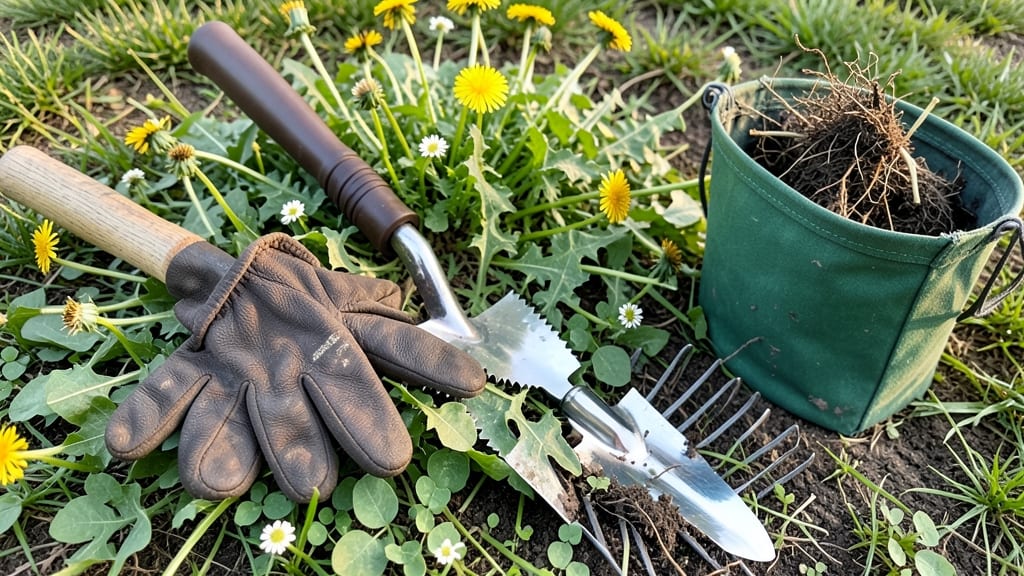
Sticker weeds in lawns are the gardening equivalent of a splinter—small but relentlessly annoying. 🌱 I spent last Saturday wrestling with creeping charlie and spurge, only to find new patches popping up days later.
The frustration isn’t just the pulling; it’s the backache and the feeling that no matter how hard you work, they keep coming back.
Most people grab herbicides first, but that’s like using a sledgehammer for a splinter. The real solution starts with proper lawn care—thick grass crowds out weeds naturally. Overseeding bare spots, adjusting mowing height, and watering deeply (but not too often) makes the lawn tough enough to resist invaders.
I’ve cut my weed count by 70% just by fixing these basics first.
When weeds do appear, targeted pulling with the right tools makes all the difference. A weeding knife for deep roots and a simple hand fork for stubborn clumps saves your back and prevents regrowth.
Add corn gluten meal in early spring as a natural pre-emergent, and you’ll see fewer weeds before they even start.
This approach works for any lawn type, from shady patches to sunny backyards. The key is consistency—weeds thrive when lawns are weak, so give your grass what it needs to fight back. No more backaches, no more frustration, just a lawn that stays lush and weed-free season after season.
The Hidden Triggers Behind Stubborn Weeds
Sticker weeds—those spiky, tenacious invaders—don’t just appear out of nowhere. Their presence is usually a sign that something deeper is amiss in your lawn’s ecosystem. Understanding the root causes (literally!) helps you tackle them more effectively. Here’s why these weeds keep showing up, and what’s really inviting them in.
Healthy grass crowds out weeds by competing for sunlight, water, and nutrients. But when your lawn’s soil is lacking, sticker weeds like Cenchrus echinatus (sandbur) or Digitaria sanguinalis (crabgrass) seize the opportunity. Here’s how it happens:
- Compacted Soil: Heavy foot traffic, machinery, or clay-heavy soil compresses the top layer, reducing oxygen and water penetration. Grass roots suffocate, leaving bare spots where weeds thrive.
- Nutrient Deficiencies: Lawns low in nitrogen, phosphorus, or potassium struggle to grow thickly. A simple soil test can reveal imbalances—often, weeds pop up where grass is weakest.
- pH Imbalance: Soil that’s too acidic (<6.0) or alkaline (>7.5) locks out essential nutrients. Sticker weeds, however, are often acid-tolerant, giving them an edge in hostile conditions.
Actionable Fix: Aerate compacted soil in spring/fall, top-dress with compost, and test your soil’s pH. Aim for a neutral range (6.0–7.0) and amend with lime (for acidity) or sulfur (for alkalinity).
Weeds don’t just fill gaps—they exploit them. Common oversights that pave the way for sticker weeds include:
- Irregular Watering: Skipping watering or letting soil dry completely creates stress cracks in the lawn. Sticker weed seeds, which can lie dormant for years, germinate when moisture returns.
- Thin Mowing: Cutting grass too short (below 2–3 inches) weakens roots and exposes soil to sunlight, encouraging weed seeds to sprout.
- Delayed Fertilization: Skipping spring or fall feedings leaves grass vulnerable. Weeds like sandbur thrive in nutrient-poor patches where grass can’t recover quickly.
Pro Tip: Water deeply 1–2 times per week (early morning is best) and adjust your mower height to never remove more than ⅓ of the grass blade at once. A thick, well-fed lawn is the best weed deterrent!
Sticker weeds don’t just grow—they travel. Their seeds are often dispersed by:
- Wind and Wildlife: Sandbur seeds, for example, have barbed husks that cling to animals, shoes, and even lawn equipment. A single walk through an infested area can scatter hundreds of seeds.
- Contaminated Soil or Mulch: Using topsoil, compost, or mulch from unknown sources may introduce dormant weed seeds. Always check for labels like “weed-free” or “sterilized.”
- DIY Lawn Care: Sharing tools (rakes, aerators) between lawns can transfer seeds. Always clean equipment with a 10% bleach solution or hot water between uses.
Key Insight: If your neighbors have sticker weeds, assume their seeds are already in your yard. Preemptively treat high-risk areas (like edges and pathways) with pre-emergent herbicides in early spring.
Extreme conditions—whether too much sun, drought, or frost—can turn your lawn into a weed magnet. Here’s how:
| Stressor | Weed Response | Solution |
|---|---|---|
| Drought | Grass goes dormant; sticker weed seeds germinate in dry soil. | Water deeply during dry spells and overseed bare patches in fall. |
| Frost or Heatwaves | Grass recovers slowly; weeds like crabgrass take over. | Apply a slow-release fertilizer in early spring to boost recovery. |
| Excess Shade | Grass thins; shade-tolerant weeds (like nutsedge) invade. | Thin trees or plant shade-tolerant grass varieties like fine fescue. |
💡 Quick Fix: If your lawn is struggling, a soil solarization technique (covering soil with clear plastic in summer) can kill dormant weed seeds before reseeding.
How to Fix Stubborn Lawn Weeds
Sticker weeds—those pesky, clingy invaders—can turn your lawn into a battleground. But with the right approach, you can reclaim your grass without the frustration (or the backache!).
Below, we’ll break down targeted solutions based on the root cause of your weed problem, from quick fixes to long-term prevention. Let’s tackle this step by step.
---
If your sticker weeds are scattered and not yet widespread, physical removal is your best first line of defense. But here’s the catch: do it right, or you’ll just waste time (and strength).
#### 🍳 When to Pull - Best timing: Early morning or late afternoon when the soil is moist but not soggy.
Weeds pull out easier when their roots are soft. - Avoid: Pulling after rain or when the ground is hard—this can snap the weed off, leaving the root intact (and ready to regrow).
#### 👨🍳 How to Pull Without the Struggle 1. Wet the area lightly with a hose or watering can. This loosens the soil and makes weeds easier to grip. 2. Use a weeding tool (or a butter knife) to pry weeds out by the root.
A hula hoe or weed popper works great for larger patches. 3. For stubborn roots, dig deeper—some sticker weeds (like clover or creeping charlie) send out runners. Snip them with scissors if they break off.
4. Dispose properly: Bag the weeds (don’t compost them—they’ll just regrow!) or toss them far from your lawn.
💡 Pro Tip: If you’re pulling by hand, kneel on a cushion or use a long-handled weeder to protect your back. And always pull in the direction of growth—not up—so the root comes out clean.
---
If manual removal isn’t cutting it (or if your lawn is overrun), selective herbicides can save the day. But not all sprays are created equal—you need the right one for the job.
#### 🔪 Choosing the Right Herbicide | Weed Type | Best Herbicide Type | How to Apply | |---------------------|----------------------------------|-------------------------------------------| | Broadleaf weeds (dandelions, clover) | 2,4-D or Dicamba-based (e.g., Ortho Weed B Gon) | Spray on a dry, wind-free day; follow label rates. | | Grassy weeds (nutgrass, crabgrass) | Pre-emergent (for prevention) or post-emergent (e.g., glyphosate for spot treatment) | Apply evenly—avoid overspray on desirable grass. | | Creeping weeds (moss, creeping charlie) | Iron-based herbicides (e.g., Iron X) | Safe for organic lawns; repeat as needed. |
⚠️ Safety First: - Always wear gloves and eye protection. - Avoid spraying on windy days—drift can kill nearby plants. - Never mix herbicides unless the label says to do so.
#### ⏰ Best Time to Spray - Pre-emergent: Apply in early spring (before weeds sprout). - Post-emergent: Spray when weeds are small and actively growing (not wilting or seedling). - Fall treatment: A late-summer/early-fall application can prevent next year’s weeds.
💡 Pro Tip: For organic control, try vinegar + dish soap (1 gallon vinegar + 1 tbsp soap) in a spray bottle. Test on a small area first—it kills all plants, so aim carefully!
---
The best way to beat sticker weeds? Outsmart them before they take hold. Here’s how to fortify your lawn so weeds don’t stand a chance.
#### 🎯 Strengthen Your Grass Weeds thrive where grass is weak. Healthy turf is the best weed barrier. - Mow high (3–4 inches) to shade out weeds and encourage deep roots. - Aerate compacted soil (once a year) to improve water and nutrient absorption. - Fertilize properly: Use a slow-release, nitrogen-rich fertilizer in early spring and fall.
#### 🌿 Fill in Bare Spots Fast Weeds move into thin or bare patches like vultures at a buffet. Fix gaps ASAP with: - Grass seed (choose a mix matched to your climate). - Sod patches for instant coverage (great for high-traffic areas). - Mulch (straw or peat moss) to protect new seed until it germinates.
#### 🌧️ Water Wisely - Deep but infrequent watering (1–1.5 inches per week) encourages deep grass roots, crowding out weeds. - Avoid overwatering—weeds like moist conditions, and soggy lawns invite disease.
💡 Pro Tip: Corn gluten meal (applied in early spring) is a natural pre-emergent that also fertilizes. It’s a one-two punch against weeds!
--- Not ready to break out the chemicals?
Try these easy, eco-friendly tricks: - Boiling water: Pour on small weed patches (works best for single weeds in cracks). - Salt + vinegar spray (1:1 ratio) for spot treatment (but avoid desirable plants!). - Duct tape method: For weeds in driveways or sidewalks, cover with duct tape for 2 weeks to smother them.
--- Final Reminder: Consistency is key! Pull, spray, and prevent in cycles—don’t wait until your lawn looks like a weed jungle. With these steps, you’ll have a lush, weed-free lawn in no time (and no backache!). 🚀
Frequently asked questions
What are the most common types of sticker weeds in lawns?
You’ll most likely encounter sandspur (with its spiky seed heads), creeping charlie (a low-growing ground cover), clover (with its distinctive three-leaf pattern), and nutgrass (which produces tough, nut-like seeds). These weeds thrive in compacted or thin lawn areas where grass struggles to compete.
Why do sticker weeds keep coming back even after I remove them?
Sticker weeds often return because their roots are deep or they spread through underground runners (like creeping charlie). If you don’t remove the entire root system, new plants will regrow. Additionally, their seeds can lie dormant in the soil for years, waiting for the right conditions to sprout again.
Is it safe to use vinegar to kill sticker weeds?
Yes, but with caution! A mix of 1 gallon white vinegar + 1 tablespoon dish soap works as a natural herbicide. However, it kills all plants it touches, so use it only on small, targeted areas. Test on a hidden spot first, and avoid using it near desirable plants or in windy conditions.
How can I prevent sticker weeds from spreading to other parts of my lawn?
Prevent spread by bagging and disposing of pulled weeds (never compost them), cleaning tools with a bleach solution between uses, and controlling foot traffic in infested areas. For high-risk zones, apply a pre-emergent herbicide in early spring to block new weeds before they sprout.
What’s the best time of year to treat sticker weeds?
For pre-emergent control, treat in early spring (before weeds sprout). For post-emergent treatment, focus on late spring or early fall when weeds are actively growing. Avoid treating in extreme heat or drought, as stressed weeds may not absorb the treatment effectively.