
Lawn
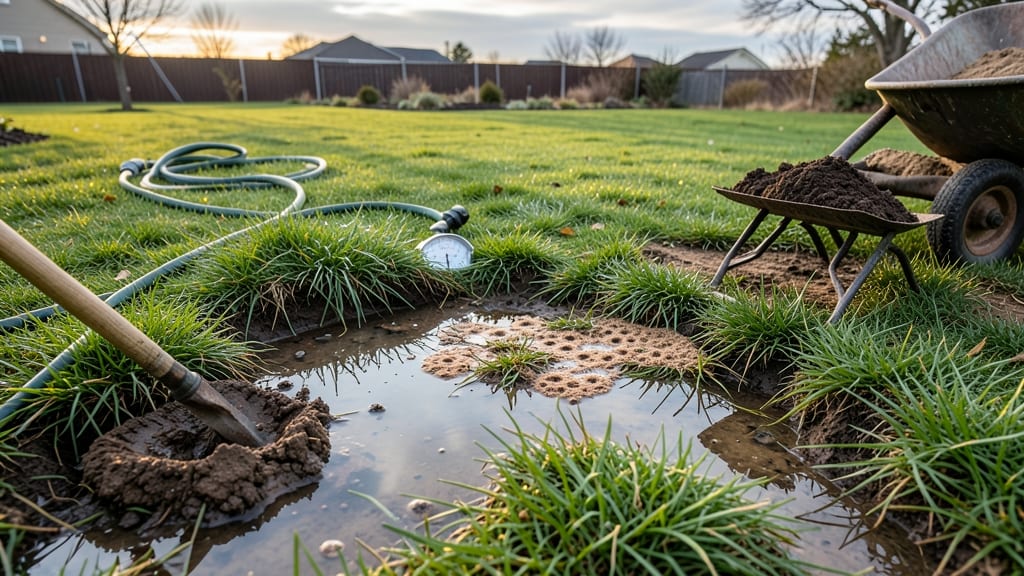
Standing water in your lawn isn’t just an eyesore—it’s a silent killer of grass roots that leaves you staring at mud instead of green. 🌱 I’ve turned soggy patches into lush lawns using simple fixes that work whether you’ve got clay soil or just a slope problem.
The key is understanding why water pools in the first place before you dig in (literally). Most standing water comes down to three culprits: compacted soil that won’t drain, a yard sloped toward your house, or clay that acts like a bathtub.
My first fix was aerating—those little holes let water escape instead of sitting like a puddle. For slopes, I built a French drain (yes, it’s easier than it sounds) to redirect water away from the grass.
By the end of the project, you’ll have roots breathing properly, water draining within 24 hours of rain, and grass that stays green even after heavy downpours. The best part? You can tackle this in stages—no need to rip up the whole yard at once.
If your lawn still looks like a swamp after basic fixes, that’s when you call in the pros. But for 80% of cases, these DIY solutions deliver healthy grass that stays put—no more muddy boots or drowned roots.
Root Causes Of Lawn Puddles
Standing water in your lawn isn’t just an eyesore—it’s a sign that something’s blocking proper drainage. Whether it’s a slow-moving storm or a stubborn patch that never dries, understanding the why behind these puddles is the first step to fixing them.
Below, we break down the most common culprits, explained in clear, actionable terms.
Your lawn’s soil is the unsung hero (or villain) of drainage. If it’s too clay-heavy, water has a harder time seeping through because clay particles pack tightly, trapping moisture like a sponge.
Conversely, sandy soil drains too quickly, but if it’s compacted, it can create pockets where water pools instead of flowing.
How to check:
- Dig a small hole (6 inches deep) and feel the soil.
- Clay? It sticks together and feels slick when wet.
- Sand? It crumbles easily and feels gritty.
- Loamy? The gold standard—holds moisture but drains well.
Actionable fix:
- Amend clay soil with organic matter (compost or peat moss) to loosen it.
- For sandy soil, mix in hydrated bentonite clay or coconut coir to improve water retention.
Heavy foot traffic, pets, or even lawn equipment can compress the soil, reducing pore space for water to drain. Compacted soil acts like a concrete slab, forcing water to sit on top instead of sinking in.
Signs of compaction:
- Soil feels hard when pressed (like a brick).
- Grass grows in patches or appears stressed.
- Puddles form even after light rain.
Actionable fix:
- Aerate your lawn using a core aerator (rent or buy one) to create holes for water and air to penetrate.
- Top-dress with a thin layer of compost after aerating to improve soil structure.
If your lawn isn’t sloped correctly, water has nowhere to go but pool in low spots. Proper grading means the ground should slope away from your home and driveway (typically 1 inch per 10 feet).
How to spot bad grading:
- Water collects near the house, sidewalk, or in a specific "bowl" shape.
- Puddles form after every rain, even light showers.
Actionable fix:
- Rake soil from low areas and redistribute it to higher spots.
- For severe cases, regrade the lawn by adding or removing soil (hire a pro if the area is large).
If your lawn has French drains, underground pipes, or swales, they might be clogged with debris, roots, or sediment. Even if you don’t see them, they’re silently failing.
Common blockages:
- Sediment buildup from erosion.
- Root intrusion from nearby trees or shrubs.
- Collapsed or cracked pipes.
Actionable fix:
- Inspect visible drains (like dry creek beds) for debris and clear them.
- Call a plumber or drainage specialist if you suspect underground pipes are failing.
Some lawns sit on shallow water tables, meaning groundwater is close to the surface. After heavy rain, this water rises and floods the lawn before draining. This is common in low-lying areas or near ponds.
How to tell if it’s a water table issue:
- Puddles form even without rain (especially after prolonged wet weather).
- The entire lawn (not just spots) stays soggy.
Actionable fix:
- Install a French drain to redirect water away from the lawn.
- Plant deep-rooted grasses (like tall fescue) that tolerate moisture.
- Consider a sump pump if flooding is severe.
A thatch layer (dead grass, roots, and debris) thicker than ½ inch can block water from reaching the soil. While a little thatch is normal, too much acts like a waterproof barrier.
How to check for thatch:
- Dig a small section and measure the layer between green grass and soil.
Actionable fix:
- Dethatch with a rake or power dethatcher in spring or fall.
- Improve air flow by mowing high (3–4 inches) to reduce stress on grass.
Leaves, twigs, and even plastic bags can clog drainage paths, creating artificial puddles. Downspouts, gutters, and dry creek beds are prime culprits.
Where to look:
- Gutters and downspouts (are they directing water toward the lawn?).
- Low spots where debris collects (like near trees or fences).
Actionable fix:
- Clear debris regularly, especially before rainy seasons.
- Redirect downspouts to drain away from the lawn (use extensions or splash blocks).
Beneath the topsoil, many lawns have a hardpan layer—a dense, compacted clay zone that repels water like a shield. This is often a leftover from construction or natural soil compression.
How to identify:
- Water pools immediately after rain, even in well-drained areas.
- Digging reveals a hard, shiny layer (like a brick) beneath loose soil.
Actionable fix:
- Core aerate deeply (6–8 inches) to break up the layer.
- Add gypsum or sulfur to clay-heavy soils to help break it down over time.
Most standing water problems are multiple issues working together—like compacted soil plus poor grading plus a high water table. Start with the most obvious fix (like clearing debris or aerating) and work your way to deeper solutions.
Once you pinpoint the cause, your lawn will thank you with healthier roots and fewer puddles! 🌱💦
Fixing Wet Lawn Spots for Good
Standing water in your lawn isn’t just an eyesore—it’s a sign your grass is struggling to breathe. The good news? With the right approach, you can restore proper drainage and keep your yard lush.
Below, we break down targeted fixes based on the most common causes, plus preventive tips to stop future puddles from forming.
If your lawn has clay-heavy or compacted soil, water pools because it can’t absorb quickly. Here’s how to loosen it up:
🍳 Aerate Like a Pro
- When to do it: Early fall or spring (when grass is actively growing).
- How to do it: Rent a core aerator (or hire a pro) to pull small soil plugs (about 2–3 inches deep).
This creates channels for water to escape. - Bonus: Top with compost after aerating to boost soil structure.
👨🍳 Add Organic Matter
- Why? Compost or peat moss improves water absorption by lightening dense soil.
- How? Spread a ¼-inch layer over the lawn after aerating, then rake in. Repeat annually for best results.
🌡️ Test Your Soil
- DIY test: Grab a handful of damp soil and squeeze. If it holds a tight ball, it’s too clay-heavy.
Amend with sand (coarse, not fine) or gypsum to break up compaction. - Pro tip: A soil test kit (available at garden centers) reveals pH and nutrient levels—key for long-term health.
If water collects in low spots or runs into your yard, you need to reroute it before it becomes a problem.
⏰ Grade Your Lawn (The Slope Solution)
- What it means: Ensuring your yard has a 1–2% slope (about 1–2 inches of drop over 10 feet) away from your home.
- How to fix it:
- Use a laser level to mark the desired slope.
- Remove soil from low areas and redistribute it uphill (or haul it away).
- Warning: Avoid steep slopes—grass struggles to grow on angles over 5%.
🔪 Install French Drains or Swales
- French drain: A buried perforated pipe wrapped in gravel to channel water underground. Best for severe pooling.
- Swales: Shallow, curved trenches filled with rocks or mulch to slow and absorb water.
Ideal for gentle slopes. - DIY tip: For small areas, a dry creek bed (landscape fabric + rocks) can mimic a swale.
💡 Divert Downspouts Away
- Problem: Gutters dumping water directly onto your lawn creates instant puddles.
- Fix: Extend downspouts at least 5–10 feet from your home using flexible pipe or a splitter system. Direct water to a rain barrel or a dry well (a gravel-filled hole).
Even with drainage fixes, some grasses thrive in wet conditions—while others drown. Adjust your lawn care to match your climate and grass type.
🥗 Choose the Right Grass
- Wet-climate winners: Tall fescue, creeping bentgrass, or wetland grasses like sedges.
- Drought-tolerant picks: Buffalo grass or zoysia (if your area gets less standing water).
- Pro tip: If you’re unsure, ask your local cooperative extension office for region-specific recommendations.
✨ Overseed Bare Spots
- Why? Thin grass = more water pooling. Overseeding fills gaps so water evaporates faster.
- When: Late summer or early fall.
- How: Use a slit seeder to plant fine fescue or ryegrass (both handle moisture well).
🎯 Adjust Watering Habits
- Problem: Overwatering = compacted soil + fungus.
- Fix:
- Water deeply 1–2 times per week (early morning) instead of daily light sprinkles.
- Use a rain gauge to track inches—most lawns need 1–1.5 inches per week (including rain).
Once your lawn is fixed, keep it dry and happy with these low-effort habits:
| Prevention Tip | How to Do It |
|---|---|
| 🌡️ Mulch properly | Use 2–3 inches of mulch (wood chips or pine straw) to improve soil absorption. |
| 🔄 Aerate annually | Compacted soil rebuilds—stay ahead with fall aeration. |
| 🚫 Avoid heavy foot traffic | Walk on dry grass to prevent soil compaction. |
| 🌧️ Install a rain garden | Plant native wetland plants (like cattails or rushes) in low spots to absorb excess water. |
| 🔧 Check sprinklers | Misaligned heads waste water and create soggy patches. Adjust or replace them. |
Final Thought: Standing water doesn’t have to be a permanent problem. Start with one fix (like aerating or grading), then layer in preventive habits over time. Before you know it, your lawn will be dry, green, and thriving—no puddles in sight! 🌿💦
Frequently asked questions about lawn drainage
Why does my lawn get soggy after every rain?
This usually means your soil is either too compacted or too clay-heavy. Clay soil acts like a sponge, trapping water, while compacted soil prevents proper drainage. Start by testing your soil—if it sticks together when wet, you likely need aeration or soil amendments like compost or gypsum to improve absorption.
How do I know if my drainage problem is from poor grading?
Check for water pooling near your home, driveway, or in specific "bowl" shapes. If puddles form after every rain—even light showers—and your yard slopes toward your house, poor grading is likely the culprit. The fix? Reroute water by creating a 1-2% slope (1-2 inches drop per 10 feet) away from structures.
Can I fix standing water without hiring a pro?
Start with simple fixes like clearing debris from gutters/drains, aerating compacted soil, or redirecting downspouts. For deeper issues, try a DIY French drain (perforated pipe in gravel) or swales (shallow trenches). Only call a pro if you suspect underground pipe failures or hardpan layers deeper than 6 inches.
Will aerating my lawn really help with drainage?
Yes—core aeration creates 2-3 inch deep holes that let water penetrate instead of pooling. Do it in spring/fall when grass is growing actively. For best results, top-dress with compost after aerating to improve soil structure long-term. Rent a core aerator for $60-$100/day or hire a pro for $100-$200 per 1,000 sq ft.
What grass types handle wet conditions best?
For soggy lawns, opt for moisture-tolerant varieties like tall fescue, creeping bentgrass, or wetland grasses such as sedges. Avoid drought-loving grasses like Bermuda or buffalo grass unless your area has well-drained soil. Overseed bare spots with fine fescue or ryegrass—they recover faster from water stress.