
Planting
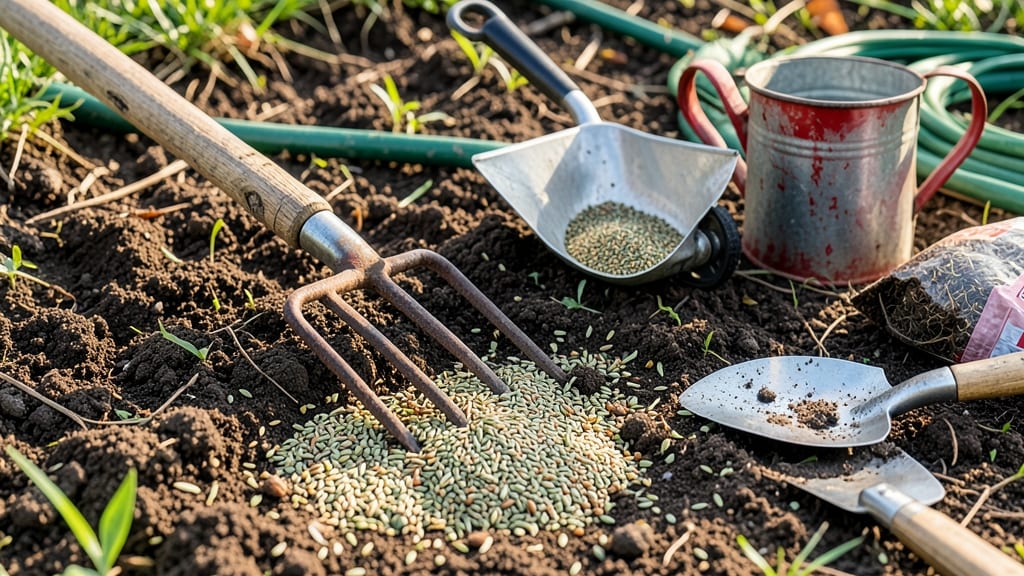
Sowing lawn seed in autumn gives you a head start on next summer's thickest grass—when soil stays warm enough to germinate but air cools to reduce weed competition. 🌱 I learned the hard way that spring planting leaves you racing against weeds and heat stress, while autumn's mild conditions let seeds establish deep roots before winter.
The secret lies in timing: aim for 4-6 weeks before your first frost, when daytime temps stay above 50°F but nights dip below 60°F. This sweet spot helps seeds germinate without drying out or overheating. In colder zones, late September works; in warmer areas, October is better.
You'll end up with grass that's 30-50% thicker than spring-sown lawns because autumn seedlings focus energy on roots, not just leaves. The result? Fewer bare spots, better drought resistance, and a lawn that greens up earlier in spring.
Works for cool-season grasses (like Kentucky bluegrass or fescue) in zones 3-8, with adjustments for southern climates where winter dormancy matters less. Let's get those seeds in the ground!
📚 In This Guide
- What you need
- Instructions
- Tips and common mistakes
- Wrapping up and next steps
What you need
- ● High-quality cool-season grass seed: Choose a blend suited to your climate (e.g., Kentucky bluegrass, fescue, or ryegrass). Aim for 5–10 lbs per 1,000 sq ft, depending on seed type.
- ● Lawn rake (bow or stiff-bristle): Essential for leveling soil and removing debris. Opt for a 12–18-inch width for efficiency.
- ● Broadcast spreader (or handheld spreader): Ensures even seed distribution. A drop spreader is ideal for precision.
- ○ Topsoil or compost (optional but recommended): Spread ¼–½ inch over bare patches to improve seed-to-soil contact.
- ● Water source (hose with sprinkler or garden hose): A gentle misting nozzle prevents seed erosion during watering.
- ○ Lawn roller (optional but helpful): Lightly roll seeded areas to press seed into soil (avoid heavy compaction).
- ● Soil test kit: Check pH levels (ideal range: 6.0–7.0) and amend soil if needed.
- ● Starter fertilizer: Use a low-nitrogen, high-phosphorus blend (e.g., 10-20-10) to boost root growth.
- ● Erosion control blanket: Protects sloped areas from washing away during watering.
- ● Garden gloves & knee pads: Because comfort matters when you’re on your hands and knees!
Step-by-Step instructions for sowing lawn seed in autumn
Autumn’s mild temps and steady rains create perfect conditions for grass roots to establish deep before winter. Here’s how to get it right.
🪴 Step 1: Prepare the Soil for Optimal Seed Contact
Start by mowing your lawn as short as possible—about ½ inch—to create an even surface. This helps seeds make direct contact with soil, which is critical for germination. Use the garden rake to loosen the top ¼ inch of soil, breaking up any compacted areas or thatch. You’ll know you’ve done enough when the soil looks fluffy and crumbly, like freshly tilled dirt.
For bare spots or new lawns, remove all existing vegetation, rocks, and debris. Spread ½ pound of 10-10-10 fertilizer evenly over the area—this gives seeds a slow-release nutrient boost without burning tender roots. Lightly rake the fertilizer into the top ¼ inch of soil so it doesn’t clump. The goal is to create a fine, textured bed where seeds can nestle just below the surface.
🌱 Step 2: Sow Seed Evenly for Uniform Germination
Using the seed spreader, walk in a crisscross pattern to distribute the 5 pounds of lawn seed evenly. For small areas, scatter seed by hand, but keep a consistent rate—about ½ pound per 100 square feet. Press seeds lightly into the soil with the garden roller or a piece of plywood. This ensures good soil contact without burying them too deep.
Here’s the thing—don’t over-seed. Too many seeds in one spot leads to weak, crowded grass that struggles to establish. After sowing, gently rake the area again to cover seeds with a thin layer of soil (⅛ inch max). If you bury them deeper, they’ll take longer to sprout or may not emerge at all.
💧 Step 3: Water Gently and Consistently for Germination
Water immediately after sowing to settle the seeds into the soil. Use a fine-mist sprinkler or gentle hose spray to apply ¼ inch of water evenly. Keep the soil moist—never soggy—until seeds germinate, which typically takes 7-14 days in cool autumn weather. You’ll know it’s working when you see tiny green shoots pushing through the soil.
Water lightly twice daily (morning and evening) for the first week, then reduce to once daily as roots establish. Avoid heavy watering, which can wash seeds away or create puddles. The top ½ inch of soil should stay damp to the touch, like a wrung-out sponge. Once seedlings reach 2 inches tall, gradually reduce watering to encourage deep root growth.
☀️ Step 4: Protect New Grass from Stress and Pests
Autumn’s cooler temps help seeds germinate, but sudden frosts can damage tender new grass. Monitor weather forecasts and cover the area with straw mulch if a hard freeze is predicted. Leave the mulch in place for 2-3 days max—longer and it’ll smother the grass. Remove it as soon as temperatures rise above 40°F to avoid mold or rot.
Keep foot traffic off the new lawn for at least 4 weeks to prevent uprooting fragile seedlings. If birds or squirrels start digging up seeds, cover the area with wire mesh until germination is complete. Once grass reaches 3 inches tall, you can mow it to 2½ inches to encourage a denser root system. Avoid fertilizing until the grass has been mowed 2-3 times—young roots can’t handle heavy nutrients yet.
⏰ Step 5: Maintain Through Winter for a Strong Spring Lawn
Reduce watering in late autumn as rainfall increases, but keep the soil from drying out completely. If your area gets less than 1 inch of rain per week, water lightly 2-3 times weekly to maintain moisture. Avoid heavy watering, which can dislodge shallow roots. By late fall, your grass should be fully established with deep roots, ready to handle winter dormancy.
In early spring, resume mowing when grass reaches 3-4 inches tall, then fertilize with a slow-release, high-nitrogen formula to promote lush growth. The thick stand you establish now will crowd out weeds naturally and give you a lawn that stays green and resilient all season long.
Tips & tricks for perfect autumn lawn establishment
These are the secrets I wish I'd known before my first autumn lawn project—trust me, they make all the difference for that thick, lush grass you're dreaming of.
Soil Prep is Everything: Don't just skim the surface when loosening soil in Step 1. Use your garden rake to create a fine, almost powdery texture in the top ¼ inch—this is where the magic happens. I learned this the hard way after patchy germination from uneven soil contact. For compacted clay soils, consider renting a core aerator to create deeper channels for roots to establish before sowing. This extra step pays off big time in spring.
Seed Distribution Technique: When using a seed spreader in Step 2, walk in overlapping passes (like mowing a lawn) rather than just one direction. This ensures you don't miss spots or create stripe patterns. For hand-sowing, try the "toss and comb" method: scatter seed lightly, then gently rake to redistribute any clumps. The ½ pound per 100 square feet rate works perfectly when done carefully—don't rush this step!
Watering Watch: The 7-14 day germination window in Step 3 can be tricky. Set a timer for your twice-daily watering sessions to maintain consistency. I use a simple rain gauge to track the ¼ inch of water each time—this prevents both underwatering and overwatering. Pro tip: Water in the early morning so any moisture on leaves evaporates before evening, reducing disease risk. The "wrung-out sponge" test is spot-on for checking soil moisture.
Frost Protection Strategy: When covering with straw mulch in Step 4, use enough to insulate but not smother. Aim for a 1-2 inch layer—thicker layers can trap too much moisture. I keep a weather radio handy during autumn planting to catch frost warnings early. The 40°F threshold is critical: once temps rise above this, remove mulch immediately to prevent mold from developing under the protective layer.
Pro Tips for Sowing Lawn Seed In Autumn
- These are the secrets I wish I'd known before my first autumn lawn project—trust me, they make all the difference for that thick, lush grass you're dreaming of.
- Soil Prep is Everything: Don't just skim the surface when loosening soil in Step 1.
- Seed Distribution Technique: When using a seed spreader in Step 2, walk in overlapping passes (like mowing a lawn) rather than just one direction.
Frequently asked questions
Got questions about sowing lawn seed in autumn? You’re not alone! Here are answers to the most common queries to help you achieve that lush, green lawn this fall.
Why is autumn the best time to sow lawn seed?
Autumn’s cool temperatures and moderate rainfall create the perfect conditions for seed germination. Unlike summer’s heat or winter’s dormancy, fall allows seeds to establish strong roots before winter, resulting in a thicker, more resilient lawn next spring. Plus, fewer weeds compete for space!
How soon after sowing will I see grass grow?
Germination time varies by grass type, but most cool-season grasses (like fescue or ryegrass) sprout in 7–21 days with ideal moisture. Warm-season grasses (like Bermuda) planted in autumn may take 3–4 weeks. Patience is key—keep the soil consistently moist until you see tiny blades popping up!
Do I need to water my lawn every day after sowing?
Yes! For the first 2–3 weeks, water lightly twice daily (early morning and evening) to keep the soil damp but not soggy. Once seedlings are 2–3 inches tall, reduce to 1 inch of water per week. Overwatering can wash away seeds or cause disease—consistency is critical.
What if my lawn has weeds or bare spots before sowing?
Don’t stress! Start by raking out debris and loosening soil with a garden fork. For weeds, spot-treat with a pre-emergent herbicide (if sowing early autumn) or pull them by hand before planting. If bare spots persist, consider a starter fertilizer to boost seedling growth.
Can I still sow lawn seed if frost is forecasted?
Timing matters! Avoid sowing 2–3 weeks before the first hard frost. If frost hits, seeds may not germinate, and young grass can be damaged. Check your USDA hardiness zone—most regions benefit from sowing between late August and October for optimal results.
Wrapping up and next steps
Autumn is your secret weapon for a lush, resilient lawn—cool weather and fewer weeds make it the perfect time to sow fresh grass seed. By following the right steps—prepping soil, choosing the best seed blend, and keeping moisture consistent—you’ll set the stage for a thick, vibrant lawn come spring. 🌱
Ready to roll up your sleeves? Grab your tools, pick a clear weekend, and get planting! Once your lawn is established, consider adding a light topsoil layer or mulch to lock in moisture and protect your hard work. Happy gardening!