
Lawn
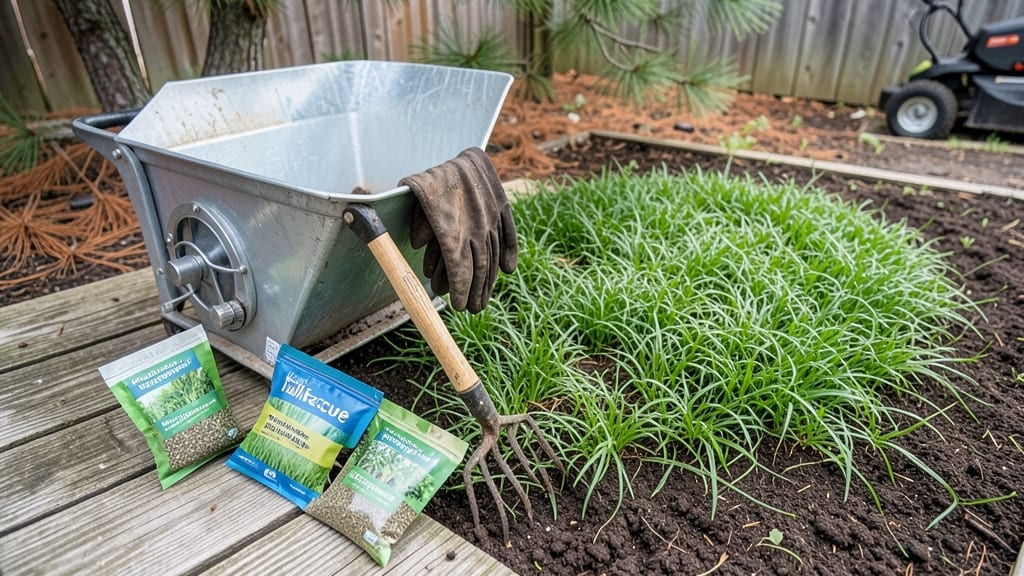
Fall is the perfect time to seed a new lawn—cooler temps and fewer weeds mean stronger roots before winter. 🌱 I’ve seeded twice in fall, and the second time, my lawn outgrew weeds by spring. The secret?
Timing: aim for 4-6 weeks before first frost when soil stays warm but air cools. Most people overlook soil prep, but testing pH and loosening compacted dirt makes all the difference. I use a basic starter fertilizer to give seeds a nutrient boost right away.
Cool-season grasses like fescue and ryegrass thrive in this window, while warm-season grasses (like Bermuda) wait for spring. By spring, you’ll have a dense, weed-resistant lawn that outpaces summer seeding. The key is keeping soil moist—not soggy—until germination, then mowing high to encourage deep roots.
Even my shady patches greened up better than expected. Works for northern climates (Sept-Nov) and southern hemispheres (Mar-May). Here’s how to nail it every time!
📚 In This Guide
- What you need
- Instructions
- Tips and common mistakes
- Wrapping up and next steps
What you need
- ● Cool-season grass seed – Choose a high-quality blend suited to your climate (e.g., Kentucky bluegrass, fescue, or ryegrass). Aim for 5–10 lbs per 1,000 sq ft, depending on seed type.
- ● Lawn soil amendment – A 1/4-inch layer of compost or starter fertilizer (look for a 10-10-10 or 16-4-8 NPK ratio) to boost nutrient uptake.
- ● Rake or lawn aerator – A garden rake with metal tines or a core aerator (for compacted soil) to loosen the top 2–3 inches.
- ● Spreaders – A broadcast spreader (for seed) and a drop spreader (for fertilizer) for even coverage.
- ● Topsoil or sand – 1/4-inch layer (if patching bare spots) to create a smooth seedbed.
- ● Water source & hose – A gentle sprinkler or hose with a fine-mist nozzle for consistent moisture.
- ○ Straw or erosion control blanket – Lightweight straw (1/4-inch layer) to protect seeds from birds and wind (optional but recommended).
- ● Soil test kit – Check pH and nutrient levels (ideal range: 6.0–7.0) before seeding.
- ● Pre-emergent herbicide – Apply 4–6 weeks before seeding to prevent weeds.
- ● Lawn roller (lightweight) – Gently press seed into soil (avoid compacting too hard).
- ● Gloves & knee pads – Because comfort (and clean hands) matter!
- ● Weather tracker app – Monitor 5–7 day forecasts to time seeding for steady rain.
Step-by-Step instructions for establishing a fall lawn
Fall planting gives cool-season grass roots time to establish before winter’s chill—here’s how to do it right.
🪴 Step 1: Prepare the Soil for Optimal Seed Contact
Rent or borrow a tiller to loosen the top 4-6 inches of soil, breaking up compacted layers that block root growth. I like to work in 10x10-foot sections at a time to avoid missing spots. Remove all debris—rocks, weeds, and old grass—since they compete with new seedlings for moisture and nutrients.
After tilling, rake the surface smooth with a stiff-bristled rake until it feels like fine sandpaper. The goal is a level, firm base where seeds will nestle just below the surface. Press down lightly with your foot to eliminate air pockets—this ensures consistent soil-to-seed contact for even germination.
💧 Step 2: Spread Seed Evenly and Lightly Cover
Use a broadcast spreader set to the recommended rate for your grass type (usually 8-12 pounds per 1,000 sq ft). Walk in straight lines with slight overlaps to avoid streaks. I like to divide the area into thirds and seed one section at a time—this prevents wind from scattering seed unevenly.
After spreading, lightly cover seeds with ¼ inch of fine soil or compost using a rake. Too much coverage smothers seedlings, while too little leaves them vulnerable to drying out. Gently press the soil down again to settle everything in place. You’ll see tiny green spears emerge in 7-21 days, depending on temperature and moisture.
☀️ Step 3: Water Deeply and Maintain Consistent Moisture
Set up sprinklers to deliver ¼ inch of water daily for the first two weeks, then taper to ½ inch twice weekly once germination begins. Water in the early morning so foliage dries quickly, reducing disease risk. I test moisture by digging a small hole—if the soil feels damp 1 inch down, you’re on track.
Keep the area moist until new grass reaches 2-3 inches tall. At this stage, you can reduce watering to 1 inch per week, allowing roots to grow deeper. Avoid walking on the lawn until blades reach 3-4 inches—this prevents soil compaction and seedling damage.
✂️ Step 4: Fertilize and Mow for Strong Establishment
Apply a starter fertilizer with high phosphorus (middle number on the bag) to encourage root development. I use ½ pound per 1,000 sq ft and water it in immediately. Wait until grass reaches 3-4 inches before mowing—set the blade to 3 inches high to leave enough leaf surface for photosynthesis.
Mow when grass grows 1 inch taller than your mower setting, never removing more than ⅓ of the blade height at once. This keeps the lawn dense and competitive against weeds. By late fall, your new grass should have a deep root system ready to survive winter’s dormancy.
Tips & tricks for perfect fall lawn establishment
Fall lawn seeding demands precision—here's how to avoid common pitfalls and maximize success.
Soil Preparation is Non-Negotiable: Don't skip the tilling step in Step 1—compacted soil blocks root growth and creates uneven germination. I've seen lawns fail because homeowners only scratched the surface. Rent a tiller if needed, and work those 4-6 inches deep to break up hardpan. After tilling, test your soil's firmness by pressing your foot down—it should feel like firm sandpaper, not spongy or rocky. This ensures seeds make proper contact with the soil.
Seed Distribution Strategy: When using the broadcast spreader in Step 2, walk in straight lines with slight overlaps to prevent streaks. I divide my yard into thirds and seed one section at a time—this prevents wind from scattering seed unevenly. For small areas, consider a hand spreader for more control. After spreading, verify your coverage by tossing a handful of seed—you should see them distributed evenly without clumping.
Watering Precision Matters: The ¼ inch daily watering in Step 3 requires consistency. Use a rain gauge or tuna can to measure—most sprinklers overestimate. Water in the early morning to prevent fungal growth from overnight moisture. After the first two weeks, reduce to ½ inch twice weekly once germination begins. Pro tip: Water until you see moisture penetrate 1 inch deep—this encourages deep root growth from the start.
Fertilizer Timing is Critical: The ½ pound starter fertilizer per 1,000 sq ft in Step 4 should be applied immediately after seeding, not before. High-phosphorus fertilizer (look for the middle number on the bag) promotes root development, but apply it too early and you risk burning tender seedlings. Always water it in thoroughly to activate the nutrients and prevent salt buildup on the soil surface.
Pro Tips for Seed New Lawn In Fall
- Fall lawn seeding demands precision—here's how to avoid common pitfalls and maximize success.
- Soil Preparation is Non-Negotiable: Don't skip the tilling step in Step 1—compacted soil blocks root growth and creat...
- Seed Distribution Strategy: When using the broadcast spreader in Step 2, walk in straight lines with slight overlaps ...
Frequently asked questions
Got questions about seeding your lawn in the fall?
You’re not alone! Here are some of the most common concerns—and their answers—to help you get started with confidence.
Why is fall the best time to seed a new lawn?
Fall’s cooler temperatures and increased rainfall create ideal conditions for cool-season grasses (like fescue, ryegrass, and bluegrass) to germinate and establish strong roots before winter. Heat and drought stress in summer can stunt growth, while spring seeding often competes with weeds and faster-growing warm-season grasses.
How long does it take for grass seed to grow in fall?
Most cool-season grasses sprout within 7–21 days after seeding, depending on soil moisture and temperature. Full root establishment (when your lawn can handle light foot traffic) takes about 4–6 weeks. Avoid heavy use until the grass reaches 3–4 inches tall to prevent soil erosion or damage.
Do I need to water my lawn every day after seeding?
Yes! Keep the soil consistently moist (not soggy) for the first 2–3 weeks by watering lightly 2–3 times daily (early morning is best). Once seedlings are 1–2 inches tall, reduce to 1 inch of water per week, including rainfall. Use a sprinkler with a gentle mist setting to avoid displacing seeds.
What if weeds pop up before the grass grows?
Weeds are common early on, but don’t panic! Pre-emergent herbicides can prevent weed seeds from sprouting, but wait until after seeding (about 4–6 weeks) to apply. For existing weeds, hand-pull them carefully to avoid disturbing young grass. A thick lawn will naturally outcompete weeds once established.
Can I seed a lawn in late fall if I missed the ideal window?
You can still seed up to 4–6 weeks before your first hard frost, but growth will slow as temperatures drop. Choose hardy cool-season varieties (like perennial ryegrass) and protect seeds with a light mulch or straw to insulate them. If frost hits before germination, wait until spring—just be prepared for more weed competition.
What’s the fastest way to fix bare spots in an existing lawn?
For small bare patches, use a slit seeder or hand-spreader with high-quality seed matched to your lawn type. Loosen soil slightly, rake in seed, and cover with ¼-inch of compost or topsoil. Water thoroughly and keep moist. For larger areas, consider sod patches for instant coverage (though they’re pricier).
Wrapping up and next steps
Fall is the perfect time to seed a new lawn—cool-season grasses thrive when temperatures dip, giving them a strong start before winter. By following these steps—preparing the soil, choosing the right seed, and keeping it moist—you’ll set the stage for a lush, resilient lawn next spring. 🌱
Don’t wait! Grab your supplies, roll up your sleeves, and take the first step toward a greener yard. Whether you’re a first-timer or a seasoned gardener, your hard work will pay off in a vibrant, healthy lawn. Ready to begin? Start today!