
Lawn
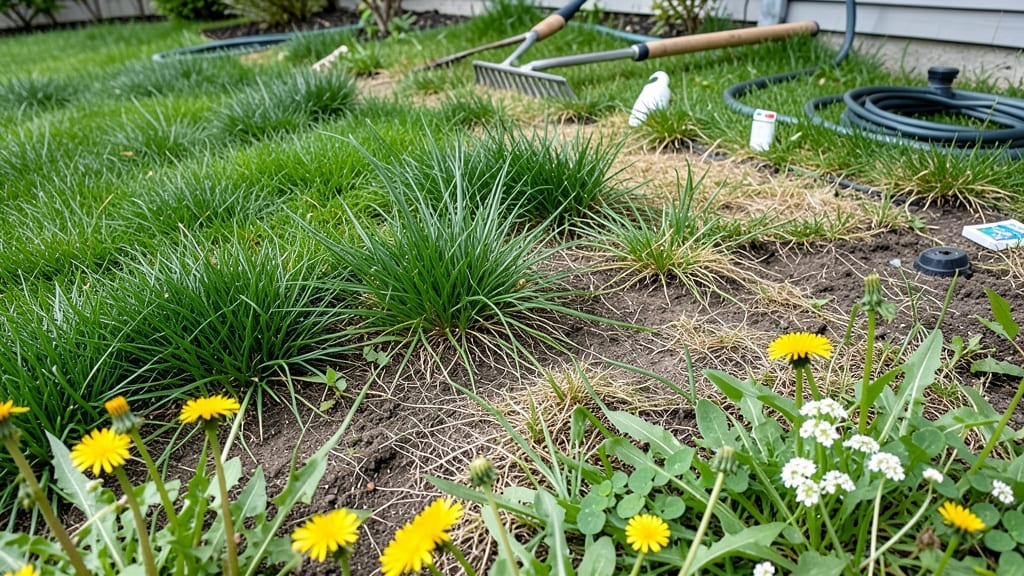
A patchy new lawn doesn’t mean you’re doomed to brown spots forever. 🌱 The good news? You can fix uneven germination, soil issues, and watering mistakes with just three straightforward steps—no magic required, just smart repairs.
Most patchiness comes from one of three problems: seeds not making contact with soil, inconsistent moisture, or thin topsoil. I’ve seen lawns go from sad and spotty to lush and green in just 4-6 weeks using these same methods. The key is working with your lawn’s rhythm, not against it.
By the end of this, you’ll have a uniform lawn that stays vibrant through summer. No more guessing—just proven techniques that actually work. Let’s get those bare patches filled in for good.
You’ll need a few basic tools: a rake for leveling soil, quality grass seed for reseeding, a sprinkler or hose for watering, and some compost or topsoil if your existing layer is too thin. That’s it—no fancy equipment needed.
Start by raking the patchy areas gently to loosen the soil and remove debris. Then spread a thin layer of compost or topsoil to create a fresh, even surface for new seeds. This small step makes all the difference in how well your lawn fills in.
Watering is where most people mess up—either drowning the seeds or letting them dry out. Keep the soil damp (not soggy) for the first 10-14 days, then taper off to normal watering once you see new growth. A little patience here saves you from wasted seeds and uneven sprouting.
For long-term results, keep an eye on your lawn’s health. Regular mowing, occasional overseeding, and watching for pests or diseases will keep it looking its best year after year.
📚 In This Guide
- What you need
- Instructions
- Tips and common mistakes
- Wrapping up and next steps
What you need
- ● Garden rake – For removing debris and leveling soil (medium-tooth, 18-24 inches wide).
- ● Shovel or spade – For digging out dead grass and soil aeration (flat-blade, 10-inch width).
- ○ Lawn roller (optional but helpful) – 4-6 foot wide, 100-150 lbs weight, for firming soil before seeding.
- ● Garden hose with spray nozzle – For deep watering (adjustable settings for misting and steady flow).
- ● Gloves and knee pads – Protect your hands and knees from dirt and sharp objects.
- ● High-quality grass seed – Match your existing lawn type (e.g., Kentucky Bluegrass, Fescue, or Bermuda). Quantity: ~10 lbs per 1,000 sq. ft. for patchy areas.
- ● Topsoil or compost – 1-2 inches depth, screened for weeds (avoid clay-heavy soil). Quantity: ~1 cubic foot per 10 sq. ft. of patch.
- ○ Starter fertilizer (optional but recommended) – High in phosphorus (e.g., 5-10-10 ratio) to boost root growth. Quantity: Follow package rates (typically 1 lb per 100 sq. ft.).
- ○ Lawn seed adhesive (optional) – Helps seed stick to soil in windy conditions (e.g., liquid starter or hydro-mulch).
- ● Weather check – Aim for cool, overcast days or early morning/evening watering to prevent seed washout.
- ○ Soil test (optional but ideal) – Ensures pH (6.0-7.0) and nutrient balance. Kits available at garden centers.
- ● Clear the area – Remove weeds, rocks, and debris from the patchy zones.
Simple steps to fix a patchy new lawn
Here’s how to restore your lawn’s lush look—no heavy equipment or complicated methods required.
🌱 Step 1: Assess and Prep the Problem Areas
Start by walking your lawn and identifying the exact patchy spots. Look for thin grass, bare soil, or areas where weeds are taking over. Use a 12-inch square of wood or a small shovel to mark each section you’ll treat—this keeps you organized and prevents overlap. I like to jot down the size of each patch so I know how much seed and soil I’ll need.
For small patches (under 2 square feet), you can skip the next step and move straight to seeding. But for larger bare spots, use a garden rake to loosen the soil to a depth of 1-2 inches. This helps new grass roots establish quickly. Avoid tilling—it can bring up weeds and disrupt the existing lawn’s root system.
💧 Step 2: Apply Seed and Topsoil Evenly
Spread a thin layer of topsoil (about ¼ inch deep) over the loosened soil. This gives new grass seeds a nutrient-rich foundation to grow into. Use a broadcast spreader or your hands to distribute the soil evenly—don’t pack it down too firmly, or it’ll create a barrier for roots.
Next, sprinkle grass seed over the soil. For a fast-green recovery, I recommend using a fast-germinating seed mix designed for your climate. Cover the seeds lightly with a thin layer of peat moss or straw (about ⅛ inch deep) to protect them from drying out and birds. Water immediately after seeding—keep the soil moist but not soggy for the first 10-14 days. You’ll see tiny green shoots in as little as 5-7 days if conditions are right.
☀️ Step 3: Water and Maintain for Rapid Growth
Water the repaired areas lightly twice daily (morning and evening) for the first week. This keeps the soil consistently moist without overwhelming the seeds. After the first week, switch to deep watering every other day—this encourages roots to grow deeper. You’ll know you’re doing it right when the soil feels damp 1-2 inches below the surface.
Once the new grass reaches 2-3 inches tall, gradually reduce watering to match your regular lawn schedule. Avoid mowing until the new grass is at least 3-4 inches tall—this ensures it’s strong enough to handle the stress. If weeds pop up, pull them by hand before they compete with your grass for nutrients. With consistent care, your patchy lawn will blend seamlessly in 4-6 weeks.
Tips & tricks for perfecting patchy lawn repair
Here's what nobody tells you about getting that fast, lush recovery—without the guesswork.
Marking Made Easy: Use painter's tape instead of wood squares for marking patches—it's easier to remove later without disturbing the grass. I've found that marking with tape also helps visualize the exact area you're treating, so you don't accidentally overlap with healthy grass. This simple trick prevents those awkward edges where new grass meets old.
The Right Rake Matters: Skip the heavy-duty garden rake for loosening soil. A hand rake with fine tines works better for breaking up soil in small patches without disturbing the surrounding lawn. Work in one direction first, then turn 90 degrees to create a fine, crumbly texture—this mimics what a rototiller does but on a smaller scale. The goal is to loosen just enough for roots to penetrate without creating a mess.
Seed Covering Secret: When covering seeds with that ⅛-inch layer of peat moss or straw, use a stiff piece of cardboard or a second board to press it down lightly. This ensures even coverage without packing it too firmly. Too much pressure can suffocate seeds, while too little leaves them exposed to drying out. Think of it like tucking seeds into a cozy blanket—just enough to hold them in place without smothering them.
Watering Precision: For those critical first 10-14 days, use a spray nozzle on your hose to deliver water gently rather than pouring. Aim for a fine mist that soaks into the soil without disturbing the seed covering. I've learned this the hard way—overhead watering can wash away seeds or create mud puddles that suffocate them. The key is to keep the soil consistently moist, not soggy, during this delicate germination period.
Pro Tips for New Lawn Patchy
- Here's what nobody tells you about getting that fast, lush recovery—without the guesswork.
- Marking Made Easy: Use painter's tape instead of wood squares for marking patches—it's easier to remove later without disturbing the grass.
- The Right Rake Matters: Skip the heavy-duty garden rake for loosening soil.
Frequently asked questions
Got a patchy new lawn and wondering how to fix it fast?
Here are answers to the most common questions to help you restore that lush, green look—without stress!
Why is my new lawn patchy even after seeding?
A patchy lawn can happen due to uneven soil prep, poor seed-to-soil contact, or inconsistent watering. New grass needs constant moisture (like a damp sponge) to germinate—skipping watering or overwatering can cause bare spots. Shade, soil compaction, or even hungry critters (like birds or rodents) can also steal seeds. Don’t panic: with the right care, patchy areas can fill in within 2–4 weeks!
How long does it take to fix patchy grass in a new lawn?
With proper care, you’ll see noticeable improvement in 2–3 weeks, but full recovery takes 4–8 weeks, depending on grass type and conditions. Cool-season grasses (like fescue or rye) germinate faster (7–21 days) than warm-season types (like Bermuda or Zoysia). Stay patient—consistent watering and light fertilizing speed up the process!
Should I water my patchy lawn differently than a healthy one?
Yes! Patchy lawns need more frequent, shallow watering—about ¼ inch per day (or twice daily for 10–15 minutes) to keep soil moist but not soggy. Avoid deep watering, which can drown seeds. Use a sprinkler with a gentle mist or a hose with a soaker nozzle to ensure even coverage. Early morning (5–9 AM) is ideal to reduce evaporation and fungal risks.
Can I just overseed patchy areas instead of resowing the whole lawn?
Overseeding is a time- and cost-saving hack for small patchy spots. Rake the bare area lightly, spread fresh seed, and top with a thin layer of compost or starter fertilizer. Just ensure the surrounding grass is healthy—if the whole lawn is struggling, a full reseeding might be better. Pro tip: Choose the same grass type as your existing lawn for a seamless blend!
What if pests or weeds are causing my patchy lawn?
Check for grubs, chinch bugs, or fungus (like brown patch) in patchy areas. Look for chewed blades, wilting grass, or white webbing. Treat pests with organic neem oil or insecticidal soap first, then reseeds. For weeds, spot-treat with vinegar (for small areas) or a pre-emergent herbicide before overseeding. If fungus is the culprit, use a fungicide and improve drainage to prevent recurrence.
Can I use sod instead of seed to fix patchy spots?
Sod is a fast fix for patchy lawns—it establishes instantly and resists weeds/pests better than seed. Cut sod into 2’x2’ sections, lay them over bare spots, and tuck edges into soil. Water deeply for the first 2 weeks to encourage rooting. However, sod can be pricier and harder to install than seeding. Best for small, high-traffic areas where speed matters!
Wrapping up and next steps
A patchy new lawn doesn’t have to be a long-term headache—with the right care, your grass can bounce back fast and lush! 🌱 The key is consistency: test your soil, patch bare spots with precision, and keep up with watering and mowing. Remember, even the greenest lawns start somewhere.
Ready to transform your yard? Start small—pick one section this weekend, follow the steps, and watch your lawn thrive. Before you know it, you’ll be the envy of the neighborhood with that perfect, vibrant green carpet! 🌿