
Lawn
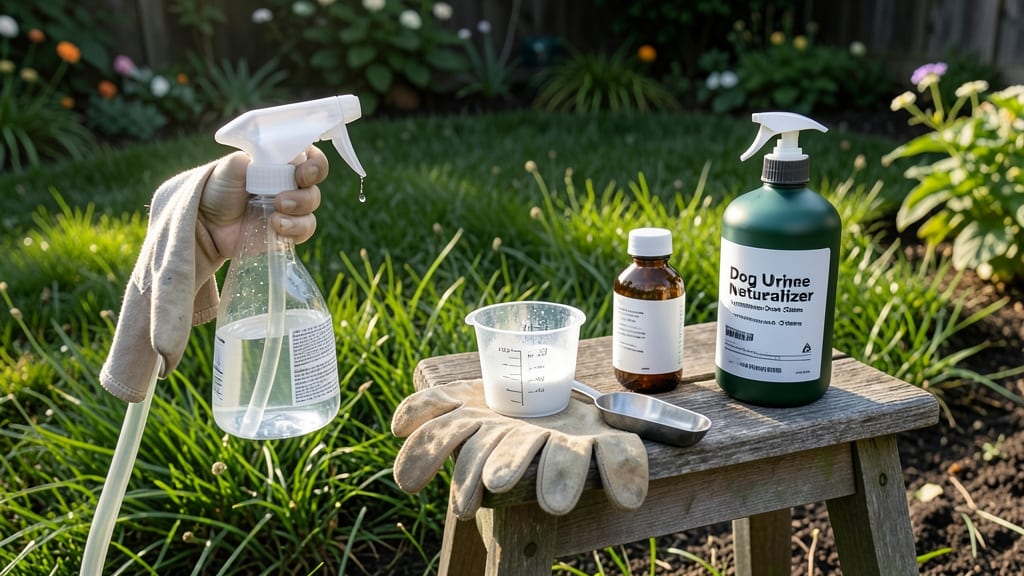
Neutralizing dog urine on lawns requires diluting the urine with water, applying a vinegar or baking soda solution, and overseeding damaged grass to restore pH balance and prevent yellow patches. Act quickly to minimize damage.
Dog urine contains high concentrations of ammonia and nitrogen, which can spike your lawn's pH levels and create alkaline soil conditions. 🌱 When this happens, grass struggles to absorb essential nutrients like iron and phosphorus, leading to those unsightly yellow patches.
The longer urine sits, the worse the damage becomes—fresh urine is easier to neutralize than aged deposits. I've found that combining immediate dilution with a natural acidifier like vinegar or baking soda can reverse the pH imbalance within days, provided you act fast.
For best results, start by thoroughly soaking the affected area with water to dilute the urine, then sprinkle a mix of 1 part baking soda to 4 parts water over the spot.
This simple solution helps restore the soil's natural acidity. After treatment, overseeding with a shade-tolerant grass variety can help repair damaged areas and prevent future discoloration.
💡 In This Article
- How Dog Urine Damages Lawn pH and Grass Health
- Best Organic Solutions for Restoring Lawn pH After Dog Urine
How dog urine damages lawn pH and grass health
Dog urine is essentially a concentrated dose of ammonia (NH₃) and nitrogen compounds, which act like a chemical time bomb for your lawn. When a dog urinates, the urine's pH can spike to 8.5-9.0—far more alkaline than healthy soil (ideal pH 6.0-7.0).
This rapid pH shift disrupts the soil's microbial balance, making it harder for grass roots to absorb critical nutrients like iron and phosphorus. 🔥 The ammonia burns root hairs, which are essential for water and nutrient uptake.
The damage worsens because aged urine becomes even more concentrated as water evaporates. Fresh urine has about 1.5-2.5% ammonia content, but within 24 hours, this can increase to 5-10% as moisture leaves.
This explains why yellow patches often appear days after a dog visits—what starts as a small spot grows into a dead zone as the soil's alkalinity peaks. Compare this to rainwater (pH 5.6-7.0), which gently nourishes grass without disrupting its delicate nutrient balance.
Grass health suffers in three key ways: nutrient lockout, root burn, and microbial disruption. The high pH binds iron into insoluble forms, causing chlorosis (yellowing) even when nitrogen is present.
Meanwhile, ammonia acts like a herbicide at the root level, killing fine root hairs that absorb 90% of water and nutrients. The soil's beneficial microbes—like nitrogen-fixing bacteria—also struggle to survive in this alkaline environment, creating a vicious cycle of poor grass health.
Visual clues help identify the damage: fresh urine spots appear as pale, waterlogged circles that dry into crispy brown rings. Aged spots develop a dull yellow halo as the grass starves for nutrients.
The most vulnerable areas are high-traffic zones where dogs frequently relieve themselves, like near fence lines or garden edges. Without intervention, these spots can persist for months, becoming permanent dead zones as the soil structure degrades.
Here's what's happening at the cellular level: grass roots rely on symbiotic fungi (mycorrhizae) to extend their reach for nutrients. Ammonia disrupts this relationship by altering the soil's electrical charge, making it harder for roots to communicate with their fungal partners.
This breakdown explains why even healthy grass can turn patchy overnight after repeated urine exposure.
Timing is everything—ammonia's burn effect peaks within 6-12 hours after urination. After 24 hours, the damage shifts to nutrient starvation as the soil's microbial ecosystem collapses.
This is why immediate dilution with water (to 1:10 urine-to-water ratio) is your first line of defense, followed by pH correction within 48 hours to prevent permanent damage.