
Lawn
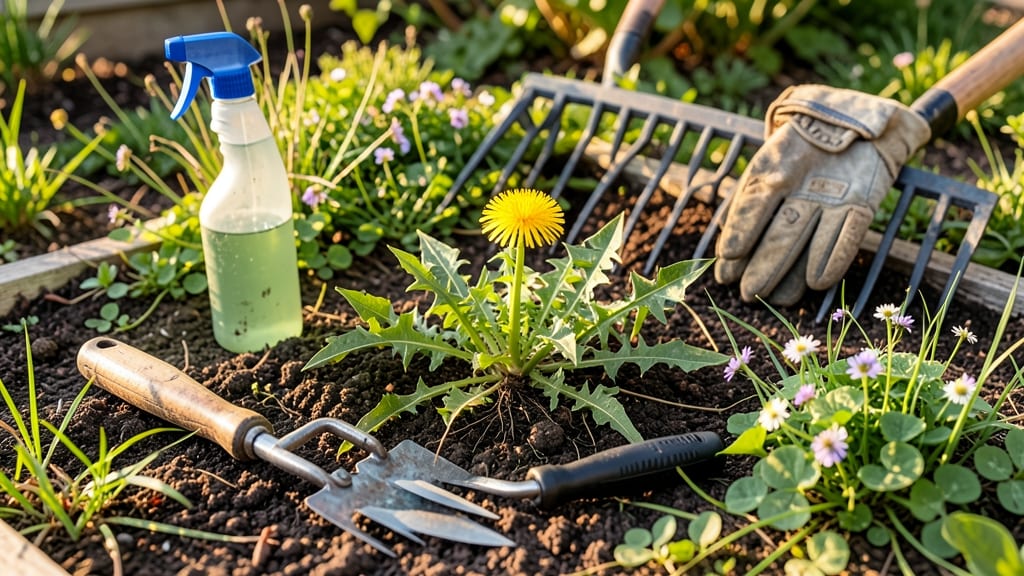
Massachusetts lawns fight weeds harder than anywhere else—dandelions, crabgrass, and clover take over when grass struggles with our rocky soil and unpredictable spring rains. 🌱 I’ve battled these stubborn invaders for years, and the organic methods I’ve perfected actually work without harsh chemicals that just mask the problem.
The key is understanding why weeds thrive here: compacted soil, poor drainage, and thin grass create perfect conditions. Most people overwater or use broadleaf killers that damage grass, making weeds worse. Instead, we focus on thickening grass through proper mowing, overseeding, and targeted spot treatments that don’t harm your lawn.
By late summer, you’ll see fewer weeds and stronger grass that crowds them out naturally. The secret? A three-step approach—fix the soil, feed the grass, and attack weeds at their roots—without the chemical warfare that harms New England’s delicate ecosystems.
Works for all lawn types, from sunny backyards to shady patches. Let’s make your grass the envy of the neighborhood—without the weed wars.
Root Causes of Massachusetts Weeds
Weeds don’t just appear out of nowhere—they thrive because of specific conditions in your lawn. Understanding the why behind their persistence is the first step to organic, long-term control. Massachusetts’ unique climate—hot summers, cold winters, and variable rainfall—creates the perfect storm for weeds to take over.
Let’s break down the key factors that turn your lawn into an unwanted garden for crabgrass, dandelions, and clover.
---
Weeds are nature’s opportunists—they exploit weak spots in your lawn. When your soil lacks essential nutrients or has compacted layers, grass struggles to grow thick and dense. Here’s how it happens:
- Lack of Organic Matter 🌿 Healthy soil is rich in humus (decomposed organic material), which feeds grass roots. Without it, weeds like chickweed and plantain dominate because they thrive in nutrient-poor conditions.
Massachusetts’ clay-heavy soils (common in the eastern part of the state) can also bake hard in summer, suffocating grass roots while leaving weeds to spread.
- pH Imbalances 📉📈 Most lawn grasses prefer a pH of 6.0–7.0. If your soil is too acidic (low pH) or alkaline (high pH), grass weakens, creating gaps for weeds.
For example: - Dandelions love slightly acidic soil (pH 5.5–6.5). - Clover (a common "weed") actually fixes nitrogen, making alkaline soils (pH 7.0+) more hospitable to it than grass.
- Compacted or Waterlogged Soil 💦🚫 Heavy foot traffic, construction equipment, or poor drainage (a problem in low-lying areas of MA) compresses soil, reducing oxygen flow to grass roots. Weeds like creeping charlie (ground ivy) and moss thrive in these conditions because they don’t need deep roots to survive.
Actionable Fix: Test your soil (kits from UMass Extension are affordable) and amend with compost, peat moss, or lime (for acidic soil) to restore balance.
---
Weeds flourish where grass is stressed or absent. In Massachusetts, uneven watering—whether from drought, overwatering, or irregular schedules—creates the perfect entry points.
- Underwatering 💧❌ Grass goes dormant in dry spells (common in July–August), leaving bare patches. Crabgrass and spotted knapweed germinate in these dry, sunny gaps because they’re drought-tolerant.
- Overwatering 💦🌪️ Too much water (or poor drainage) leads to fungal diseases (like brown patch) that kill grass, inviting weeds like nutsedge (which loves wet soil). In spring, heavy rains can also wash away seed, leaving thin spots where weeds take hold.
- Irregular Watering ⏰🔄 Skipping watering days or using sprinklers that miss spots creates patchy growth. Weeds like clover and henbit fill these gaps because they germinate quickly in disturbed soil.
Actionable Fix: Water deeply 1–1.5 inches per week (early morning is best) and mow high (3–4 inches) to shade out weeds. Fix drainage issues with sand or organic matter if your lawn pools water.
---
Neglecting basic lawn care is like leaving the door open for weeds. Here’s how:
- Skipping Mowing ✂️❌ Tall grass shades the soil, but it also traps moisture and seeds, creating ideal conditions for foxtails and cheatgrass. Mowing too short (below 2.5 inches) stresses grass, while leaving clippings too long can smother new growth.
- No Overseeding 🌱🚫 Massachusetts lawns often have bare patches from winter kill, pests, or disease. Without overseeding in early fall, weeds like annual bluegrass and prostrate spurge move in to fill the gaps.
- Ignoring Thatch Buildup 🍄📏 Thatch (a layer of dead grass and roots) thicker than ½ inch blocks water and nutrients. Weeds like moss and creeping bentgrass thrive in this environment because they don’t need deep roots.
Actionable Fix: Mow regularly, overseed with cool-season grasses (like fine fescue) in September–October, and dethatch if the layer exceeds ¾ inch.
--- Grass isn’t the only thing suffering in a Massachusetts lawn—pests and diseases weaken it, giving weeds a foothold.
- Grubs & Insects 🐜🍃 Japanese beetles, chinch bugs, and grubs feed on grass roots, creating brown, spongy patches. Weeds like dandelions and clover quickly colonize these dead zones.
- Fungal Infections 🍄😷 Dollar spot, brown patch, and snow mold (common in MA winters) kill grass, leaving open space for annual weeds to sprout in spring.
- Animal & Wildlife Damage 🦌🐇 Deer, rabbits, and voles graze on young grass, preventing it from filling in. Weeds like black medic and wild violet become the dominant plants instead.
Actionable Fix: Apply beneficial nematodes (for grubs) or fungicides (like neem oil) early in the season. Install deer fencing if wildlife is an issue.
--- Not all weeds are equal—some are native to New England and exploit local conditions.
- Early Spring Germination ⏳🌱 Weeds like henbit and purple deadnettle germinate as early as March, while grass is still dormant. Their fast growth outcompetes slow-starting turf.
- Hot, Dry Summers 🔥🌞 Crabgrass and goosegrass thrive in bare, sunny spots during July–August droughts. These weeds produce thousands of seeds, ensuring next year’s invasion.
- Wet Springs & Fall 🌧️🍂 Nutsedge and moss dominate in waterlogged areas, while cool-season weeds (like chickweed) spread in fall rains when grass growth slows.
Actionable Fix: Apply pre-emergent herbicides (organic options like corn gluten meal) in early spring to block weed seeds. In fall, aerate to improve drainage before winter.
--- Ironically, harsh herbicides can sometimes backfire by killing beneficial microbes and encouraging superweeds.
- Over-Reliance on Glyphosate 🚫💥 While glyphosate kills weeds, it also disrupts soil biology, reducing organic matter. This leaves soil vulnerable to resistant weeds like marestail and palmer amaranth (though less common in MA, some weeds develop tolerance).
- Salt & Fertilizer Burn 🧂🌱 Over-salting driveways or over-fertilizing can stunt grass growth, creating weak spots where annual weeds like pigweed take over.
Actionable Fix: Use targeted organic herbicides (like vinegar + soap for spot treatment) and test soil before fertilizing to avoid overapplication.
--- Weeds don’t appear randomly—they’re signaling an underlying issue in your lawn. By addressing soil health, watering, maintenance, and climate-specific challenges, you can starve out weeds naturally and restore a thick, lush turf. The key? Consistency—because weeds exploit any weakness. 🚀
Targeted Weed Removal Solutions
Massachusetts lawns face a unique battle against weeds—thanks to the state’s humid summers, heavy rainfall, and diverse soil types. But armed with the right strategies, you can reclaim your grass without harsh chemicals.
Below, we’ll map out cause-specific fixes, from quick fixes to long-term prevention, tailored for New England’s climate.
---
Cause: Thin grass, compacted soil, or late spring seeding leaves gaps for crabgrass to thrive.
How to Fix It: 🔥 Pull Early – Crabgrass spreads via seeds, so remove it before it goes to seed (late summer). Use a weed puller or dig out roots with a hand trowel. 🍳 Pre-Emergent Treatment – Apply corn gluten meal (organic pre-emergent) in early spring (March–April) to block seeds from germinating. 👨🍳 Thicken Your Grass – Overseed bare spots with fine fescue or Kentucky bluegrass in early fall (September–October) to outcompete weeds. 🥘 Mulch & Mow High – Set your mower to 3–4 inches to shade soil and retain moisture, making it harder for weeds to establish.
💡 Pro Tip: Water deeply 2–3 times per week (1 inch total) to encourage deep grass roots, which crowd out weeds naturally.
---
Cause: Poor soil health, excess nitrogen, or disturbed soil (e.g., from aeration or construction).
How to Fix It: 🔪 Hand-Pull or Vinegar Spray – - For dandelions: Use a dandelion weeder to extract the entire taproot (even a tiny piece regrows!). - For clover/plantain: Spray with a 5% vinegar + dish soap solution (reapply every 3–4 days until dead). 🌡️ Boost Soil Health – Spread compost or aged manure in early spring to improve soil structure and reduce weed seeds’ ability to sprout. 🎯 Spot-Treat with Cornmeal – Corn gluten meal (not just pre-emergent!) can smother existing broadleaf weeds when applied thickly. ✨ Encourage Beneficial Microbes – Apply a mycorrhizal fungi treatment to help grass roots outcompete weeds naturally.
💡 Pro Tip: Aerate in fall (September–October) to reduce soil compaction, which weakens grass and invites weeds.
---
Cause: Poor drainage, acidic soil, or too much shade (common in Massachusetts’ wooded or north-facing yards).
How to Fix It: 📊 Test Soil pH – Moss thrives in acidic soil (pH < 6.0). Raise pH with lime (calcium carbonate) in early fall. 💪 Improve Drainage – Rake moss away, then top-dress with sand or compost to improve aeration. 🥗 Plant Shade-Tolerant Grass – Replace mossy areas with fine fescue or creeping red fescue, which handle low light better. 🍎 Add Organic Mulch – Spread pine straw or wood chips to suppress moss regrowth while improving soil over time.
💡 Pro Tip: If moss keeps returning, consider partial sun exposure—trim back overhanging trees or thin dense shrubs to let more light in.
---
Cause: Massachusetts’ mild winters and wet springs create perfect conditions for Poa annua, a cool-season weed that spreads aggressively.
How to Fix It: ⏰ Mow High & Frequently – Keep grass at 3–4 inches and mow weekly to weaken Poa annua’s seed production. 🔥 Solarize in Late Summer – Cover infested areas with clear plastic for 4–6 weeks (July–August) to bake out seeds. 👨🍳 Use Iron-Based Herbicides – For stubborn patches, iron chelate sprays kill Poa annua without harming grass (organic option). 🥘 Prevent Seed Spread – Rake and bag seed heads before they release in early spring.
💡 Pro Tip: Avoid overseeding in fall if Poa annua is bad—wait until late summer when it’s dormant.
---
To keep weeds at bay without chemicals, follow this New England-specific routine:
| Season | Task | Why It Works | |------------------|-----------------------------------|-------------------------------------------| | Early Spring | Apply corn gluten meal | Blocks weed seeds from germinating. | | Spring | Overseed bare spots | Thick grass crowds out weeds. | | Summer | Hand-pull weeds early | Prevents seed spread. | | Fall | Aerate + top-dress with compost | Improves soil health for next year. | | Winter | Leave grass clippings | Natural mulch suppresses weeds. |
--- Final Note: Patience is key—weeds return if soil health isn’t addressed. Consistent care (mowing, watering, overseeding) will make your lawn weed-resistant over time. For stubborn patches, combine methods (e.g., vinegar spray + cornmeal) for best results. 🌿
Frequently asked questions about Massachusetts lawn weeds
What are the most common weeds in Massachusetts lawns?
Dandelions, crabgrass, clover, and creeping charlie (ground ivy) top the list. These weeds thrive in MA’s climate because dandelions love acidic soil, crabgrass exploits bare patches, and clover spreads quickly in thin grass. Moss also dominates in shady, wet areas.
When is the best time to treat weeds organically?
Early spring (March–April) for pre-emergent treatments like corn gluten meal, and late summer (August–September) for hand-pulling before weeds go to seed. Fall aeration and overseeding also prevent winter weeds from taking hold in spring.
Can I use vinegar to kill weeds without harming grass?
Only for spot treatments! A 5% vinegar + dish soap mix works on dandelions and clover, but avoid spraying grass—it’ll burn the blades. For large areas, use targeted methods like hand-pulling or cornmeal instead.
Why do weeds keep coming back even after treatment?
Weeds return when soil conditions aren’t fixed. Compacted soil, poor drainage, or thin grass create perfect conditions for regrowth. Focus on soil health (compost, aeration) and thickening grass—weeds can’t survive in a dense lawn.
Are there any weeds native to Massachusetts that shouldn’t be removed?
Most "weeds" in MA are non-native and aggressive. However, clover actually fixes nitrogen—some gardeners tolerate it for soil benefits. For lawns, remove all weeds to maintain grass dominance, but consider leaving wildflowers in garden borders.