
Lawn
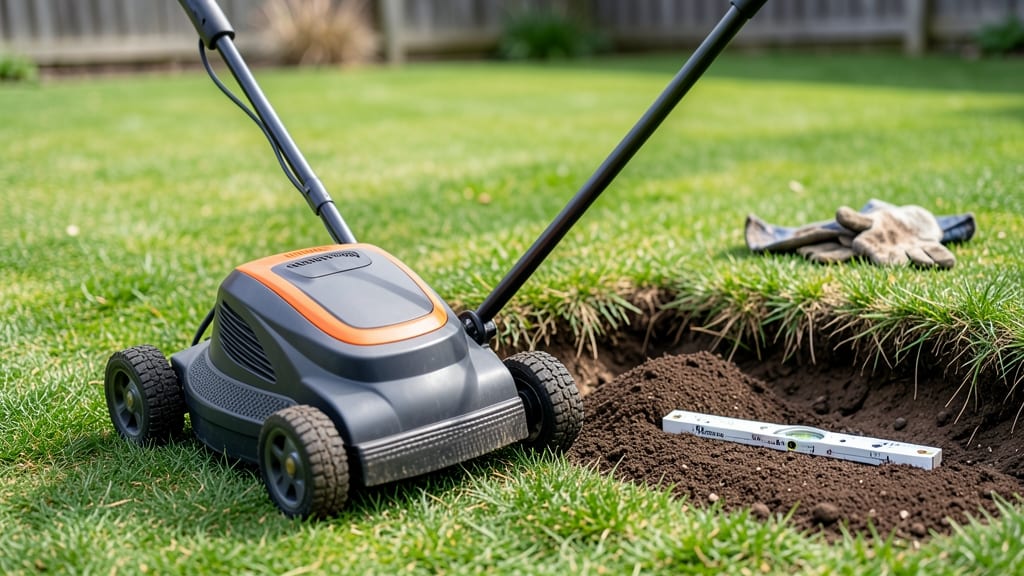
Selecting the best lawn levelling tool requires matching your yard’s size, terrain, and material type: hand rakes excel for small areas, while powered levellers efficiently handle large spaces, and sand or soil-based fixes demand specialized equipment for lasting results.
Your yard’s unique challenges dictate which tool will give you the smoothest, longest-lasting results. 🌱 Hand tools like rakes and shovels offer precise control for small patches or delicate slopes, while powered levellers with vibrating plates distribute weight evenly across expansive lawns.
For sandy soils, a laser-guided screed ensures perfect grade alignment, whereas clay-heavy yards may need a combination of tilling and soil amendments before levelling. I always recommend testing a small area first—this helps you gauge how the tool interacts with your specific terrain without committing to a full yard treatment.
Budget also plays a key role: manual tools cost less upfront but demand more physical effort, while electric or gas-powered levellers save time but require maintenance. Pro-level tools with adjustable depth settings can handle everything from minor dips to severe slopes, though they come with a higher price tag.
The right choice balances immediate results with long-term performance—skipping this step often leads to uneven settling or wasted materials.
💡 In This Article
- How Different Lawn Levelling Tools Work
- Best Lawn Levelling Tools by Yard Type
How different lawn levelling tools work
Manual tools like hand rakes and shovels rely on physical leverage to redistribute soil or sand. When you use a rake, the curved tines catch and lift material from low spots while pushing it toward higher areas, creating a gradual slope.
The key here is the angle—holding the rake at 30-45 degrees ensures you don’t dig too deep, which can destabilize the soil. Shovels, on the other hand, provide more control for moving larger volumes in small, precise areas, but they require more effort for extensive levelling.
The friction between the tool and soil creates resistance, which is why you’ll often see professionals use a combination of both for fine-tuning.
Powered levellers, such as vibrating plates or rotary tillers, work by applying consistent downward force while moving across the ground. Vibrating plates, for example, use centrifugal weights that create rapid, high-frequency vibrations at 2,500-3,000 RPM, compacting soil as they roll.
This process not only levels the surface but also stabilizes the base, reducing future settling. Rotary tillers, meanwhile, chop through dense soil or thatch with spinning blades, breaking up compacted layers before you spread new material.
The depth adjustment on these tools—typically ranging from 1-6 inches—lets you control how aggressively the machine works, making them ideal for correcting severe dips or uneven terrain.
Specialized tools like laser-guided screeds take precision to another level by using a self-leveling beam to create a perfectly flat surface. These systems project a laser line onto the ground, which the screed follows as it spreads and levels fill material.
The laser ensures accuracy within ±1/8 inch across the entire area, which is critical for projects like patios or driveways where flatness is non-negotiable. The screed’s weight—often 50-100 pounds—distributes pressure evenly, preventing sinkage in soft soils.
This technology is overkill for most lawns but indispensable for high-stakes levelling where even minor imperfections can cause drainage issues.
For sandy soils, tools like a drag harrow or a simple push plate work best because they don’t compact the loose material.
The harrow’s tines gently drag sand into low spots without disturbing the grain structure, while a push plate (often used in construction) spreads and levels fill material with minimal effort.
In contrast, clay-heavy soils need tools that can break up compaction first—like a rotary tiller—before levelling, as clay’s sticky nature resists redistribution without pre-loosening. The choice of tool here directly impacts how well the material settles and compacts over time.
Consider the terrain’s slope as another critical factor. On gentle inclines (5-10 degrees), a hand rake or a lightweight vibrating plate suffices, but steeper slopes (>10 degrees) demand tools with better traction, like a walk-behind leveller with adjustable casters.
The tool’s ability to maintain stability on uneven ground prevents it from tipping or digging into soft spots, which can turn a simple levelling job into a frustrating battle.
Always check the manufacturer’s recommended slope limits—some tools are rated for up to 15 degrees, while others struggle beyond 5 degrees.
Finally, the material you’re levelling with matters. For sand or topsoil, a broadcast spreader paired with a rake works well, but for heavier fill like crushed stone, you’ll need a tool that can handle the weight without sinking.
The density of the material affects how much force the tool needs to exert—loose sand requires less pressure than compacted gravel.
This is why pros often use a combination of tools: a tiller to break up the base, a leveller to spread the fill evenly, and a roller to compact it into place.