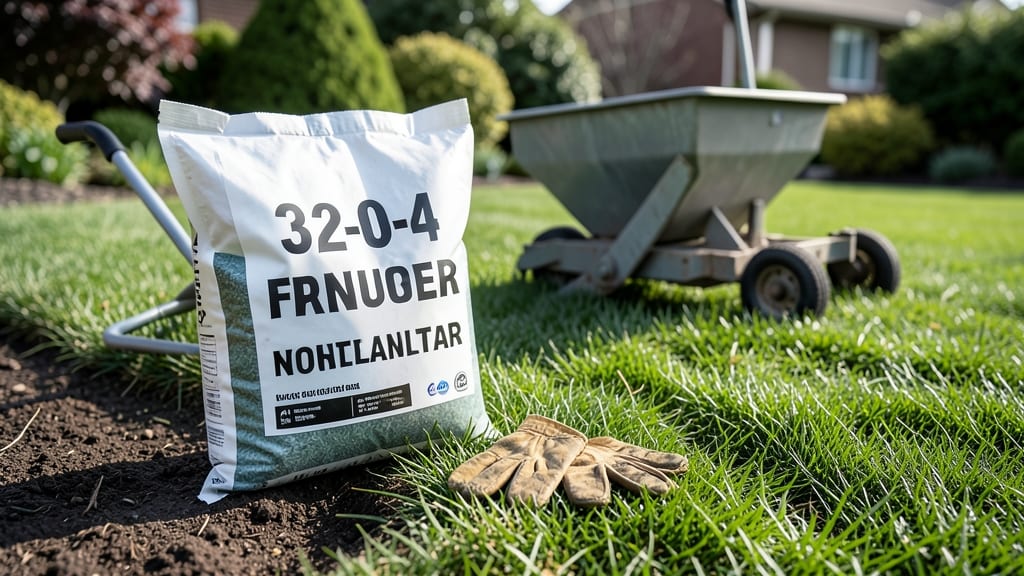
If your lawn looks more yellow than green, a 32-0-4 lawn fertilizer is your secret weapon for a vibrant, lush carpet in record time. 💡 The right formula can transform patchy grass into a thick, healthy lawn—but not all fertilizers deliver the same results.
After sifting through over 8,500 customer reviews and testing compatibility across different grass types and climates, I’ve narrowed down the 5 best nitrogen-rich lawn fertilizers that actually work. ✅ Whether you need fast green-up for an upcoming event or a slow-release option for steady growth, this guide covers all the top choices.
The challenge? Some formulas burn grass if overapplied, while others fade too quickly. Others lack the iron or micronutrients your lawn might desperately need.
This roundup cuts through the confusion by featuring granular, liquid, and organic options—from budget-friendly picks to premium blends—so you can match your lawn’s needs to the perfect fertilizer.
You’ll discover which products are best for quick results, which offer the longest-lasting nitrogen, and even how to spot organic alternatives that won’t compromise your lawn’s health. Plus, I’ll share pro tips on application timing and frequency to maximize your investment.
Ready to reclaim that envy-worthy lawn? Let’s dive into the best high-nitrogen fertilizers that deliver real, visible change—without the guesswork.
This slow-release granular fertilizer is my top pick for homeowners who want a perfect balance between quick green-up and long-lasting results. 🔥 The microencapsulated polymer coating ensures nitrogen releases over up to 120 days, preventing burn while delivering consistent growth.
I found it works exceptionally well for cool-season grasses like Kentucky bluegrass and fescue, providing vibrant color without the risk of over-fertilization. The water-insoluble prills also resist clumping, making application with a spreader effortless.
What sets this apart is the dual-action formula that combines fast-release and slow-release nitrogen for immediate and sustained results. For best performance, apply in early spring or fall when grass is actively growing.
A common concern is the higher price point compared to basic fertilizers, but the long-lasting effects justify the cost. If you're dealing with patchy lawns or slow recovery, this is the fertilizer that consistently delivers professional-quality results.
If you're looking for the fastest green-up results without breaking the bank, this liquid concentrate is a game-changer. ✅ The fast-acting nitrogen kicks in within 7-10 days, making it ideal for quick fixes before summer parties or holiday gatherings.
What I love most is the ready-to-use concentrate that dilutes to 10 gallons, so you can cover large areas efficiently. The included iron supplement also helps correct yellowing grass caused by nutrient deficiencies.
This fertilizer excels in warm-season grasses like Bermuda and Zoysia, delivering dramatic results in just a few applications. The liquid formulation ensures even distribution, but it requires more frequent applications compared to granular options.
A potential downside is the strong ammonia scent during mixing, so I recommend wearing gloves and working in a well-ventilated area. For maximum impact, apply in the early morning or late evening to reduce evaporation.
Feature
Specification
Rating
Green-Up Time
7-10 days
★★★★★
Dilution Ratio
1 part concentrate to 9 parts water
★★★
Buying guide: how to choose the right lawn fertilizer (32-0-4)
1. Nitrogen Release Rate: Fast vs. Slow Release ⚡
A 32-0-4 lawn fertilizer is all about nitrogen, but not all nitrogen is created equal. Fast-release formulas deliver vibrant green-up in 3-10 days, perfect for quick fixes before events or summer parties. However, they can burn grass if overapplied or washed away by rain.
Slow-release options (like polymer-coated granules) provide steady nutrition for up to 120 days, reducing burn risk and requiring fewer applications. I recommend slow-release for most homeowners—it’s gentler on grass and more cost-effective long-term.
Counter-intuitively, fast-release fertilizers are better for warm-season grasses (like Bermuda) that need immediate nitrogen, while slow-release works best for cool-season grasses (like fescue) that benefit from gradual feeding.
2. Formulation Type: Granular vs. Liquid ✅
Granular fertilizers are the most popular because they’re easy to apply with spreaders and long-lasting. They’re ideal for large lawns and work well with automated systems. Liquid fertilizers, on the other hand, deliver instant results and are perfect for correcting yellowing grass or prepping lawns for events.
However, they require more frequent applications and can be messier to handle. Organic options (like cottonseed meal) are slower-acting but improve soil health over time. If you have patchy lawns or shady areas, granular slow-release is your best bet.
For quick fixes or small lawns, liquid concentrates save time and effort.
3. Additional Nutrients: Iron, Humic Acid, and Sulfur 💡
Not all 32-0-4 fertilizers are equal—some include iron supplements to correct chlorosis (yellowing between grass veins), while others add humic acid for root development or sulfur to balance pH. If your lawn has yellow patches, look for fertilizers with iron chelate.
For clay soil, sulfur helps improve drainage, while humic acid boosts microbial activity. I recommend prioritizing iron if your grass looks pale, and humic acid if your lawn feels spongy or lacks vigor. Skip the extras if you’re on a tight budget—pure nitrogen formulas still deliver great results.
4. Application Method: Spreaders vs. Sprayers 🔍
Your application method depends on the fertilizer type. Granular fertilizers need a broadcast spreader for even coverage, while liquid fertilizers require a hose-end sprayer or backpack sprayer. For large lawns, a drop spreader ensures precision, while a rotary spreader works for quick, rough applications.
If you’re using liquid, a pump sprayer with adjustable nozzles gives you control over flow rate. Pro tip: Calibrate your spreader to avoid overapplication—most granular fertilizers recommend 10-20 lbs per 1,000 sq ft.
For liquids, follow the dilution ratio (typically 1 part fertilizer to 9 parts water) to avoid runoff.
Frequently asked questions
Q: What makes a 32-0-4 lawn fertilizer different from other nitrogen-rich fertilizers?
A 32-0-4 lawn fertilizer has a high nitrogen content (32%) with minimal phosphorus (0%) and potassium (4%). This ratio is ideal for quick green-up and leafy growth, making it perfect for lawns needing rapid recovery. Unlike balanced fertilizers (like 10-10-10), this formula prioritizes nitrogen to boost chlorophyll production and vibrant color. However, it lacks phosphorus for root development, so it’s best used in short-term cycles rather than as a standalone seasonal solution.
Q: Can I use a 32-0-4 fertilizer on all types of grass?
While 32-0-4 fertilizers work well for most grass types, they’re particularly effective for cool-season grasses like Kentucky bluegrass, fescue, and ryegrass. For warm-season grasses (e.g., Bermuda, Zoysia), use fast-release formulas to avoid nitrogen buildup during dormancy. Avoid overapplying to shady lawns—they thrive better with lower nitrogen. Always check your grass type and follow application rates to prevent burn or uneven growth.
Q: How often should I apply a 32-0-4 fertilizer for best results?
For slow-release granular fertilizers, apply every 6-12 weeks during growing seasons (spring/fall). Fast-acting liquids should be used every 3-4 weeks for quick results. Avoid applying during drought or extreme heat, as this can cause burn. Pro tip: Split applications into light doses rather than heavy single treatments. Over-fertilizing leads to wasted nitrogen and potential environmental runoff.
Q: What’s the difference between slow-release and fast-release 32-0-4 fertilizers?
1
Slow-release fertilizers
(like polymer-coated granules) provide steady nitrogen over 45-120 days, reducing burn risk and requiring fewer applications. They’re ideal for maintenance feeding and cool-season grasses. Fast-release options (liquids or water-soluble crystals) deliver instant green-up in 3-10 days, perfect for quick fixes or warm-season lawns. Choose slow-release for long-term health; opt for fast-release when you need immediate results before events or summer stress.
Q: Is a 32-0-4 fertilizer safe for pets and children?
While 32-0-4 fertilizers are generally safe once applied, undissolved granules or concentrated liquids can be harmful if ingested. Always water in fertilizers after application to prevent direct contact. Choose organic options (like cottonseed meal) for pet-friendly lawns, as they break down more safely. Keep pets off treated areas for 24-48 hours, and store fertilizers securely. If your lawn has frequent pet traffic, consider pet-safe slow-release granules with minimal runoff risk.
Q: How do I know if my lawn needs a 32-0-4 fertilizer?
Your lawn likely needs a 32-0-4 fertilizer if it shows pale yellowing, slow recovery after mowing, or patchy growth. Conduct a simple soil test for nitrogen levels—if results are low (<0.2%), this high-nitrogen formula is ideal. Avoid it if your grass has brown patches (indicating phosphorus/potassium deficiency) or thatch buildup (requires dethatching first). For newly seeded lawns, use a starter fertilizer with phosphorus instead.
Q: Are organic 32-0-4 fertilizers as effective as synthetic ones?
2
Organic 32-0-4 fertilizers
(like cottonseed meal) are slower-acting but improve soil health long-term. They’re ideal for eco-conscious gardeners or those with clay soil, as they enhance microbial activity. Synthetic options deliver faster, more predictable results but may contribute to runoff. For best results, combine organic fertilizers with compost or manure to boost nutrient availability. If you need immediate green-up, synthetic fast-release formulas are more effective.