
Lawn
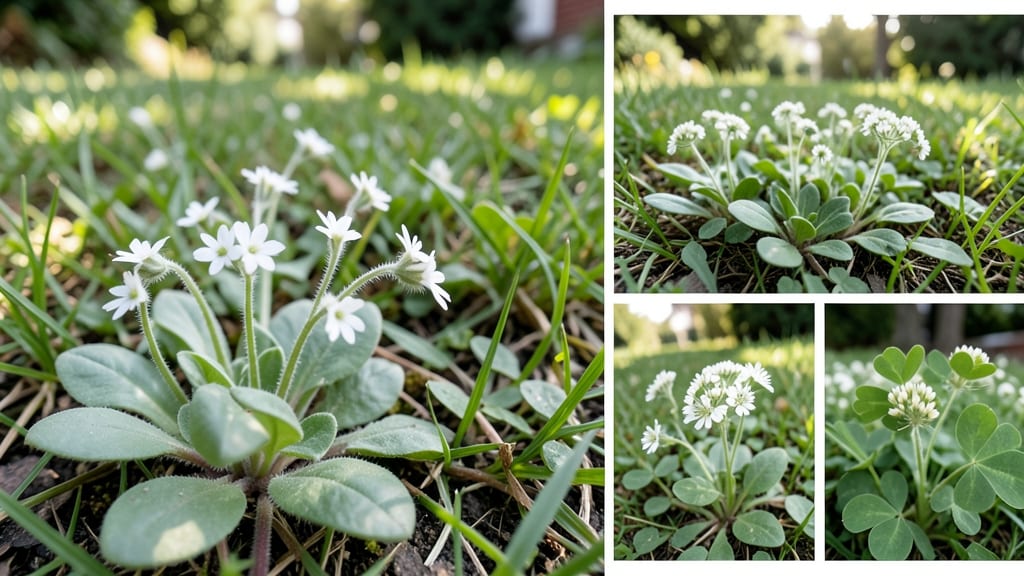
The identification of lawn chickweed starts with spotting those tiny, oval leaves that look like they’re wearing a fuzzy blanket. 🌱 I’ve spent too many weekends pulling what I thought was clover, only to realize it was this sneaky weed creeping into my grass—especially after cool, damp springs.
The key difference? Chickweed leaves grow in pairs along the stem, while clover forms a three-leaf cluster (trifoliate), and its stems stay low to the ground, never standing upright like grass blades. This weed thrives in thin lawns or shady spots, where it spreads like a ground-hugging mat.
The stems feel slightly sticky when wet, and if you crush a leaf, you’ll smell a faint, almost cucumber-like scent—something clover never does. It’s not harmful, but if left unchecked, it’ll outcompete your grass for sunlight and water, leaving patchy, weak areas that invite more weeds.
Once you know what to look for, spotting it becomes second nature. A quick tug test reveals chickweed’s shallow roots—it pulls out easily, while clover and grass resist.
For management, simply hand-pull when the soil is moist, or mow high (3–4 inches) to shade out new growth before it takes over. The good news? Chickweed doesn’t spread aggressively like crabgrass, so a little vigilance goes a long way.
Focus on thick, healthy grass first—it’s your best defense against any invader.
Why Chickweed Invades Lawns
Chickweed thrives in lawns not by accident but due to a mix of environmental and human factors that create the perfect conditions for its rapid spread. Understanding these root causes can help you take proactive steps to prevent and control its growth.
Let’s break down the science behind why this pesky weed keeps showing up in your grass.
Chickweed is an opportunistic weed that exploits stressed or thin lawns. Its success stems from a few key soil-related factors:
- Compacted or Poor-Draining Soil 💧 Chickweed thrives in areas where water pools or drains poorly. Compacted soil restricts root growth in grass, leaving bare spots that chickweed quickly colonizes. Its shallow roots allow it to absorb moisture efficiently in soggy conditions, while turfgrass struggles to establish.
- Low Soil Fertility or pH Imbalance 🌱🔄 Grass requires balanced nutrients (nitrogen, phosphorus, potassium) and a pH between 6.0 and 7.0 to stay healthy. Chickweed, however, flourishes in nutrient-poor or acidic soils (pH below 6.0).
If your lawn lacks proper fertilization or lime applications, chickweed fills the gap by outcompeting weak grass.
- Thin or Patchy Turf 🏞️🚫 Bare soil or sparse grass coverage (often from drought, foot traffic, or poor seeding) gives chickweed an open invitation. Its fast germination rate means it can sprout within 5–7 days of exposed soil, while grass seeds may take weeks to establish.
Actionable Fix: Conduct a soil test to check pH and nutrient levels. Aerate compacted areas, overseed thin patches, and apply a balanced fertilizer to strengthen grass density.
Chickweed’s life cycle is tightly linked to temperature and moisture, making it a year-round nuisance in many regions:
- Cool, Wet Springs and Falls 🌧️🍂 Chickweed germinates best in 50–70°F temperatures and thrives in damp conditions. If your lawn stays moist during these seasons (e.g., from rain or overwatering), chickweed seeds lying dormant in the soil will sprout en masse.
- Winter Survival Strategies ❄️🌱 Unlike many weeds, chickweed is a winter annual, meaning it germinates in fall, grows through winter, and sets seeds in spring. Its ability to withstand light frosts (down to 20°F) ensures it outlasts many turfgrasses.
- Drought Stress in Grass 💦🚫 While chickweed prefers moisture, it can also take advantage of drought-stressed lawns. When grass wilts from underwatering, chickweed’s deep taproots (relative to its size) help it access residual moisture, giving it a competitive edge.
Actionable Fix: Adjust your watering schedule to promote deep root growth in grass (1–1.5 inches per week) and avoid overwatering in fall/winter to discourage chickweed germination.
Even the best-maintained lawns can fall victim to chickweed if certain practices are overlooked:
- Over-Fertilization with Weed-and-Feed Products 🌿💥 Some broadleaf herbicides (common in "weed-and-feed" products) target chickweed but may also stress grass, creating gaps. Additionally, excessive nitrogen can promote fast grass growth that shades out chickweed temporarily—but once the grass slows (e.g., in heat), chickweed rebounds.
- Improper Mowing Practices ✂️🚫 Mowing grass too short (below 2–3 inches) weakens roots and exposes soil, while leaving clippings too long can smother grass. Chickweed, however, thrives in short mow settings because its low-growing habit blends in until it’s too late.
- Unintended Seed Contamination 🌱📦 Chickweed seeds can hitchhike on tools, shoes, or even bird droppings. If you’ve recently spread compost, topsoil, or even purchased mulch from infested areas, you may have unknowingly introduced seeds to your lawn.
Actionable Fix: Mow at the highest recommended height for your grass type, sharpen mower blades to avoid tearing grass, and sanitize tools between lawns. Avoid over-fertilizing in fall to prevent chickweed seed production.
Chickweed isn’t just lucky—it’s biologically equipped to dominate lawns:
- Rapid Reproduction Cycle 🌱🔄 A single chickweed plant can produce thousands of seeds in its lifespan, which lie dormant in the soil for years. Even a few missed plants can lead to a full-blown infestation next season.
- Shade Tolerance 🌿🌑 While it prefers sun, chickweed can grow in partial shade, where many turfgrasses struggle. This makes it a persistent problem under trees or in dense lawns.
- Allergy to Competition 🛑🌱 Chickweed releases allelopathic chemicals that inhibit the growth of nearby plants, giving it a competitive edge in crowded conditions.
Actionable Fix: Pull chickweed before it flowers (when it’s still small and seed-free) to break its reproduction cycle. Use a spot treatment of vinegar or a targeted herbicide (like 2,4-D) for larger patches.
How to Remove & Prevent Lawn Weeds
Now that you’ve identified chickweed in your lawn (or ruled out the lookalikes!), it’s time to tackle it effectively. Chickweed thrives in moist, shaded, or poorly maintained areas, so addressing the root causes will prevent its return.
Below, we’ve mapped practical solutions to common causes—whether it’s overwatering, compacted soil, or weak grass—and how to fix them for good.
Chickweed loves damp conditions, so soggy lawns invite it in. If your soil stays wet for long periods, chickweed will spread like wildfire.
How to Fix It: ✅ 🔥 Improve Drainage
- Test your soil’s drainage by digging a 6-inch hole and filling it with water. If it drains in under 6 hours, you’re good. If not, amend the soil with sand or compost to loosen it up.
- Consider installing French drains or swales (shallow trenches) if water pools in low spots.
✅ 👨🍳 Adjust Your Watering Schedule
- Water deeply but less frequently—aim for 1–1.5 inches per week, including rainfall.
- Water early in the morning (before 10 AM) to reduce evaporation and fungal risks.
- Avoid daily light watering, which keeps soil moist and encourages chickweed.
✅ 🌡️ Mulch Strategically
- Apply 2–3 inches of organic mulch (like shredded bark or straw) around garden beds to retain moisture without smothering grass.
- Keep mulch away from the lawn’s edge to prevent it from blocking sunlight to your turf.
Chickweed thrives where grass struggles—thin, weak, or bare patches are its favorite entry points.
How to Fix It: ✅ 🔪 Aerate Your Lawn
- Rent a core aerator (or hire a pro) to pull out small soil plugs, allowing water, air, and nutrients to penetrate.
- Best time: Early fall or spring, when grass is actively growing.
✅ 💡 Fertilize Smartly
- Test your soil’s pH and nutrient levels (a DIY kit from a garden center works).
- Apply a slow-release, balanced fertilizer (like 10-10-10) in early spring and fall.
- Avoid over-fertilizing with nitrogen—chickweed can outcompete weak grass, but strong grass crowds it out!
✅ 🌱 Overseed Bare Spots
- After aerating, overseed thin areas with a dense, shade-tolerant grass mix (like fine fescue or Kentucky bluegrass).
- Keep soil moist until new grass sprouts (about 2–3 weeks).
Chickweed often takes over where grass can’t survive—think dappled shade from trees or high-traffic areas where grass wears thin.
How to Fix It: ✅ 🍳 Thin Out Tree Canopy (If Possible)
- Prune branches to increase sunlight to the lawn (just don’t overdo it—too much sun can stress grass).
- Plant shade-tolerant ground covers (like creeping thyme or clover) in heavily shaded spots to outcompete weeds.
✅ 🎯 Strengthen Your Grass
- Mow high (3–4 inches) to shade out weeds and encourage deep roots.
- Dethatch if your lawn has a thick thatch layer (over ½ inch), which smothers grass.
- Hand-pull chickweed in small patches—grasp the base (where the roots meet the soil) to avoid regrowth.
Once you’ve removed chickweed, stop it from coming back with these habits:
💡 🌡️ Maintain Proper Moisture
- Let the top inch of soil dry out between waterings—chickweed seeds won’t germinate in dry conditions.
💡 ✨ Stay Vigilant with Weed Control
- Apply a pre-emergent herbicide in early spring (before chickweed seeds sprout) to block germination.
- For post-emergent control, use a selective herbicide like 2,4-D (follow label instructions carefully).
💡 🔥 Encourage Healthy Competition
- A thick, dense lawn is chickweed’s worst enemy. Overseed, fertilize, and aerate regularly to keep grass lush.
💡 🌱 Pull Early & Often
- Chickweed spreads via tiny seeds and runners, so remove it before it flowers (or it’ll seed everywhere!).
- Boil water or vinegar spray (1 gallon vinegar + 1 oz dish soap) can kill chickweed in cracks or sidewalks.
❌ Don’t ignore small patches—chickweed spreads fast! ❌ Don’t use salt or bleach—it’ll kill your grass too. ❌ Don’t skip soil testing—wrong fertilizers can make the problem worse.
By tackling water, soil, and grass health, you’ll create an environment where chickweed can’t survive—and your lawn will stay lush and weed-free! 🌿✨
Frequently asked questions
How can I tell if those tiny green plants in my lawn are chickweed or clover?
Chickweed leaves grow in pairs along the stem and have a fuzzy texture, while clover leaves form a three-leaf cluster (trifoliate). Chickweed stems stay low to the ground and feel slightly sticky when wet, while clover has a more upright growth habit. Crush a leaf—chickweed smells faintly like cucumber, while clover has no distinct odor.
Is chickweed harmful to my lawn or garden?
Chickweed isn’t toxic, but it can outcompete grass for sunlight and water, creating thin, patchy areas. While it doesn’t harm plants directly, its rapid spread signals poor soil conditions. Focus on improving grass health—thick turf naturally crowds out chickweed over time.
When is the best time to remove chickweed before it spreads?
Pull chickweed before it flowers (typically in early spring or late fall) to prevent seed production. The key is to remove the entire root system—grasp the base and tug gently. If you spot it after flowering, it’s already seeding, so act fast to limit next year’s infestation.
Will vinegar kill chickweed without harming my grass?
Spot treatments of undiluted white vinegar (1 gallon) mixed with 1 tablespoon dish soap can kill chickweed, but it may also damage nearby grass. For safety, apply only to small patches or sidewalks. For lawns, hand-pulling or targeted herbicides like 2,4-D are better choices.
Why does chickweed keep coming back even after I pull it?
Chickweed seeds can lie dormant in soil for years, and even small patches produce thousands of seeds. The real fix is improving soil drainage, fertilizing properly, and maintaining a thick lawn—this removes the conditions chickweed needs to thrive. Consistency is key!