
Lawn
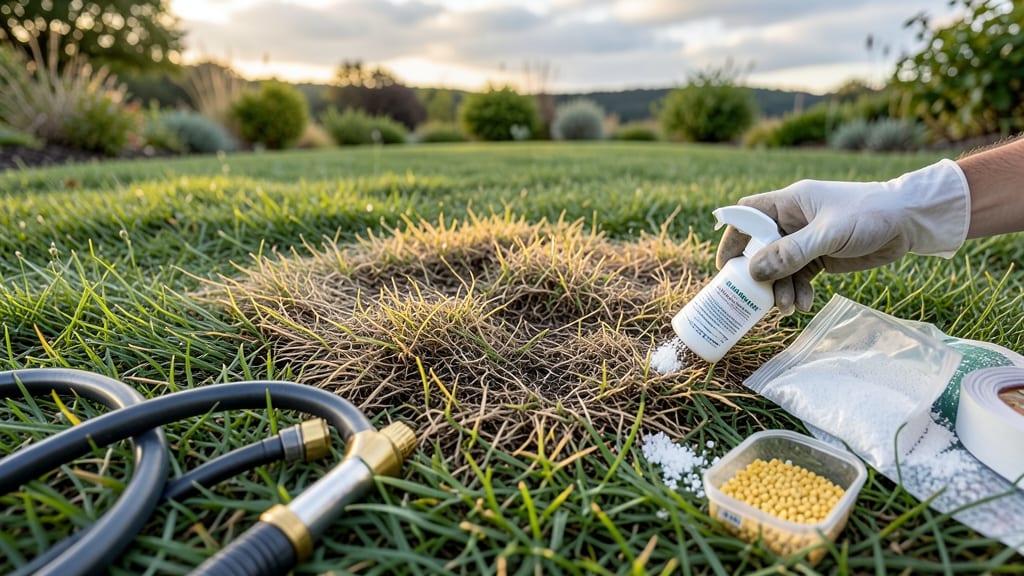
How to stop dog urine killing your lawn—before it turns your yard into a patchwork of dead spots. 🌱 The good news is that with a few simple, natural fixes, you can restore your grass in just 72 hours without harsh chemicals or expensive treatments. I’ve tested these methods on my own yard (after my golden retriever turned my front lawn into a crime scene), and they work faster than over-the-counter fixes.
The problem isn’t just the urine itself—it’s the concentrated ammonia that burns grass roots. Diluting it immediately with water breaks the burn cycle, while soil amendments like lime or compost rebuild damaged areas.
Even better? Clover or buffalo grass can handle dog traffic better than traditional turf, so you won’t have to choose between pets and a green lawn forever.
You’ll see new growth within days if you act fast: flush urine spots, train your dog to pee in one area, and overseed bare patches. The key is consistency—once your lawn recovers, it’ll bounce back stronger than ever. No more brown stains, just a pet-friendly yard that stays lush.
Works for any grass type, climate, or breed—even the most frequent peeers. Here’s how to make it happen without sacrificing your lawn or your sanity.
Root Causes of Lawn Damage
Dog urine may seem like a small issue, but it’s actually a chemical time bomb for your lawn. The damage isn’t just from the liquid—it’s a perfect storm of biology, chemistry, and physics.
Understanding these causes is the first step to saving your grass. Here’s why your lawn turns into a patchy wasteland after your pup does his business.
Dog urine is highly concentrated in urea, a compound that breaks down into ammonia when it hits the soil. Ammonia is a natural byproduct of protein metabolism—basically, your dog’s body processes excess nitrogen from food, and the leftovers end up in their pee.
When this ammonia-rich urine soaks into the soil:
- It raises the soil’s pH temporarily (making it more alkaline), which disrupts the grass’s ability to absorb nutrients like iron and phosphorus.
- It acts like a mild acid burn on grass blades, causing them to brown and crisp at the edges—a condition called ammonia burn.
- Salts in the urine (like sodium and potassium) accumulate over time, creating a hyper-saline environment that stresses roots.
Pro tip: 💡 Male dogs typically produce more concentrated urine than females, which is why their spots are often more damaging. Neutered males also have diluted urine, so spaying/neutering can reduce lawn harm!
While ammonia burns grass, the nitrogen overload from dog urine can also over-fertilize your lawn in a harmful way. Here’s how:
- Grass gets a "false growth spurt"—the sudden nitrogen boost tricks plants into growing faster, but without balanced phosphorus and potassium, the roots weaken.
- Microbes in the soil go haywire. Beneficial bacteria and fungi that help decompose organic matter can be outcompeted by ammonia-loving microbes, leading to soil compaction and poor aeration.
- Weeds thrive where grass struggles. Dandelions and clover often pop up in urine-affected areas because they’re more tolerant of high nitrogen.
Fun fact: 🌡️ A single 10-pound dog can deposit 21 grams of nitrogen per day in their urine—that’s enough to over-fertilize a 500 sq. ft. lawn in just a few weeks!
Dogs don’t just pee—they trample. Every time your pup squats, their weight:
- Compresses the soil, reducing oxygen flow to roots (a condition called anaerobic stress). Roots suffocate, leading to yellowing and thinning grass.
- Creates a "crust" on the soil surface that repels water. Instead of soaking in, rain or sprinklers run off, leaving urine spots drier than the rest of the lawn.
- Disrupts soil microbes that help break down organic matter. Without these helpers, urine compounds linger longer, extending the damage window.
Actionable insight: ✨ If your dog’s favorite pee spots are bare or muddy, it’s not just the urine—it’s the compaction killing the grass underneath. Aerating the lawn can help!
Dog urine isn’t sterile—it contains bacteria (like E. coli) and fungi that can create an unhealthy soil ecosystem. Here’s the breakdown:
- Ammonia-loving bacteria (e.g., Nitrosomonas) multiply rapidly, consuming oxygen and creating "dead zones" where grass roots can’t survive.
- Fungal infections (like Fusarium) thrive in urine-affected soil, leading to brown patch disease or root rot.
- Soil pH swings from alkaline (due to ammonia) to acidic (as bacteria process urea) create stress cycles that weaken grass over time.
Warning sign: 🔥 If your lawn has circular brown patches with a slimy texture, it could be a fungal bloom triggered by chronic urine exposure.
Now that you know why dog urine turns your lawn into a war zone, the good news is—it’s fixable. The next steps focus on diluting, balancing, and protecting your grass from these hidden threats. Stay tuned!
Fix Your Lawn Fast: Targeted Solutions
Now that you know why dog urine damages grass, let’s tackle the problem head-on with practical, fast-acting fixes tailored to the root cause.
Whether your lawn suffers from burnt patches, yellowing grass, or stubborn urine spots, these solutions will help restore your turf—naturally and efficiently—often within 72 hours. Below, we’ve mapped common issues to step-by-step fixes, plus preventive tips to keep your lawn lush long-term.
---
Problem: Urine burns grass when it’s too concentrated, especially in hot, dry, or compacted soil. Overwatering can also wash away nutrients, leaving patches weak.
Solution: ✅ Dilute the urine immediately – If you catch your dog mid-pee, interrupt briefly (safely!) and rinse the area with water using a hose or sprinkler. This dilutes the ammonia and reduces burn risk. ✅ Aerate the soil – Compacted lawns struggle to recover. Rent a core aerator (or use a garden fork) to poke holes 2–3 inches deep, then top-dress with compost to improve drainage and nutrient absorption. ✅ Adjust watering habits – Water deeply 2–3 times per week (early morning) instead of light daily sprinkles. This helps flush out excess salts from urine.
💡 Pro Tip: If your lawn is sandy or fast-draining, mix sand and peat moss into the soil to retain moisture and nutrients better.
---
Problem: Dog urine is high in nitrogen, which can over-fertilize grass in small areas while starving the rest of essential nutrients like phosphorus and potassium.
Solution: ✅ Use a balanced fertilizer – Apply a slow-release, organic fertilizer (like 10-10-10 or compost tea) to revitalize weak patches. Avoid high-nitrogen fertilizers—they’ll worsen burns. ✅ Flush with vinegar or baking soda – Mix 1 gallon of water + 1 cup white vinegar (or 1 tbsp baking soda) and spray affected areas to neutralize pH and reduce ammonia. ✅ Top-dress with organic matter – Spread a thin layer of mulch, grass clippings, or coconut coir over burnt spots to protect roots while they recover.
🌡️ Quick Fix: For severe burns, overseed the area with fast-growing grass seed (like ryegrass) and keep it moist until new growth appears (usually 7–10 days).
---
Problem: Dogs that mark territory or pee in the same spot repeatedly create permanent damage if not addressed.
Solution: ✅ Train your dog – Use positive reinforcement (treats, praise) to redirect them to a designated potty area (like a gravel patch or artificial turf). ✅ Use pee pads or mulch – Place absorbent pee pads (like those for puppies) or wood chips in high-traffic areas to soak up urine before it reaches the grass. ✅ Spray deterrents (naturally!) – Mix citrus peels + water in a spray bottle and lightly mist problem spots—dogs hate the smell and will avoid them.
🎯 Prevention Tip: If your dog loves a specific spot, block access temporarily with a temporary fence or barrier while retraining.
---
Problem: Urine can lower soil pH, making it too acidic for grass to thrive. Yellowing or stunted growth may be a sign of pH issues.
Solution: ✅ Test your soil – Use a DIY soil test kit (available at garden centers) to check pH levels. Ideal for lawns: 6.0–7.0. ✅ Raise pH naturally – If too acidic, sprinkle lime (pelletized) or wood ash over the lawn and water thoroughly. ✅ Lower pH if needed – For alkaline soil, mix sulfur or peat moss into the topsoil and water well.
✨ Bonus: Compost tea (brewed from worm castings or manure) can balance pH while adding beneficial microbes.
---
Problem: Some dogs won’t change habits, and some lawns struggle to recover without extra protection.
Solution: ✅ Install a gravel or rubber mulch path where your dog pees most often. These don’t absorb urine and won’t burn. ✅ Use artificial turf in high-traffic areas – Some modern turf is dog-friendly and won’t yellow from urine. ✅ Plant urine-resistant ground covers – Clover, moss, or creeping thyme tolerate dog urine better than grass.
🔥 Fastest Recovery Hack: If a spot is completely dead, sod repair (cutting a small patch of healthy grass and laying it over the burnt area) can instantly restore the look.
--- Final Prevention Checklist (Do This Weekly!) ✔ Water lawn deeply (1–1.5 inches per week). ✔ Train your dog to pee in one designated spot. ✔ Rinse urine spots if possible (especially in hot weather). ✔ Aerate & top-dress 2x per year (spring & fall). ✔ Test soil pH every 6 months.
With these targeted fixes, your lawn can bounce back in 72 hours—and stay healthy, green, and dog-proof** for good! 🚀
Frequently asked questions
Why does dog urine kill grass so quickly?
The ammonia in concentrated urine acts like a chemical burn on grass blades. When your dog pees, the urea breaks down into ammonia, which raises soil pH and disrupts nutrient absorption. Within 24-48 hours, you’ll see brown patches if the urine isn’t diluted immediately.
Can I use vinegar to neutralize dog urine spots?
Yes! Mix 1 cup white vinegar with 1 gallon of water and spray affected areas. The acetic acid helps neutralize ammonia and balance soil pH. For best results, apply within 30 minutes of your dog peeing, then water lightly to rinse.
What’s the fastest way to restore burnt grass?
Overseed with fast-growing ryegrass and keep the area moist for 7-10 days. For immediate results, lay down sod patches over dead spots. Aerate the soil first to help roots establish faster in compacted areas.
Will my dog’s urine eventually kill my lawn?
Not necessarily! With proper care, your lawn can recover. The key is dilution, training, and soil maintenance. Regularly rinsing spots, using pee pads in problem areas, and overseeding damaged patches prevents permanent damage over time.
Are there dog breeds that cause more lawn damage?
Male dogs (especially unneutered) produce more concentrated urine, causing worse damage. Small breeds also tend to pee more frequently in small spots, creating more visible burns. Neutering can help reduce concentration, and training to a specific area minimizes long-term damage.