
Lawn
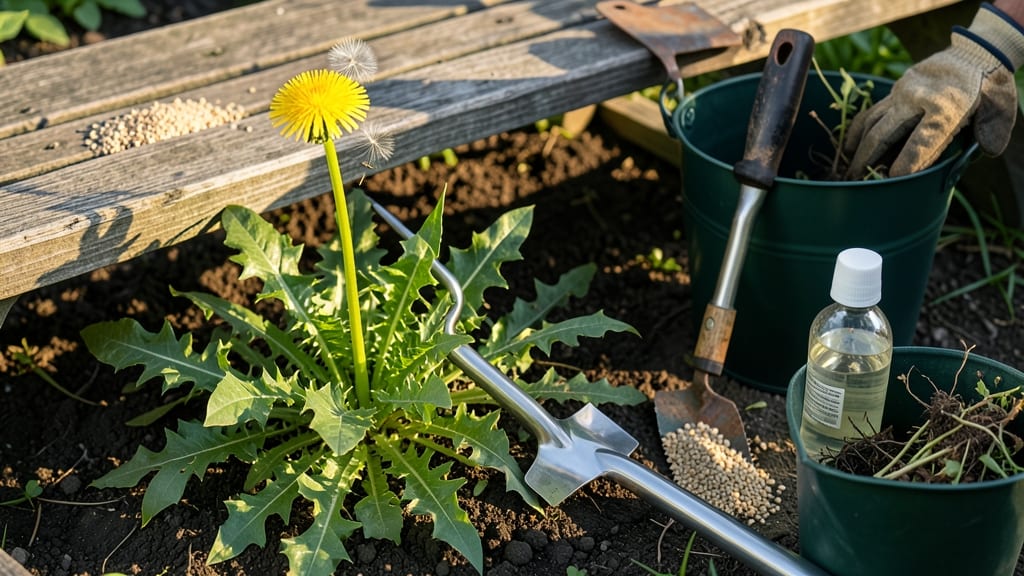
Dandelions are the lawn's most stubborn weeds—until you learn their one weakness. 🌱 I've wrestled with these bright yellow invaders for years, and the secret isn't brute force but targeted timing and technique that makes them disappear for good.
The problem starts with those deep taproots, which can stretch 10-15 inches into the soil. Most people pull too early or miss the roots entirely, leading to regrowth. But when you hit the right moment—just as the flower buds form—you can yank them out cleanly, roots and all, in seconds.
What you're left with is a lawn that stays green and dense, crowding out weeds naturally. The key is consistency: tackle them before they seed, and you'll spend less time pulling and more time enjoying your yard. Works for both small patches and entire lawns.
Here's how to make them vanish without chemicals or backbreaking effort.
The Hidden Triggers Behind Dandelions
Dandelions may seem like an innocent lawn nuisance, but they’re actually nature’s way of telling you something’s off with your grass. Understanding why they thrive in your yard is the first step to stopping them in their tracks.
Let’s break down the science—and the sneaky reasons—these bright yellow invaders keep coming back.
Dandelions are opportunistic plants—they flourish where your grass struggles. If your lawn lacks essential nutrients, dandelions swoop in like lawn-care vultures. Here’s why:
- Low Nitrogen Levels 💡 Nitrogen is the building block of healthy grass. If your lawn is nitrogen-deficient, dandelions—with their deep, taproot systems—can outcompete grass for nutrients. They’re like the fast-food restaurants of the plant world: quick, aggressive, and always expanding.
- Compacted or Poor Soil 🪨 Dandelions love loose, disturbed soil because their roots can spread easily. If your lawn has:
- Clay-heavy soil (poor drainage)
- Sandy soil (nutrient-poor)
- Compacted turf (from foot traffic or heavy machinery) …dandelions will take over the gaps.
- pH Imbalances 🧪 Grass prefers a pH of 6.0–7.0. If your soil is too alkaline (high pH) or acidic (low pH), dandelions thrive.
A simple soil test can reveal if your lawn’s pH is off—fixing it with lime (for acidity) or sulfur (for alkalinity) can weaken dandelion dominance.
Actionable Fix: Test your soil and amend it with compost, organic matter, or slow-release fertilizer to crowd out dandelions naturally.
Dandelions are sun-loving survivors, and they exploit weak spots in your lawn’s care routine.
- Overwatering or Underwatering 💦
- Overwatering creates soft, spongy soil—perfect for dandelion seeds to germinate and roots to spread.
- Underwatering stresses grass, leaving bare patches where dandelions move in like squatters.
- Uneven Water Distribution 🌧️ If some areas get more water than others, grass weakens, and dandelions take advantage. A sprinkler system check or manual watering adjustments can even out moisture levels.
- Drought Stress 🏜️ Dandelions are drought-resistant—they go dormant in dry spells but bounce back when rain returns. Grass, however, often dies back, leaving open space for dandelions to reclaim.
Actionable Fix: Water deeply but infrequently (1–1.5 inches per week) and early in the morning to reduce evaporation and fungal risks.
Dandelions hate competition—if your grass is sparse, they’ll fill the gaps faster than weeds in a grocery store.
- Thin Grass Due to Disease or Pests 🐜 Fungal infections (like brown patch or dollar spot) or insect damage (grubs, chinch bugs) can kill patches of grass, leaving dandelions free rein.
- Poor Seed Germination 🌱❌ If you didn’t overseed in fall or spring, bare spots become dandelion magnets. Even a 5–10% bare area can lead to an infestation.
- Shallow Root Systems 🌱💀 If your grass isn’t deep-rooted (due to poor mowing habits or lack of fertilization), it struggles in heat/drought—dandelions move in to dominate.
Actionable Fix:
- Overseed in early fall or spring.
- Aerate your lawn to improve root depth.
- Apply pre-emergent herbicide in early spring to block dandelion seeds before they sprout.
One dandelion plant can produce up to 200 seeds per flower, and those seeds can travel miles on the wind. 🌬️
- Wind Dispersal 💨 Dandelion seeds (those fluffy "parachutes") can drift for miles, landing in your lawn even if you’ve never seen one before.
- Animal & Human Spread 🐿️👟 Birds, squirrels, and even lawnmower blades can carry seeds from one yard to another. If a neighbor has dandelions, your lawn is at risk.
- Dormant Seed Bank 🔄 Dandelion seeds can linger in the soil for years in a dormant state. Even if you kill the visible plants, new ones can pop up when conditions improve.
Actionable Fix:
- Pull dandelions before they go to seed (cut flower heads off if pulling isn’t an option).
- Bag and dispose of seeds (don’t compost them—they’ll regrow!).
- Install a windbreak (like shrubs or a fence) to reduce seed drift.
Final Thought: Dandelions aren’t just weeds—they’re symptoms of an unhealthy lawn. Fix the root causes (literally), and you’ll starve them out for good. 🚀
Quick Fixes for a Cleaner Lawn
Dandelions might seem unstoppable, but with the right approach, you can reclaim your lawn—without resorting to harsh chemicals or endless pulling sessions. Below, we’ve mapped out targeted solutions based on the most common causes of dandelion invasions, along with prevention tips to keep them from creeping back.
Let’s tackle this step by step!
Problem: Bare spots or weak grass invite dandelions to take over. Fix:
- 🔥 Reseed the Area – Choose a high-quality grass seed mix suited to your climate and soil type. Spread it evenly over the bare patches, then lightly rake to ensure good seed-to-soil contact.
- 💧 Water Consistently – Keep the soil moist (but not soggy) for the first 2–3 weeks to encourage germination. Aim for about 1 inch of water per week.
- 🌡️ Fertilize Lightly – Once the new grass is about 3 inches tall, apply a slow-release, nitrogen-rich fertilizer to strengthen it.
💡 Pro Tip: Test your soil first! A simple pH test (available at garden centers) can tell you if your soil is too acidic or alkaline—dandelions thrive in imbalanced conditions.
Problem: Compacted or nutrient-poor soil struggles to support thick grass, leaving room for weeds. Fix:
- 🍳 Aerate the Lawn – Rent a core aerator or use a manual spiker to create holes in compacted soil. This allows air, water, and nutrients to reach the roots. Do this in early fall or spring when grass is actively growing.
- 👨🍳 Add Organic Matter – Mix in ¼ to ½ inch of compost or well-rotted manure into the top layer of soil. This improves drainage and provides essential nutrients.
- 🥘 Overseed After Aerating – Follow up by reseeding and fertilizing to give your grass a fighting chance.
✨ Bonus: Top-dress with a thin layer of compost annually to maintain soil health long-term.
Problem: Tall grass and irregular mowing create the perfect dandelion paradise. Fix:
- ⏰ Mow Regularly – Keep your grass at the recommended height for your type (usually 2.5–4 inches). Never remove more than ⅓ of the grass blade in one mowing to avoid stressing it.
- 🔪 Sharpen Your Mower Blade – A dull blade tears grass instead of cutting cleanly, weakening it and inviting weeds. Sharpen blades at least once a season.
- 🌿 Leave Clippings – Grass clippings act as a natural fertilizer, returning nutrients to the soil. Just avoid bagging unless your grass is diseased.
🎯 Prevention Tip: Set a reminder to mow every 5–7 days during peak growing season (spring and fall) to stay ahead of dandelion growth.
Problem: Even if you remove visible dandelions, seeds can linger in the soil for years. Fix:
- 🔪 Pull or Dig Them Out – For small patches, hand-pull dandelions on a dry day when the soil is soft. Use a dandelion weeder or fork to extract the entire root (including the taproot) to prevent regrowth.
- 🌡️ Apply Vinegar or Boiling Water – For stubborn spots, spot-treat dandelions with a mix of 1 gallon white vinegar, 1 cup salt, and 1 tbsp dish soap. Spray directly on the leaves (avoid desirable plants!). Alternatively, pour boiling water over the roots to kill them instantly.
- 🌱 Smother with Mulch or Cardboard – Cover bare soil with thick layers of cardboard or mulch to block sunlight and prevent seed germination. This works best in fall or early spring.
💡 Pro Tip: Pull dandelions before they go to seed (when the flower bud is still closed). One mature dandelion can produce 100+ seeds—act fast!
If your lawn is heavily infested, consider these natural but effective methods: - 🌿 Corn Gluten Meal – Apply this organic pre-emergent in early spring to prevent dandelion seeds from sprouting.
It’s safe for pets once established but won’t kill existing weeds. - 🍃 Clove Oil Spray – Mix 10 drops of clove oil with 1 teaspoon of dish soap and 1 quart of water.
Spray directly on dandelion leaves (reapply every few days until they die). - 🐝 Encourage Beneficial Insects – Ladybugs and ground beetles feed on dandelion larvae. Plant native flowers to attract these natural predators.
🔄 Long-Term Prevention Checklist: ✅ Mow high (never scalp your lawn). ✅ Water deeply but infrequently (encourages deep grass roots). ✅ Test soil pH and amend as needed (ideal range: 6.0–7.0). ✅ Overseed bare spots in fall for a thick, weed-resistant lawn. ✅ Pull weeds early before they seed.
With consistency, your lawn can go from dandelion-dominated to lush and green in just a few seasons. Start with one or two of these methods, and watch the difference!
Frequently asked questions
Why do dandelions keep coming back even after I pull them?
Dandelions have deep taproots that can stretch 10-15 inches into the soil. If you don't remove the entire root, even a tiny piece can regrow. Pull when soil is moist (after rain) and use a dandelion weeder or fork to extract the full root. For stubborn ones, try boiling water or vinegar spray to kill remaining root fragments.
Is it better to pull dandelions by hand or use herbicides?
Hand-pulling works best for small patches and is chemical-free. For large lawns, spot-treat with vinegar-based herbicides (1 gallon vinegar + 1 cup salt + 1 tbsp dish soap) or organic options like clove oil. Avoid glyphosate—it kills grass too. Always pull before flowers form to prevent seed spread.
Can I prevent dandelions without chemicals?
Focus on lawn health: mow high (3-4 inches), aerate compacted soil, overseed bare spots, and water deeply but infrequently. Apply corn gluten meal in early spring as a natural pre-emergent. Thick grass crowds out weeds naturally. Also, encourage beneficial insects like ladybugs by planting native flowers.
What's the best time of year to tackle dandelions?
Early spring (March-April) and fall (September-October) are ideal. Soil is softer after rain, making roots easier to remove. Avoid summer heat—dry soil makes pulling difficult. For seed prevention, focus on late summer to early fall when dandelions start flowering. This timing gives your lawn time to recover before winter.
Will my neighbor's dandelions spread to my lawn?
Yes, dandelion seeds can travel miles on wind or hitch rides on shoes, pets, and lawn equipment. Install a windbreak (like shrubs) between properties, and regularly clean mower blades. If neighbors are resistant, use a tarp or cardboard barrier along property lines to block drifting seeds.