
Pests
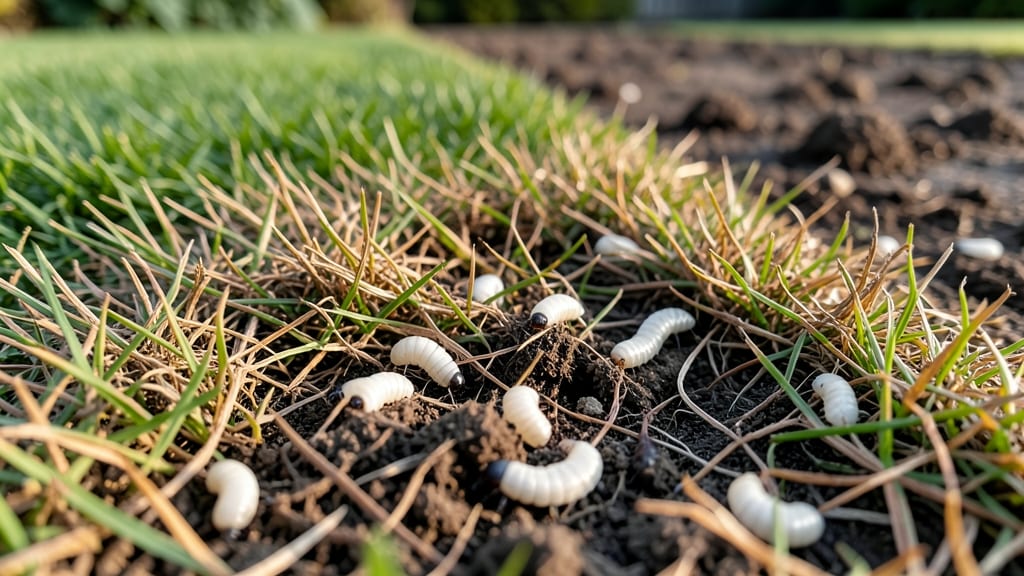
Your grub-infested lawn’s brown patches aren’t just drought stress—they’re grubs eating your grass roots from the inside out. 🌱 I’ve pulled up enough dead grass to know this isn’t a quick fix, but the right organic approach can turn your lawn back into a lush carpet in just a few months.
The problem starts when Japanese beetle grubs munch on roots, leaving behind weak spots that turn brown. Most people reach for chemicals first, but I’ve had better luck with beneficial nematodes and milky spore—both kill grubs naturally without harming your yard’s ecosystem.
By late summer, you’ll see new green shoots pushing through as grubs die off. The key is timing: treat in July and September when grubs are most vulnerable, and you’ll break the cycle for good. Works for any grass type, from Kentucky bluegrass to fescue.
Here’s how to make it happen without harsh chemicals.
Root Causes Of Lawn Grub Damage
If your lawn looks like it’s been hit by a hidden army of tiny caterpillars, you’re likely dealing with a grub infestation. But why does this happen in the first place? The answer lies in the lifecycle of these pests, environmental conditions, and even your lawn care habits.
Understanding the real reasons behind grub activity helps you prevent future outbreaks—and stop the damage before it starts.
Grubs—specifically the larvae of Japanese beetles, June bugs, and European chafer beetles—are a natural part of the ecosystem. Adult beetles lay eggs in warm, moist soil during late spring or summer. When those eggs hatch, the grubs feed on grass roots, but they’re not supposed to stay forever.
In ideal conditions, grubs pupate and emerge as beetles by fall, completing their lifecycle. However, if soil temperatures stay warm or moisture levels are just right, they linger longer, chewing through roots and weakening your lawn.
Overwatering or thick thatch layers can create a perfect grub buffet, encouraging them to stay put.
Grubs thrive in consistently moist soil. While a well-hydrated lawn is healthy, excessive watering—especially in short, frequent sessions—keeps the topsoil damp, which is exactly what grubs love. Here’s why:
- Oxygen depletion: Waterlogged soil reduces oxygen, stressing grass roots and making them easier targets for grub feeding.
- Extended hatch window: Grubs prefer soil temps between 70–90°F. If your lawn stays moist, newly hatched grubs don’t dry out and can survive longer, leading to larger populations.
- Thatch buildup: Overwatering without proper aeration creates a thick thatch layer—a grub hiding spot—where they’re protected from predators and treatments.
Actionable fix: Water deeply but infrequently (1–1.5 inches per week, including rain) and aerate annually to improve drainage.
Grubs are cold-blooded, meaning their activity levels depend entirely on soil temperature. When soil warms to 65°F or higher, grubs become hyperactive, feeding voraciously and reproducing rapidly.
Regions with hot summers (like the South or Midwest) see peak grub activity, but even cooler climates can experience outbreaks if spring arrives early. Artificial heat retention—from dark-colored mulch, dense turf, or urban heat islands—can also accelerate grub development.
Actionable fix: Monitor soil temps (use a soil thermometer) and adjust watering schedules to avoid overheating. Mow high (3–4 inches) to shade soil and reduce heat absorption.
A thick layer of thatch (dead grass, roots, and debris) acts like a grub hotel. Why?
- Moisture retention: Thatch holds water against the soil, keeping grubs hydrated and active.
- Predator protection: Birds, beetles, and other natural enemies can’t reach grubs hidden beneath a thick mat.
- Nutrient shield: Decomposing thatch provides extra food, extending grub survival.
Weak or stressed grass (from drought, disease, or poor fertility) is also more susceptible to grub damage because healthy roots repel pests naturally.
Actionable fix: Dethatch annually (if layer exceeds ½ inch) and overseed to strengthen turf density.
Grubs aren’t the only ones in your lawn—they’re food for many beneficial creatures. But if their predators disappear, grub populations explode. Common natural enemies include:
- 🦋 Adult beetles (some species eat grubs)
- 🐦 Birds (robins, starlings, and grackles feast on grubs)
- 🐜 Ground beetles & ants (hunt grubs aggressively)
- 🐛 Parasitic wasps (lay eggs inside grub eggs, killing them)
Pesticides, habitat loss (like over-fertilizing), or even too much lawn care can disrupt this balance. For example, broad-spectrum insecticides kill both pests and their predators, leaving grubs unchecked.
Actionable fix: Reduce chemical use, plant native grasses to attract predators, and leave leaf litter in garden edges to support beetle populations.
Fix Your Lawn’s Grub Problem Naturally
A grub-infested lawn doesn’t have to be a lost cause—especially when you tackle it with organic, effective solutions that restore your grass without harsh chemicals.
Below, we break down the root causes of grub damage and pair them with practical fixes, plus prevention tips to keep your lawn thriving long-term.
---
Cause: Excess moisture creates the perfect breeding ground for grubs, as it softens soil and attracts their favorite food—grass roots.
Fix It: 🍳 Reduce Watering Frequency - Water deeply 2-3 times per week (early morning) instead of daily light sprinkles. - Aim for 1–1.5 inches per session—let the top inch of soil dry between waterings.
👨🍳 Improve Drainage - Aerate compacted soil in fall or spring (use a core aerator) to help water drain faster. - Add compost or sand to heavy clay soils to boost airflow.
🥘 Encourage Beneficial Microbes - Sprinkle mycorrhizal fungi (available as powder) to strengthen roots and outcompete grubs.
💡 Pro Tip: Install a rain gauge to track moisture levels—overwatering is the #1 way to invite grubs back!
---
Cause: Thatch (a layer of dead grass and roots) traps moisture and blocks natural predators like beetles and nematodes from attacking grubs.
Fix It: 🔪 Dethatch Properly - Rent a vertical mower or manual thatch rake (for small areas). - Target ¼-inch thick thatch layers—never remove more than ½ inch at once.
⏰ Time It Right - Dethatch in early fall (before grubs hatch) or late spring (after they’ve pupated).
🌡️ Boost Soil Health - Top-dress with 1–2 inches of compost after dethatching to feed beneficial organisms.
✨ Prevent Future Buildup - Mow high (3–4 inches) to shade out weeds and reduce thatch. - Overseed with tall fescue or Kentucky bluegrass—these grasses grow deeper roots, choking out grubs.
---
Cause: Stressed or thin grass is easier for grubs to devour, especially if nitrogen-heavy fertilizers are overused.
Fix It: 📊 Switch to Slow-Release Fertilizer - Use organic options like composted manure, bone meal, or fish emulsion (low in fast-acting nitrogen). - Follow a balanced NPK ratio (e.g., 5-5-5) in early fall.
💪 Overseed Bare Spots - Choose grub-resistant grasses like tall fescue, perennial ryegrass, or buffalo grass. - Sow seeds in late summer/early fall when grubs are most active (they’ll find food elsewhere).
🍎 Feed the Soil, Not Just the Grass - Add worm castings or kelp meal to boost root resilience. - Avoid high-phosphorus fertilizers—they attract grubs by promoting lush, tender growth.
🎯 Prevention Hack: - Mow less frequently in summer to reduce stress on roots. - Leave grass clippings (they decompose into free nitrogen!).
---
Cause: If grubs have already taken over, you’ll need targeted organic treatments to starve them out.
Fix It: 🔥 Milky Spore or Beneficial Nematodes - **Milky spore (Bacillus popilliae) is a bacteria that infects Japanese beetle grubs (common in lawns). - Nematodes (Heterorhabditis bacteriophora) are microscopic predators that kill grubs on contact. - How to apply: - Water lawn lightly the day before treatment. - Spread milky spore powder (follow package rates) or nematodes (mix with water, apply at dusk). - Reapply every 2–3 years for milky spore; nematodes need annual treatments.
👨🍳 DIY Grub-Repellent Spray - Mix 1 tbsp neem oil + 1 tsp dish soap + 1 gallon water in a sprayer. - Apply to bare soil (not grass) in early evening—reapply every 2 weeks until grubs decline.
⏰ Timing is Everything - Treat in late summer/early fall when grubs are young and near the surface. - Avoid treating in spring—adult beetles will lay new eggs, and your effort will be wasted!
--- To keep grubs from crashing your lawn party again, follow this 3-step shield: 1. Inspect annually in late summer—dig up a 6-inch square of soil to check for grubs.
2. Encourage predators—plant clover or dandelions (their deep roots attract beneficial insects). 3. Rotate treatments—don’t rely on just one method; combine nematodes, milky spore, and cultural fixes for best results.
--- Remember: Patience is key—grubs can take 1–2 seasons to fully disappear, but a healthy lawn is your best defense. With these steps, you’ll be grub-free and green** in no time! 🌱💚
Frequently asked questions
How do I know if my lawn has grubs instead of other pests like chinch bugs or fungus?
Look for these key signs: spongy patches that pull up easily (roots are eaten), birds digging in your yard (they love grubs), or white grubs when you dig up soil. Unlike fungus (which has dark spots), grub damage leaves irregular brown patches that don’t improve with water.
Can I use milky spore on a new lawn or young grass?
No—milky spore targets Japanese beetle grubs specifically and won’t harm grass, but it takes 2-3 years to establish in soil. For new lawns, use beneficial nematodes (they work faster) or focus on cultural fixes like proper watering and aeration. Young grass needs root protection more than grub control!
Will my dog get sick from eating grubs in the yard?
Grubs are generally safe for dogs in small amounts, but some may carry parasites or pesticides if you’ve used chemical treatments. If your dog eats a lot, monitor for vomiting or diarrhea. For peace of mind, treat your lawn with organic methods like nematodes or neem oil before letting pets play.
How long does it take to see results from organic grub treatments?
With nematodes, you may see improvement in 2-4 weeks as grubs die off. Milky spore takes 1-2 seasons to fully establish. The fastest results come from combining treatments with proper watering and overseeding. Patience is key—grubs don’t disappear overnight, but a healthy lawn recovers faster!
Can I still use chemical grub killers after trying organic methods?
Yes, but wait until fall when grubs are near the surface. If you’ve already used nematodes/milky spore, chemicals may disrupt their effectiveness. For best results, stick with organic methods first—they’re safer for kids, pets, and the environment while still being highly effective when applied correctly.