
Lawn

Frustrated by fern-like weeds ruining your lawn’s appearance? These 10 persistent intruders mimic ornamental ferns but thrive aggressively—learn how to spot them early and eliminate them before they spread.
Cinnamon Fern Spreading in Shady Areas
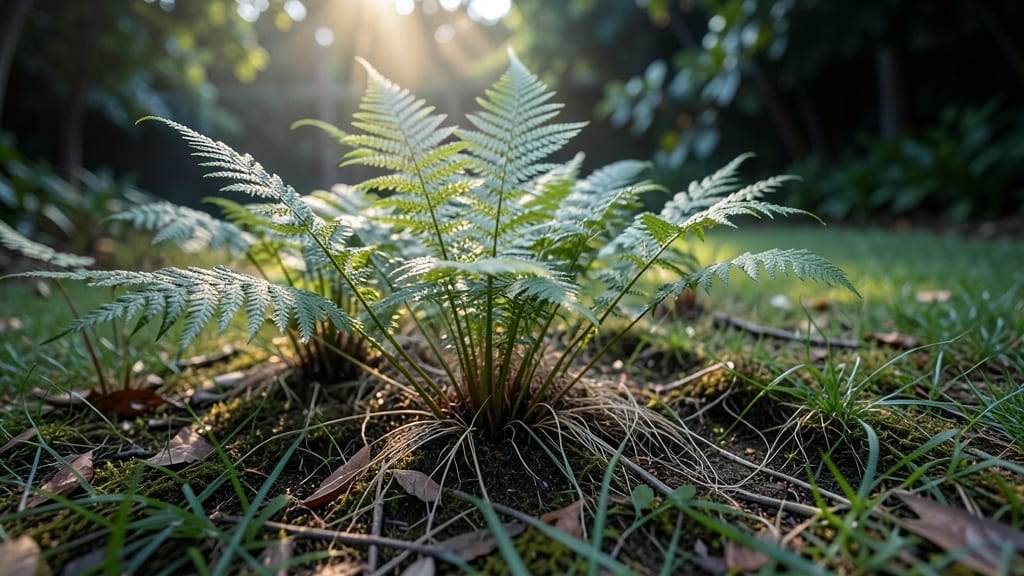
That lush, fern-like foliage creeping into your shaded lawn might not be the ornamental plant you planted—it could be cinnamon fern, a native weed with a sneaky habit of spreading via underground rhizomes. Unlike its decorative cousins, this aggressive intruder thrives in moist, shaded areas, often smothering grass beneath its dense fronds.
Identify it by its cinnamon-brown stems and triangular fronds that arch gracefully. The real challenge? Its rhizomes can stretch up to 3 feet underground, making it nearly impossible to remove by pulling alone. For best results, dig out the entire root system in early spring before new growth emerges, or use a spot herbicide labeled for broadleaf weeds in shaded areas.
Homeowners with shady lawns or garden beds near wooded areas should watch for this weed—it’s particularly fond of damp, undisturbed soil. Catching it early saves you from battling a full-blown fern takeover. 🌿
Japanese Painted Fern with Purple Stems
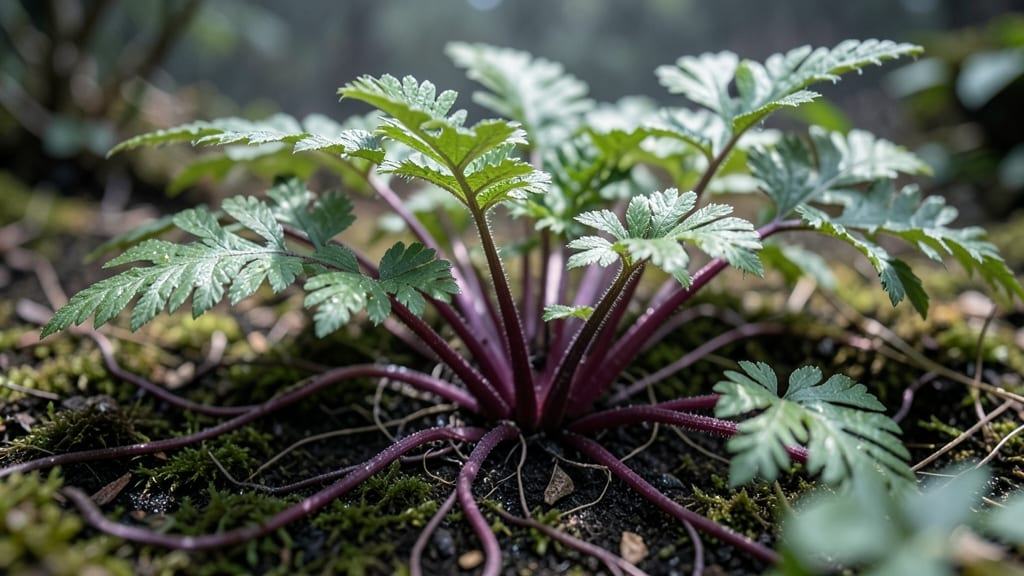
That vibrant purple stem might look like a prized garden addition, but the Japanese painted fern (Athyrium niponicum var. pictum) is actually a sneaky weed that spreads aggressively in damp soil. Its lacy green fronds and striking stems fool many gardeners into thinking it’s a desirable ornamental—until it starts crowding out grass and flowers.
This weed thrives in moist, shady lawn edges and spreads via underground rhizomes, making it harder to remove than it looks. The key to control is early action: pull young plants before they establish deep roots, and avoid overwatering areas where you’ve spotted it. If it’s already taken hold, dig out the entire root system to prevent regrowth—surface trimming won’t stop its spread.
Gardeners with shady lawns or border gardens should watch for this one, as its beauty masks its invasive tendencies. Catch it before it dominates your space! 🌿
Sensitive Fern with Yellow Fronds in Spring
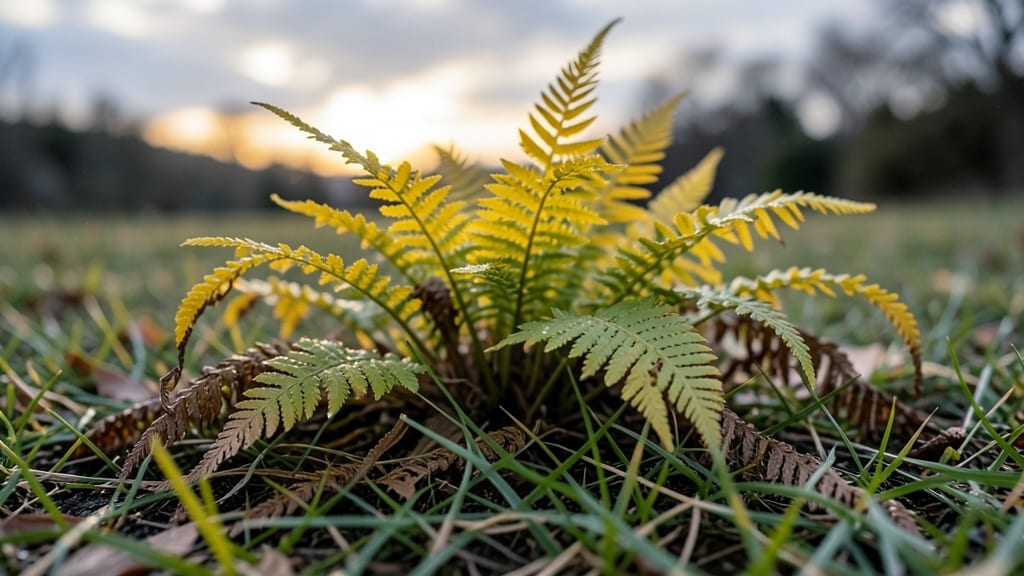
Spot those bright yellow fronds emerging in early spring? That’s the sensitive fern—a weed that disguises itself as ornamental foliage but returns stronger every year. Unlike other ferns that stay green year-round, this one’s seasonal color shift makes it easier to identify before it spreads.
This weed thrives in sunny to partially shaded lawns and dies back completely in winter, only to resprout from underground roots in spring. The key to control is acting fast: pull it when fronds are still young, or use a selective herbicide labeled for broadleaf weeds in lawns. For organic gardeners, smothering with thick mulch or hand-pulling repeatedly works best.
Perfect for homeowners who want to tackle weeds before they become unmanageable—this early-season identification gives you the upper hand. 🌱
Ostrich Fern Growing in Wet Lawn Spots
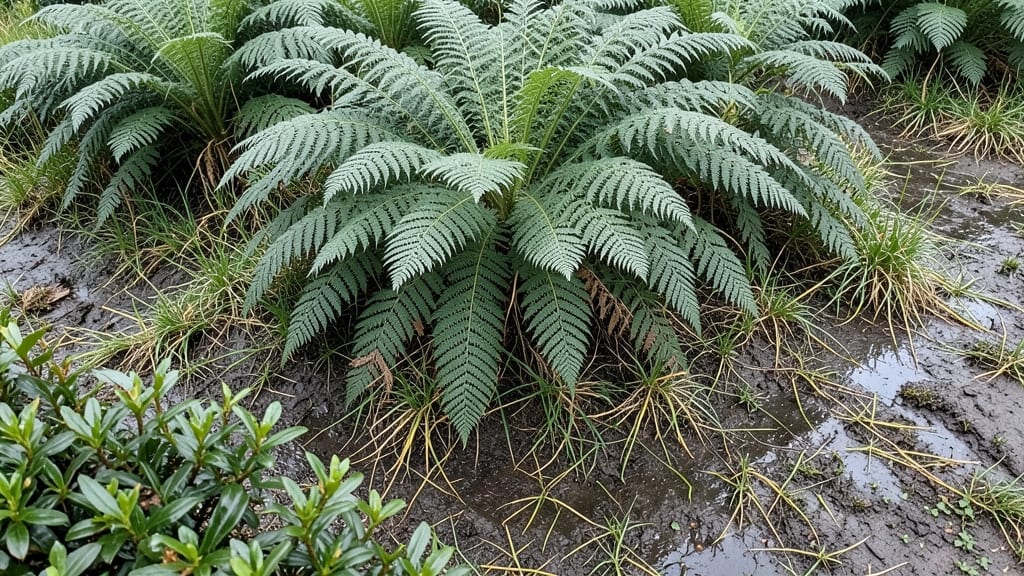
If your lawn has soggy patches where grass struggles to grow, you might be dealing with ostrich fern—a feathery weed that thrives in wet conditions and outcompetes turf. This tall, lush fern can reach 4 feet high, creating dense colonies that block sunlight and smother grass roots.
To tackle it, pull young fronds by hand before they mature, or use a sharp spade to dig out the deep rhizomes in early spring. Avoid herbicides, as they may harm nearby grass—focus on improving drainage in affected areas to discourage regrowth. This weed spreads quickly, so act fast to prevent it from taking over your lawn. 🌱
Lady Fern with Delicate Fern-Like Leaves
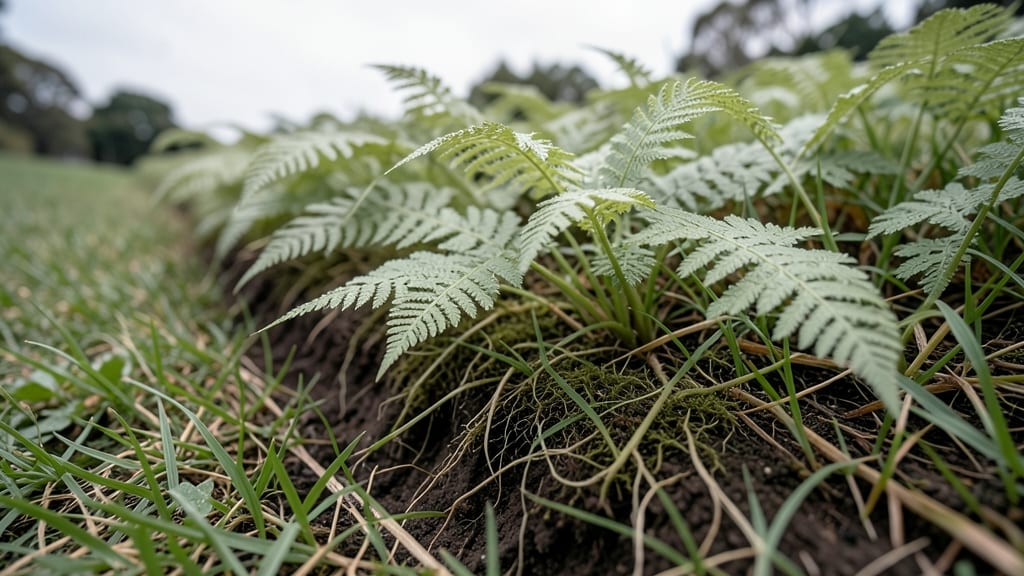
That delicate lacework of fronds creeping along your lawn edges might look like a prized ornamental fern—but it’s actually lady fern, a sneaky weed that spreads aggressively through both spores and underground rhizomes. What starts as a charming accent can quickly become a suffocating mat that chokes out grass and garden plants.
To stop it before it takes over, pull entire plants (including roots) when soil is moist, or use a string trimmer to sever rhizomes below the surface. For stubborn patches, apply a targeted vinegar-based herbicide (20% acetic acid) directly to fronds—avoid broad spraying to protect nearby plants. This weed thrives in partial shade and moist soil, so improve drainage and mulch garden beds to discourage regrowth.
Homeowners with shady lawns or garden borders should watch for lady fern’s early signs—its fine, feathery fronds with rounded pinnae (leaflets) are dead ringers for ornamental varieties. Act fast, or you’ll be battling a full-blown invasion next spring. 🌿
Bracken Fern Invading Sunny Lawn Areas
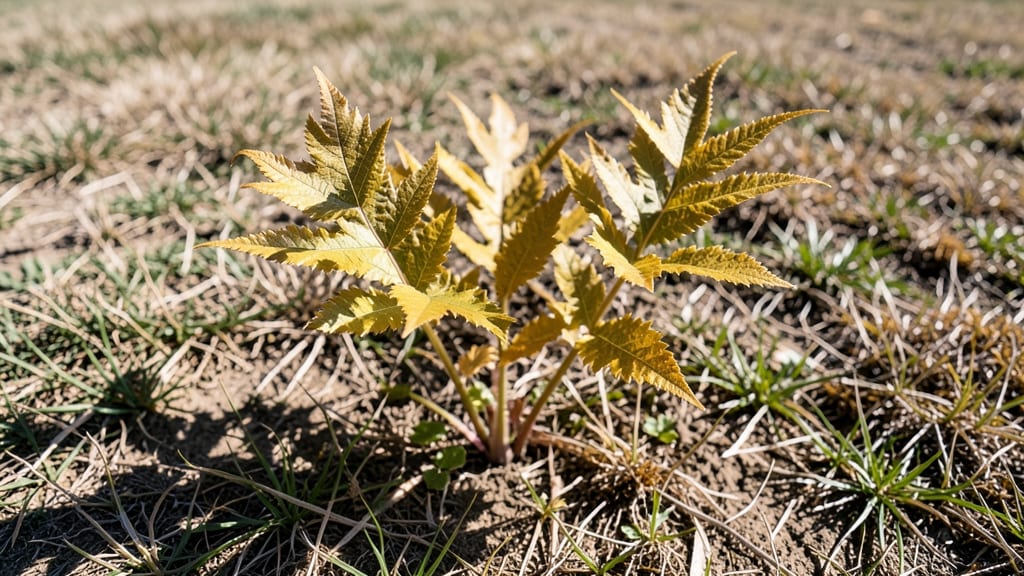
If your sunny lawn patches look patchy and brown despite regular watering, bracken fern might be the culprit. Unlike most ferns that prefer shade, this hardy weed thrives in full sun and releases chemicals that suppress grass growth—making it a sneaky lawn invader.
Look for its triangular, golden-edged fronds that turn crispy brown by late summer. The key to control is early action: dig out roots completely in spring or fall, as even small fragments regrow. For large infestations, smother with thick cardboard or mulch for 6 months to starve the roots.
Homeowners with sunny lawns should prioritize this weed—its allelopathic effects can weaken grass permanently if left unchecked. 🌻
Maidenhair Fern in Moist Lawn Crevices
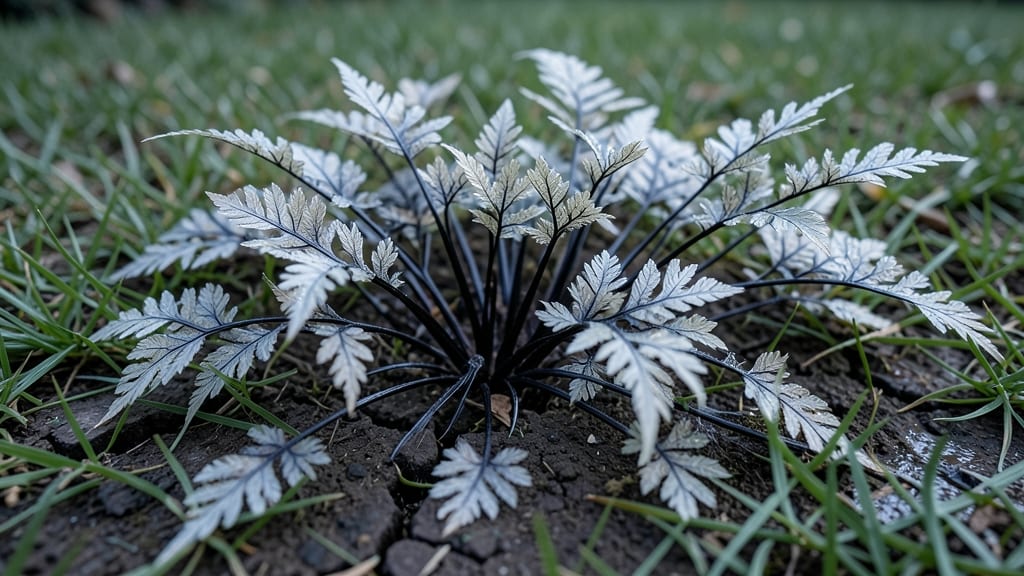
That delicate, almost ethereal maidenhair fern might look like a prized ornamental, but when it takes root in your lawn’s moist crevices, it becomes a stubborn weed. Its fan-shaped fronds on black stems create a lacy pattern that spreads aggressively in damp soil, filling cracks and choking grass.
To stop it before it forms dense mats, pull young plants by hand when soil is moist—this prevents deep root establishment. Avoid herbicides near desirable plants, as maidenhair fern’s sensitive foliage can be damaged by overspray. For stubborn patches, smother with cardboard or mulch for 4-6 weeks to block sunlight and starve roots.
Homeowners with shady, damp lawns should monitor these areas closely—maidenhair fern thrives where grass struggles. Early action keeps your lawn looking pristine without sacrificing beauty. ✨
Christmas Fern with Evergreen Leaves
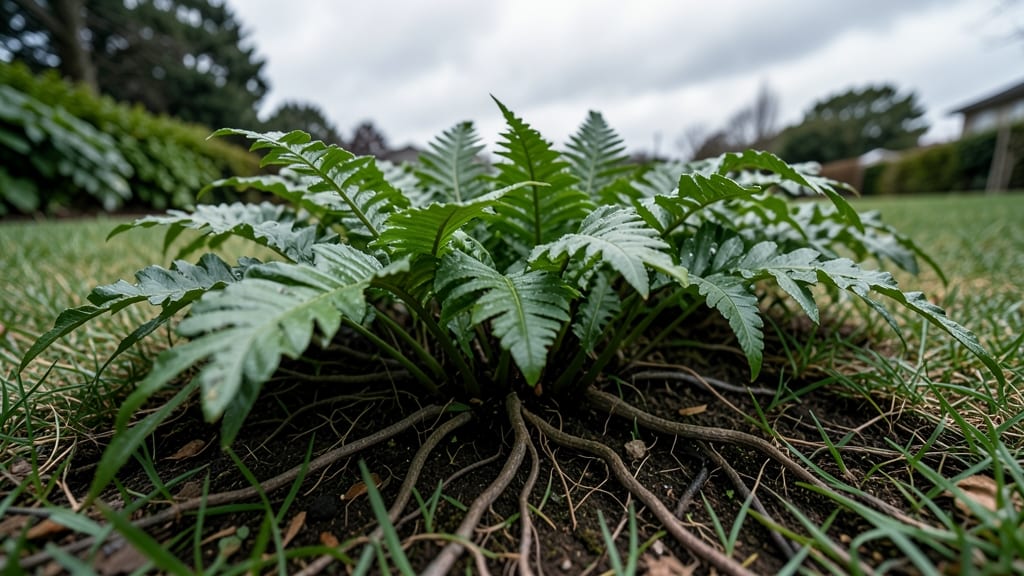
The Christmas fern might look like a harmless evergreen addition to your shaded lawn, but its glossy, leathery fronds hide a sneaky habit—spreading slowly but relentlessly through underground rhizomes. Unlike seasonal ferns, this one stays green all year, making it easy to overlook until it’s too late.
To stop its spread, dig out the entire plant—including the rhizomes—before it forms dense colonies. This fern thrives in partial to full shade and moist soil, so monitor lawn edges and wooded areas where it’s most likely to take hold. A sharp spade and gloves are your best tools for removal, as even small root fragments can regrow.
Gardeners with shaded lawns should act fast—this fern can outcompete grass and other plants once established. Early detection is key! 🌿
Interrupted Fern with Spore Clusters
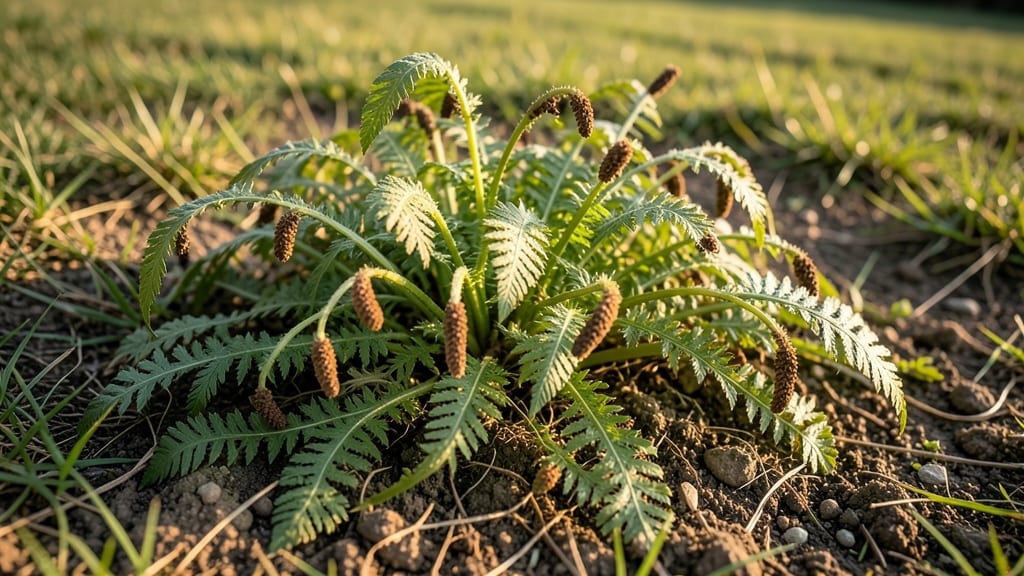
If your lawn has suddenly sprouted fern-like plants with brown, bead-like clusters along the fronds, you’re likely dealing with interrupted fern—a weed that spreads aggressively through spores. Unlike ornamental ferns, this intruder thrives in disturbed soil, like freshly tilled lawns or garden beds, and can quickly take over if left unchecked.
Look for its distinct spore clusters (called sori) along the edges of the fronds, which release thousands of spores when mature. The best time to remove it is early spring or fall, before spores have a chance to spread. Pull the entire plant, including roots, or use a vinegar-based herbicide for stubborn patches—this weed won’t respond to mowing alone.
Homeowners with newly seeded lawns or frequently disturbed soil should monitor for this weed, as it’s particularly fond of bare patches where grass struggles to establish. Catching it early prevents a full-blown infestation. 🌿
Hayscented Fern Spreading via Underground Rhizomes

If your lawn smells like a hayfield when you walk across it, you’re likely dealing with hayscented fern (Dennstaedtia punctilobula). This fern’s distinctive hay-like aroma isn’t just a quirky trait—it’s your first clue that its aggressive underground rhizomes are silently claiming territory beneath your grass.
Unlike other fern-like weeds that spread via spores, hayscented fern relies on horizontal rhizomes that can extend up to 3 feet underground. Simply pulling the fronds won’t stop it—you must dig out the entire root system, including any broken rhizome pieces, to prevent regrowth. For stubborn patches, apply a pre-emergent herbicide in early spring before new shoots appear.
Homeowners with dry to medium-moist lawns should watch for this weed, as it thrives in full sun to partial shade. The key to control? Act fast—once established, its scent becomes a permanent reminder of a battle lost. 🌻