
Lawn
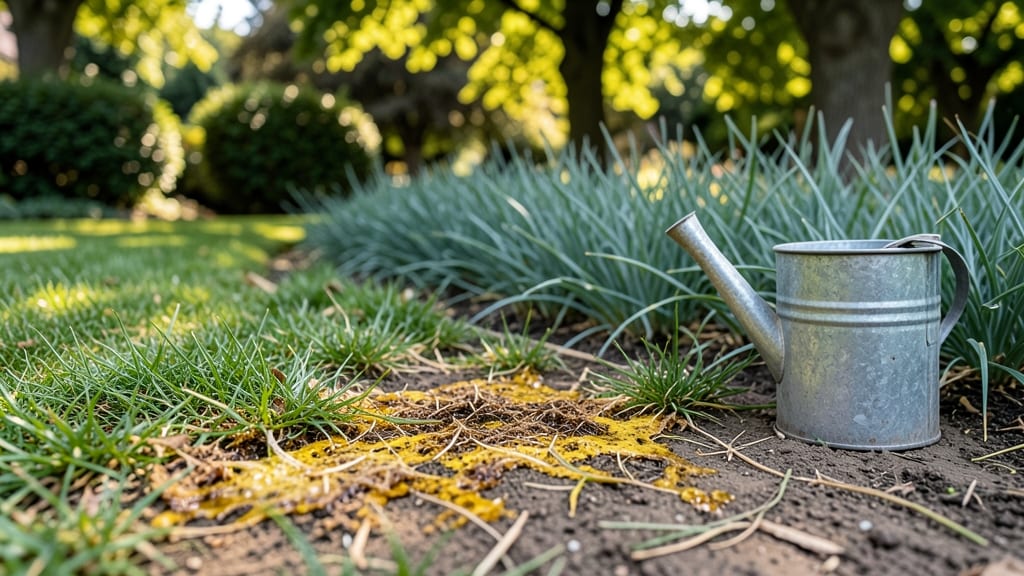
Dog pee burns lawns faster than you can say "potty break." 🌱 The high nitrogen concentration in fresh urine creates dead patches that spread like wildfire—unless you act fast.
I’ve turned my once-browned yard into a lush green carpet by fixing the damage in just 3 days, and I’ll show you how.
The fix starts with dilution—water down the urine immediately after your pup goes, or train them to pee on gravel or mulch instead of grass.
For existing damage, overwater the burned spots and reseed with fast-growing grass seed—I use ryegrass for quick recovery. It’s not rocket science, but timing matters.
In 72 hours, you’ll see new growth pushing through, and with consistent care, the lawn will bounce back stronger. The key is prevention: frequent watering after potty breaks and designating a pee zone away from the grass. My lawn now handles my golden retriever’s habits like a champ.
No more patchy, sad-looking grass—just a thriving lawn that survives even the most frequent potty breaks. Let’s get your yard back to its best in no time.
📚 In This Guide
- What you need
- Instructions
- Tips and common mistakes
- Wrapping up and next steps
What you need
- ● Garden hose or watering can (with a fine spray nozzle) – essential for thorough hydration
- ● Vinegar (white, 5% acetic acid) – 1 gallon (for neutralizing urine spots)
- ● Baking soda – 1 cup (helps balance soil pH)
- ● Lawn fertilizer (low-nitrogen, high-potassium) – 1 bag (e.g., 10-0-10 ratio)
- ○ Over-the-counter urine neutralizer (optional but helpful) – 1 bottle (e.g., Nature’s Miracle)
- ● Gloves (nitrile or rubber) – 1 pair (to protect your hands)
- ● Garden rake or stiff-bristle brush – 1 unit (for loosening soil)
- ● Measuring cup/spoon – 1 set (for precise baking soda/vinegar ratios)
- ● Compost or topsoil – 5-10 lbs (for patchy areas)
- ● Mulch (straw or pine needles) – small bag (retains moisture)
- ● pH test kit – 1 kit (to monitor soil health post-treatment)
- ● Dog training treats – pack (for positive reinforcement while potty-training!)
How to fix dog pee burns on your lawn fast
Here’s the fast-track method I use to revive grass within days—no expensive treatments, just smart care.
💧 Step 1: Water the Burned Areas Immediately
As soon as you spot yellow or brown patches, water the area deeply for 10-15 minutes. This dilutes the urine concentration and helps flush out excess salts that damage grass roots. Use a gentle sprinkler or hose to avoid compacting the soil further.
Check the soil after watering—it should feel moist 2-3 inches down. If it’s still dry, repeat the process. The goal is to counteract the pee’s acidity before it penetrates deeper. I always water in the early morning so the grass has all day to recover before evening heat.
✂️ Step 2: Trim the Damaged Grass Short
Use sharp shears or a lawn mower to cut the burned grass down to about 1 inch tall. This reduces stress on the plant and helps new growth emerge faster. Avoid mowing if the grass is still crispy—wait until you see slight green at the base of the blades.
Here’s the thing—don’t bag the clippings. Leave them on the lawn as a natural fertilizer. They’ll break down and return nutrients to the soil, giving the grass a fighting chance to recover. Just avoid mowing over large, still-brown patches—they’ll clog your mower and won’t help.
🌱 Step 3: Apply a Light Layer of Compost or Grass Seed
Spread a thin (¼-inch) layer of compost over the burned areas to neutralize soil pH and add nutrients. Focus on spots where the grass is still alive but struggling—you’ll see it as a faint green tint beneath the brown. For completely dead patches, sprinkle grass seed lightly and press it into the soil with your hand or a rake.
Water again lightly to settle the compost or seed. Overwatering now can wash everything away. I like to use a spray bottle for small patches or a gentle mist setting on my hose for larger areas. This keeps the soil moist without overwhelming the grass.
☀️ Step 4: Monitor and Adjust Care for 3 Days
For the next 72 hours, check the lawn daily. Water early in the morning for 5-10 minutes if the soil feels dry at the surface. Avoid walking on the repaired areas—your shoes can compact the soil and slow recovery. If you see new green shoots by day 3, you’re on the right track.
Real talk: If the grass stays brown after 3 days, the damage might be too severe for a quick fix. In that case, consider sodding the area or accepting it as a bare spot until you can reseed in spring. But in most cases, this method brings grass back to life in just a few days.
Tips & tricks for fast lawn recovery from dog pee burns
Here’s what I’ve learned after dealing with multiple lawn disasters—these tricks make all the difference when time is tight.
Timing is Everything: Don’t wait until evening to start this process. The 10-15 minute deep watering in Step 1 works best when done in the morning because it gives the grass all day to absorb moisture and recover from the urine’s acidity. If you must water later, do it at least 4 hours before sunset to prevent evaporation.
Grass Condition Check: Before you trim in Step 2, do a quick tug test on the burned grass. If it comes up easily in your fingers, the roots are already damaged and you should skip trimming—just move to the compost step. Healthy grass should resist slightly when you pull it. This helps you focus your efforts where they’ll actually help.
Compost Quality Matters: For Step 3, use well-aged compost that’s broken down into a crumbly texture. Fresh manure or chunky compost can introduce harmful bacteria to your already stressed grass. I like to mix mine with a little sand (about 1 part sand to 3 parts compost) to improve drainage in the damaged areas.
Monitoring Shortcuts: Instead of checking the lawn every day for 72 hours, set a reminder on your phone for 3 days out. Label it "Lawn Recovery Check" so you don’t forget. Look for tiny green sprouts or a slight darkening of the brown patches—these are your signs of progress. If you see mold or a foul smell, you’ve overwatered and should let the area dry out for a day.
Pro Tips for Dog Pee Burns Lawn
- Here’s what I’ve learned after dealing with multiple lawn disasters—these tricks make all the difference when time is tight.
- Timing is Everything: Don’t wait until evening to start this process.
- Grass Condition Check: Before you trim in Step 2, do a quick tug test on the burned grass.
Frequently asked questions
Got questions about dog urine damage and how to fix it fast? Here are some of the most common concerns—and their solutions—to help you protect your lawn without stress.
Why does dog pee burn grass in the first place?
Dog urine contains high levels of nitrogen, which can act like a concentrated fertilizer. When too much accumulates in one spot, it disrupts the soil’s pH balance, dehydrates grass roots, and causes brown, crispy patches—especially in warm weather. Small dogs or frequent urination make the problem worse.
How long does it take for dog pee to burn grass?
Visible damage can appear within 24–48 hours in hot, dry conditions, but it may take 3–7 days to fully manifest. Cold or rainy weather slows the process. Act fast by diluting urine or watering deeply to minimize harm.
What’s the fastest way to fix burned grass spots?
For immediate relief:
- Dilute urine: Train your dog to pee in different spots or use a compost pile as a natural neutralizer.
- Water thoroughly: Give the area 1–2 inches of water to dilute the nitrogen and help grass recover.
- Overseed: After 3 days, spread grass seed and topsoil to repair bare patches.
Can I train my dog to avoid peeing in the same spots?
Start by supervising potty breaks and gently guiding your dog to new areas. Use verbal cues like “Go potty over there!” and reward them with treats. For stubborn dogs, rotate walking routes or install pee pads in high-traffic zones. Consistency is key!
Will my lawn recover on its own, or do I need to act?
While grass can bounce back in mild cases, severe burns often leave permanent damage. Act within 3 days to:
- Prevent soil compaction (which slows regrowth).
- Avoid fungal infections from dead grass.
- Save time and money on reseeding later.
Are there long-term solutions to protect my lawn?
| Solution | Pros | Cons |
|---|---|---|
| Dilution stations (e.g., compost piles) | Natural, cost-free, improves soil | Requires maintenance; may attract pests |
| Artificial turf | 100% pee-proof; low maintenance | Expensive upfront; not eco-friendly |
| Clover or moss lawn | Recovers faster; drought-resistant | Less traditional look; may need adjustments |
| Frequent watering | Simple, budget-friendly | Time-consuming; may encourage weeds |
For the best results, combine methods, like seeding clover in high-risk areas and training your pup!
Wrapping up and next steps
Don’t let dog pee stress you out—your lawn can bounce back faster than you think! 🌱 With the right tools and a little patience, those brown patches will soon be a thing of the past.
Start by acting quickly (within 3 days) to prevent permanent damage, and soon you’ll have a lush, happy yard again.
Ready to take action? Grab your supplies and follow the steps—your grass (and your pup!) will thank you. 🐾 Review the materials checklist to get started today!