
Lawn
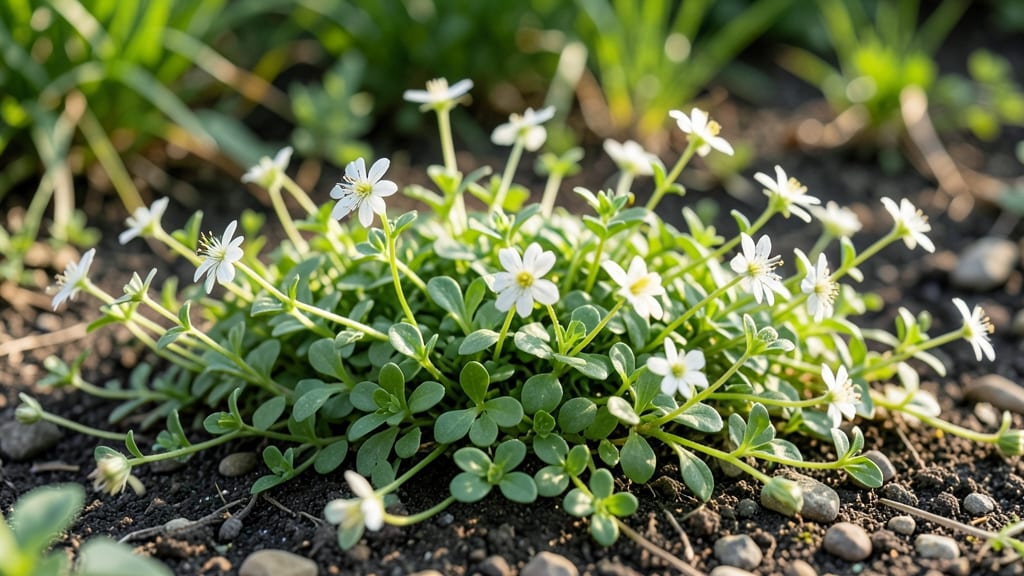
Those delicate white flowers creeping through your lawn aren't clover—they're chickweed, and it's time to take action before it smothers your grass. 🌱 I've spent too many springs watching this soft-stemmed weed spread like wildfire, only to realize it thrives in the same conditions that keep my lawn looking half-dead.
The good news? Chickweed responds well to the right approach—you just need to know when and how to strike.
First, spot the difference: chickweed grows in low mats with tiny oval leaves and those signature white, star-shaped flowers that appear in early spring. Unlike dandelions, it doesn't have a deep taproot—just a network of shallow runners that make it stubborn but beatable.
Grab some gardening gloves, a sturdy weeding tool, and either a corn gluten meal (for prevention) or a targeted herbicide (for eradication). The key is acting before it sets seed in late spring.
You'll see results within 2-3 weeks if you pull it consistently and prevent new seeds from taking hold. The lawn will fill in faster, the soil will compact less, and those white blooms will become a distant memory.
Chickweed may look harmless, but it's a lawn thief—stealing sunlight, water, and nutrients from your grass. With the right timing and technique, you'll reclaim your yard without resorting to harsh chemicals.
Works best in cool seasons (spring and fall), but don't let summer heat fool you—chickweed often lies dormant until conditions improve. For persistent patches, repeat treatments every 4-6 weeks until your lawn looks thick and green again. The battle isn't over until you've broken its seed cycle completely.
📚 In This Guide
- What you need
- Instructions
- Tips and common mistakes
- Wrapping up and next steps
What you need
- ● Gloves (heavy-duty gardening gloves) – Protect your hands from prickly stems and dirt (1 pair).
- ● Hand trowel or weeding tool – A stainless steel or ergonomic design works best (1-2 units).
- ● Garden kneeler or pad – For comfort during long sessions (1 unit).
- ● Trash bags (13-gallon or larger) – For disposal (2-3 bags).
- ● Hose with adjustable nozzle – For rinsing off dirt and roots (1 unit).
- ○ Pre-emergent herbicide (optional but helpful) – Look for corn gluten meal or vinegar-based options (1 bottle, 1-2 gallons).
- ● Lawn rake (bendable tines) – For loosening soil and uncovering hidden weeds (1 unit).
- ● Spray bottle (8 oz.) – For targeted herbicide or vinegar application (1 unit).
- ● Post-emergent herbicide (glyphosate-free) – For stubborn patches (1 small bottle).
- ● Soil solarizer or black plastic sheeting – To smother regrowth in hot sun (1 roll).
- ● Compost or mulch – For replenishing soil after weeding (1-2 bags).
- ● Magnifying glass or plant ID app – To confirm chickweed vs. other weeds (1 unit).
Step-by-step guide to eradicating chickweed from your lawn
Here's how to tackle those delicate white-flowered weeds before they take over your grass.
🌱 Step 1: Identify Chickweed and Assess the Infestation
Chickweed has distinctive oval leaves with jagged edges and delicate white flowers that bloom in spring and fall. The stems are smooth and sprawling, forming dense mats that smother grass. Walk your lawn in the morning when dew is present—the leaves will feel slightly sticky, a key identification clue.
Kneel and examine 3-4 square feet in several areas. Note whether the infestation is patchy or widespread. Chickweed thrives in cool, moist conditions, so check shaded areas and spots where grass is thin. If you see more than 10% of your lawn covered, you'll need a multi-step approach to prevent regrowth.
✂️ Step 2: Pull Weeds by Hand at the Right Time
The best time to remove chickweed is after rain when the soil is soft, or in the morning when the plants are still turgid with moisture. Grab weeds at the base using your thumb and forefinger—this prevents breaking stems that could regrow. For stubborn patches, use a weeding tool to loosen roots without disturbing surrounding grass.
Work in small sections, pulling weeds toward you to avoid bending over repeatedly. Discard pulled weeds immediately in the trash, not your compost bin—chickweed seeds can survive composting. I like to work in 5-foot by 5-foot grids to stay organized and avoid missing spots. This method gives you the cleanest results with minimal lawn disturbance.
💧 Step 3: Improve Lawn Conditions to Outcompete Weeds
Chickweed thrives in compacted, nutrient-poor soil with poor drainage. Aerate your lawn in late summer or early fall using a core aerator to create 3/8-inch holes every 2-3 inches. This allows water, air, and nutrients to reach grass roots while preventing chickweed from spreading through surface mats.
After aerating, spread a ½-inch layer of compost over the entire lawn and lightly rake it in. This improves soil structure while providing nutrients that encourage thick, healthy grass growth. Water deeply after amending to help the compost integrate. Over time, dense grass will naturally crowd out chickweed by blocking sunlight and occupying space.
☀️ Step 4: Implement Preventive Maintenance Year-Round
Mow your lawn regularly at a height of 3-4 inches to create shade that discourages chickweed germination. Tall grass also develops deeper roots that outcompete weeds. Adjust your mowing pattern to overlap edges where chickweed often invades—this creates a physical barrier against spreading.
In early spring and fall, apply a slow-release, nitrogen-rich fertilizer to promote vigorous grass growth. Chickweed struggles to establish in healthy turf, so focus on maintaining thick, green grass throughout the growing season. If you notice chickweed returning in the same spots, consider overseeding those areas with a shade-tolerant grass variety like fine fescue.
🌿 Step 5: Monitor and Treat New Growth Promptly
Check your lawn weekly during chickweed's active growing seasons (spring and fall). New chickweed plants will appear as small rosettes of leaves. The moment you spot these, pull them immediately—they're easiest to remove when young. I keep a small hand trowel in my gardening belt for quick spot treatments.
For persistent problem areas, apply a corn gluten meal pre-emergent in early spring. This natural product prevents chickweed seeds from germinating while allowing grass seeds to grow. Reapply after mowing to maintain effectiveness. With consistent monitoring and these preventive measures, you'll see chickweed populations decline by 70-80% within a growing season.
Tips & tricks for perfect chickweed eradication
Real talk: Chickweed might look harmless, but those delicate white flowers signal a lawn takeover waiting to happen. Here's how to outsmart it before it spreads.
Timing is Everything: The morning after rain is your golden window for pulling chickweed. That's when the soil is softest and the plants are most vulnerable to removal. I've learned this the hard way—waiting until midday when the lawn dries out means fighting stubborn roots that resist coming out clean. The dew-covered morning also makes identification easier—the leaves feel slightly sticky, a key giveaway that separates chickweed from other weeds.
The Technique That Changed Everything: When you're working through those 5-foot by 5-foot grids, focus on getting the entire root system. Chickweed's stems break easily, so grip firmly at the base and pull upward with steady pressure. If you notice any resistance, that's your cue to switch to a weeding tool—it gives you the leverage to extract those stubborn roots without disturbing surrounding grass. I keep a small pair of gardening gloves handy to protect my hands from the tiny hairs that can cause skin irritation.
Soil Strategy: The 3/8-inch aeration holes might seem small, but they're game-changers for preventing future chickweed invasions. These holes create pathways for water, air, and nutrients to reach grass roots while disrupting chickweed's surface mat growth. After aerating, that ½-inch layer of compost becomes your secret weapon—it's not just about adding nutrients, it's about transforming your soil's structure to create an environment where grass thrives and weeds struggle. Water deeply afterward to help the compost integrate fully into the soil profile.
Pro Tips for Chickweed Lawn Weeds With White Flowers
- Real talk: Chickweed might look harmless, but those delicate white flowers signal a lawn takeover waiting to happen.
- Timing is Everything: The morning after rain is your golden window for pulling chickweed.
- The Technique That Changed Everything: When you're working through those 5-foot by 5-foot grids, focus on getting the entire root system.
Frequently asked questions
about chickweed in your lawn—because even the toughest gardeners need a little clarity! Here are answers to the most common questions to help you tackle this pesky weed with confidence.What does chickweed look like, and how do I confirm it’s the weed in my lawn?
Chickweed has tiny white flowers on slender stems and oval-shaped leaves arranged opposite each other. It grows low to the ground (1–4 inches tall) and often forms dense mats. If your weed matches this description and thrives in cool, moist conditions, it’s likely chickweed. Pro tip: Rub a leaf between your fingers—chickweed has a slightly sticky texture!
Is now the best time to pull chickweed from my lawn?
The ideal time to remove chickweed is spring or fall when it’s actively growing but before it seeds. Pulling in early spring (March–April in most regions) prevents it from spreading. Avoid pulling in summer heat—it’ll regrow faster. Quick tip: Pull on a cool, damp morning for easier removal!
Will chickweed kill my grass, or can I just ignore it?
Chickweed won’t kill your grass directly, but it competes for nutrients, water, and sunlight, weakening your lawn over time. Ignoring it lets it spread aggressively, crowding out your turf. Action step: Pull or treat it early to protect your grass’s health—think of it like a lawn workout!
What’s the fastest way to get rid of chickweed without chemicals?
For natural removal, try these methods:
- Hand-pulling: Grasp the weed at the base (wear gloves!) and twist to remove roots. Best for small patches.
- Corn gluten meal: Apply before chickweed seeds sprout (late winter/early spring) to prevent regrowth naturally.
- Mulching: Smother bare spots with thick mulch (2–3 inches) to block sunlight and growth.
Why does chickweed keep coming back even after I pull it?
Chickweed spreads via seeds and tiny root fragments, so incomplete removal leads to regrowth. To break the cycle:
- Pull all stems (even small ones)—check for hidden roots!
- Avoid tilling (it buries seeds, triggering more growth).
- Improve lawn health with proper watering, mowing, and fertilization to crowd out weeds.
Wrapping up and next steps
Dealing with chickweed lawn weeds with white flowers doesn’t have to be a never-ending battle!
By identifying these pesky plants early, pulling them by hand or using the right tools, and preventing regrowth with natural or chemical solutions, you’ll reclaim your lawn’s health and beauty. Stay consistent—your hard work will pay off with a lush, weed-free yard!
Ready to take action? Start with a quick inspection of your lawn this weekend—grab your gloves, gather your supplies, and tackle those weeds before they spread. A little effort now means fewer headaches (and fewer weeds!) later. 🌱✨