
Diseases
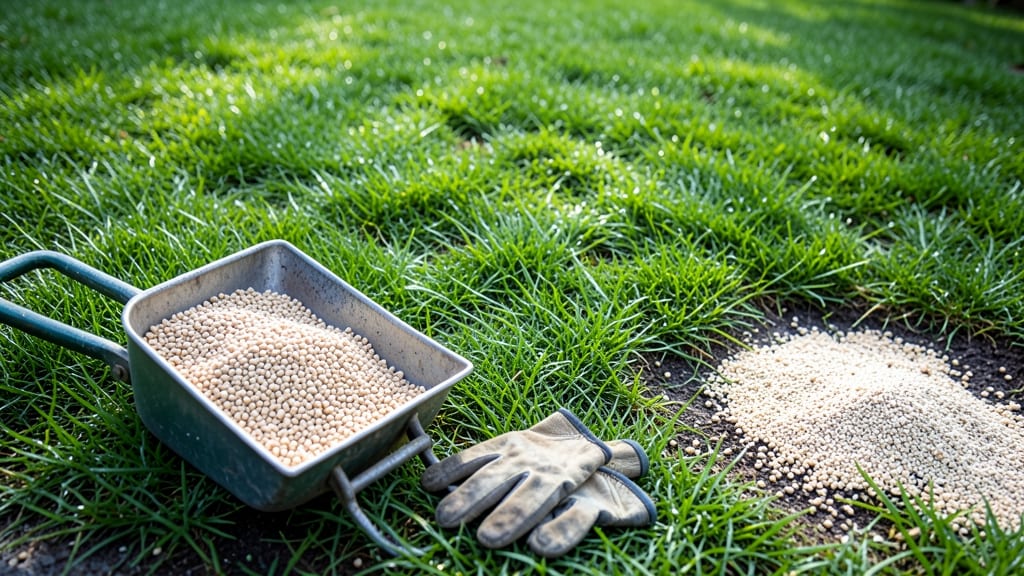
Applying Grubex to a wet lawn is not recommended, as moisture prevents granules from adhering to grass blades and reaching soil-dwelling grubs effectively. Wait until the lawn is completely dry—ideally in the morning or early evening—for best results and proper absorption.
Moisture disrupts the granules' ability to stick to grass blades, which means they won't reach the grubs hiding in the soil where they do the most damage. 🌱 When granules get wet before application, they clump together instead of spreading evenly, leaving parts of your lawn vulnerable.
I've seen firsthand how a single application on damp grass can leave brown patches where the product simply washed away. The best approach is to apply Grubex when the lawn is bone-dry, so the granules can work their magic right where it counts.
Timing matters just as much as dryness. Early morning applications let the granules settle before afternoon heat or dew sets in, while evening applications avoid midday evaporation. A light mowing before treatment also helps the granules reach the soil more effectively.
Think of it like sprinkling medicine on a wound—it needs to stay put to work properly!
💡 In This Article
- Why Wet Lawn Conditions Reduce Grubex Effectiveness
- Best Times and Conditions for Applying Grub Control
Why wet lawn conditions reduce Grubex effectiveness
Grubex granules rely on dry grass blades to create a temporary "bridge" that carries them down to the soil where grubs hide. When moisture is present, the granules become sticky and clump together instead of distributing evenly.
This clumping effect creates uneven coverage—some areas get over-saturated with granules while others receive none, leaving grubs unharmed in untreated zones. The active ingredient, chlorantraniliprole, needs to reach the grubs' feeding sites in the soil's upper layers to be effective.
Water also dilutes the granules' concentration, reducing their potency by up to 40% according to lawn care studies. Imagine trying to dissolve a sugar cube in a glass of water versus sprinkling it on dry sand—the moisture disperses the granules too quickly, preventing proper absorption.
Even dew or light rain can create a similar effect, turning your 1-2 pound application into a less effective, watered-down version. The granules' waxy coating, designed to slow moisture absorption, becomes ineffective when pre-wetted.
Soil saturation plays a critical role too. Wet soil creates an oxygen-deprived environment where grubs become less active, but it also prevents the granules from penetrating deeply enough. Grubs typically feed 2-4 inches below the surface, so granules need to reach this zone to work.
When soil is damp, the granules may stay on the surface or get washed deeper than needed, missing the target zone entirely. Think of it like trying to deliver medicine through a soggy sponge—it either doesn't reach the right spot or gets absorbed too quickly.
Temperature matters in this equation too. When granules are applied to wet grass, they can overheat in direct sunlight, causing the active ingredients to degrade faster. The ideal application temperature range is 55-85°F—below this, the granules work too slowly, and above it, they may lose effectiveness.
Wet conditions accelerate this process, making your treatment less reliable. This is why early morning or late afternoon applications are preferred—they allow the granules to settle before temperature extremes set in.
Real-world example: I once treated a 5,000-square-foot lawn after a light rain, expecting good results. Three weeks later, I found healthy grubs still active in the soil—exactly where the granules should have been working.
The lesson? Always check your lawn's moisture level by pressing your finger 1-2 inches into the soil. If it feels damp, wait 24-48 hours for it to dry out completely before applying Grubex.
One common misconception is that "a little moisture won't hurt." But even morning dew can create a thin film that reduces adhesion by 30%. The granules need to cling to grass blades long enough to be carried downward by natural forces—like dew or light rain after application—not before.
This is why professional lawn care services always check for dry conditions before treating.