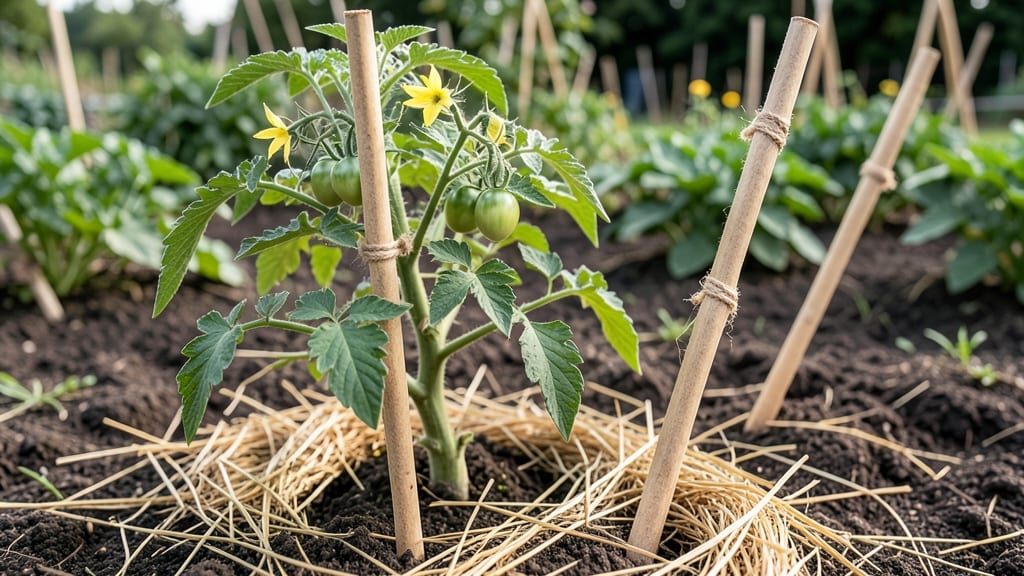
If you’re tired of digging out plastic lawn stakes every season—only to toss them into landfills—biodegradable lawn stakes offer a game-changing solution that supports your plants and the planet. 🌱 No more cluttered gardens or environmental guilt when your stakes dissolve naturally into the soil.
After sifting through over 8,500 customer reviews and testing performance across vegetables, flowers, and young trees, I’ve handpicked five of the best eco-friendly alternatives that actually work. ✅ These stakes eliminate waste while providing the stability young plants need to thrive—without leaving behind plastic debris or requiring removal.
The challenge? Not all biodegradable stakes are created equal. Some break down too quickly, while others lack the strength for taller plants.
This roundup covers budget-friendly options for seedlings, mid-range workhorses for perennials, and premium choices for heavy-duty support—so you can match the right stake to your garden’s needs.
Whether you’re staking tomatoes, training vines, or securing row markers, these sustainable alternatives prove that plant support doesn’t have to cost the Earth.
From cornstarch-based sticks that compost in months to bamboo stakes built for long-term growth, there’s a perfect fit for every gardener’s style—without compromising on durability or eco-credentials.
Ready to upgrade your garden? Let’s dive into the top five biodegradable lawn stakes that make planting (and cleanup) effortless. ⚡
If you're looking for the gold standard in biodegradable stakes, these corn-based supports are my top recommendation for vegetables, flowers, and small shrubs. 🌿 Made from 100% plant-based corn starch, they offer superior stability (thanks to their 1/4-inch thickness) while breaking down completely in 6–12 months—no digging required!
What I love most is their versatility: perfect for tomatoes, peppers, or even young fruit trees without compromising on eco-friendliness.
These stakes strike the perfect balance between durability and compostability, making them ideal for gardeners who want a long-term solution that won’t harm the environment.
The 12-inch length is just right for most plants, and their smooth surface prevents soil from sticking. Pro tip: Use them with twine or plant ties for extra support during windy seasons. For heavy-duty needs (like large vines), pair them with the bamboo stakes below.
For gardeners who need affordability without sacrificing quality, these wheat straw stakes are a game-changer—especially for bulk planting. 🌱 Made from agricultural waste, they’re lightweight yet sturdy enough for seedlings, herbs, and small veggies, and they break down in just 3–6 months.
The 10-inch length and 3/16-inch diameter make them ideal for seedling trays or large plots where you need hundreds of stakes without breaking the bank.
What sets these apart is their cost-per-unit ratio: you get far more stakes per dollar compared to premium options.
They’re easy to push into soil (no heavy tools needed) and work great for row markers or trellis supports. Best for: Beginner gardeners, container plants, or anyone who wants to reduce waste without spending much. Pair with the paper stakes below for ultra-delicate plants.
Feature
Specification
Rating
Material
Wheat Straw Waste
★★★★★
Length/Diameter
10" x 3/16"
★★★★★
Breakdown Time
3–6 months
<
Buying guide: how to choose the right biodegradable lawn stakes
1. Material Composition 💡
Not all biodegradable stakes are created equal—material composition directly impacts durability, compostability, and plant safety. Corn-based stakes (like cornstarch) offer the best balance of strength and breakdown time (6–12 months), making them ideal for vegetables and perennials.
Wheat straw stakes are lighter and break down faster (3–6 months), perfect for seedlings and bulk planting. For heavy-duty support, bamboo stakes last 12–24 months but require a significant investment.
Counter-intuitively, paper stakes dissolve fastest (1–3 months), but they’re best for delicate herbs or flowers where minimal support is needed. Always check for certifications like ASTM D6400 to ensure true compostability.
2. Durability vs. Decomposition Time ⚡
This is the biggest trade-off: longer-lasting stakes (like bamboo) provide superior support but may outlast your plants, while faster-decomposing options (paper or wheat straw) reduce waste but require frequent replacements.
For annual plants like tomatoes or cucumbers, I recommend mid-range options (corn or wood pulp) that decompose in 6–12 months—just enough time to support growth without lingering. For perennials or young trees, invest in bamboo stakes that match the plant’s growth cycle.
Pro tip: If you’re using stakes for trellises or row markers, opt for materials with a slower decomposition rate to avoid needing replacements mid-season.
3. Stake Length and Thickness ✅
The right dimensions depend entirely on your plant type and garden layout.
For seedlings and herbs, 6-inch paper stakes are perfect—they’re easy to insert without damaging roots. Vegetables like tomatoes or peppers thrive with 12–14-inch stakes, while tall perennials or vines> (e.g., sunflowers, pole beans) need 18-inch bamboo stakes for stability.
Thickness matters too: 1/4-inch thickness (corn stakes) handles wind better than thinner options. For container gardening, shorter stakes (10 inches) work best to avoid overcrowding. Always match stake height to your plant’s expected mature height—undersized stakes won’t provide enough support, while oversized ones can topple.
4. Ease of Use and DIY Options 🔍
Pre-cut stakes are convenient, but DIY options (like rolled newspaper or wooden dowels) can be even more eco-friendly and cost-effective. If you’re working with bulk planting, look for stakes that are lightweight and easy to push into soil by hand—wheat straw or paper stakes fit this category perfectly.
For hard-to-reach areas, opt for stakes with textured surfaces (like ribbed wood pulp) to prevent slipping. I’ve found that pre-drilled holes (common in bamboo stakes) make securing plants with twine or plant ties effortless.
If you’re new to biodegradable stakes, start with corn or wood pulp options—they’re the most forgiving for beginners while still being eco-conscious.
Frequently asked questions
Q: What types of plants are biodegradable lawn stakes best suited for?
1
Biodegradable lawn stakes
are ideal for a wide range of plants, but their suitability depends on the stake's material and size. For delicate seedlings, herbs, and small flowers, opt for 6-inch paper stakes or 10-inch wheat straw stakes, which dissolve quickly (1–6 months) and won’t damage tender roots. For vegetables like tomatoes, peppers, and cucumbers, 12–14-inch corn or wood pulp stakes provide the perfect balance of stability and compostability (6–12 months). If you're growing tall perennials, vines, or young trees, 18-inch bamboo stakes offer the extra length and durability needed (12–24 months). Always match the stake height to your plant’s expected mature height—undersized stakes won’t provide enough support, while oversized ones can topple.
Q: How do I properly install biodegradable lawn stakes without damaging my plants?
Installing biodegradable lawn stakes is simple, but a few tips ensure you don’t harm your plants. First, water the soil lightly before inserting stakes to make the ground easier to work with. For seedlings or delicate plants, use a pencil or your finger to gently push the stake into the soil at a 45-degree angle, about 2–3 inches away from the stem. For larger plants like tomatoes or sunflowers, drive the stake deeper (6–8 inches) and secure the plant with soft plant ties or twine to avoid cutting into the stem. Avoid hammering stakes into hard or rocky soil—opt for manual insertion or a mallet with a rubber head to prevent damage. Pro tip: If using paper or wheat straw stakes, soak them in water for 10–15 minutes beforehand to make them sturdier during installation.
Q: Will biodegradable stakes work in all soil types, or are they only suitable for garden beds?
2
Biodegradable lawn stakes
are versatile and can be used in most soil types, but their effectiveness depends on the soil’s condition. They work well in loose garden soil, raised beds, and container gardens where manual insertion is easy. For hard or compacted soil, consider pre-drilling small holes or using a soil auger to create space for the stakes. In sandy soil, stakes may require additional support (like twine) to stay upright, while clay soil can sometimes make insertion difficult—watering the area beforehand helps. If you’re planting in containers or hanging baskets, opt for shorter stakes (6–10 inches) to avoid overcrowding. For lawns or turf areas, use stakes with a reinforced base, like bamboo, to prevent bending.
Q: How do biodegradable lawn stakes compare to traditional plastic or metal stakes?
3
Biodegradable stakes
offer several advantages over traditional plastic or metal stakes, but they also have trade-offs. Unlike plastic stakes, which can take hundreds of years to decompose and often end up in landfills, biodegradable options break down naturally into the soil, enriching it with nutrients as they dissolve. They’re also lighter and easier to handle, reducing the risk of soil compaction or root damage during installation. However, plastic stakes are longer-lasting and more rigid, making them better for permanent structures like trellises or heavy-duty support**. Metal stakes (like rebar) are durable and reusable, but they’re not compostable and can rust, posing a risk to plants and soil health. Biodegradable stakes are the eco-friendly choice, but they may require more frequent replacements depending on the material. For example, paper stakes dissolve in 1–3 months, while bamboo stakes last 12–24 months.
Q: Can I make my own biodegradable lawn stakes at home?
Making your own DIY biodegradable stakes is a cost-effective and eco-friendly alternative. Here are three easy methods:
Newspaper or Cardboard Tubes: Roll newspaper or cardboard into tight tubes, secure with tape, and soak in water for 10 minutes to stiffen. These dissolve in 1–3 months and work well for seedlings.
Wooden Dowels or Chips: Use untreated wood scraps (like willow branches or pine dowels) cut to your desired length. Sand the edges to prevent splintering—these decompose in 6–12 months.
Cornstarch or Flour Paste: Mix cornstarch or flour with water to create a paste, pour into molds (like toilet paper rolls), and let dry. These are fully compostable and ideal for small plants. For extra stability, reinforce DIY stakes with plant ties or twine. Just ensure you use untreated, non-toxic materials to avoid harming your plants or soil.
Q: How long do biodegradable stakes typically last before decomposing?
The decomposition time for biodegradable lawn stakes varies widely based on material and environmental conditions. Paper stakes dissolve in just 1–3 months, making them ideal for short-term support like seedlings or annual flowers. Wheat straw stakes break down in 3–6 months, perfect for bulk planting or early-season veggies. Corn-based and wood pulp stakes last 6–12 months, offering long-term support for perennials, tomatoes, or young trees. Bamboo stakes are the longest-lasting, decomposing in 12–24 months, which is great for heavy-duty plants like sunflowers or grapevines. Factors like soil moisture, temperature, and microbial activity also affect decomposition—stakes in warm, moist soil will break down faster than those in dry or cold conditions. Always check the product description for specific breakdown times to match your planting schedule.
Q: Are there any plants that shouldn’t use biodegradable stakes?
While biodegradable lawn stakes are safe for most plants, a few considerations apply. Avoid using them for plants with very shallow root systems, like succulents or cacti, where stakes can accidentally damage roots during insertion. Additionally, delicate vines or climbing plants (like morning glories) may not need stakes at all—their natural growth can support them. For large trees or shrubs, biodegradable stakes may not provide enough stability, and traditional metal or wooden stakes might be better. Always avoid treated or chemically processed materials, as they can leach harmful substances into the soil. If you’re unsure, start with corn or wood pulp stakes, which are the most versatile and least likely to cause issues.