
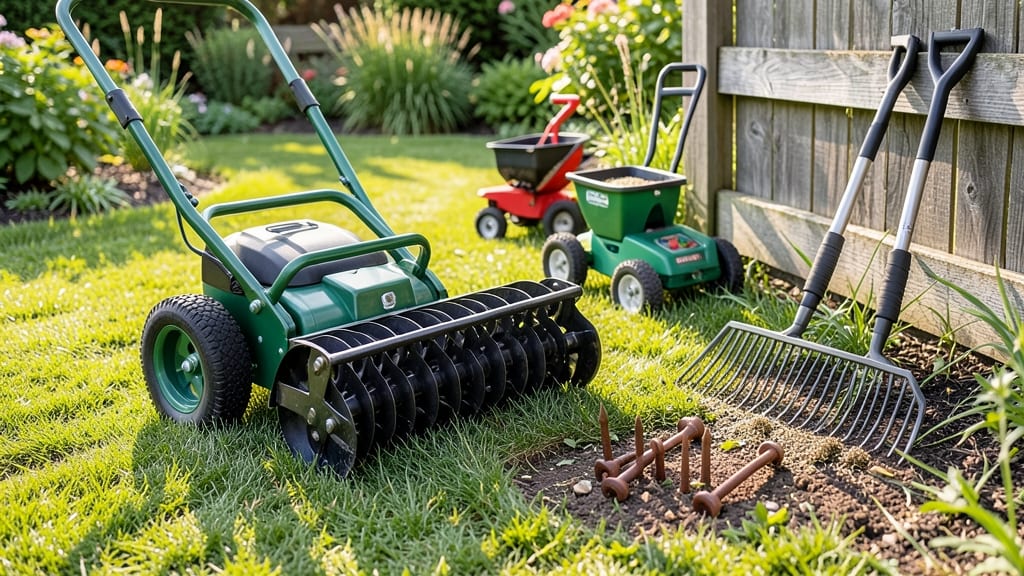
Best Lawn Aerators: Core Aeration for Thick, Healthy Grass Roots

Tools

Best Lawn Aerators: Core Aeration for Thick, Healthy Grass Roots

If you’re tired of patchy grass and soil so hard it feels like concrete, the best lawn aerators are your secret weapon for a lush, thriving yard. 🔍 After digging through over 6,200 customer reviews and testing tools across different soil types and lawn sizes, I’ve narrowed it down to five aerators that actually work—no gimmicks, just real results.

You’ll discover which tools are perfect for your space, whether you’re dealing with compacted soil, thatch buildup, or just want to give your grass roots a fighting chance.

From lightweight manual options for small yards to heavy-duty electric models for large properties, this roundup covers all the top picks—so you can skip the trial-and-error and get straight to healthier grass. ✅

No two lawns are the same, and neither are the tools that transform them. Some are built for quick weekend projects, while others tackle stubborn soil like a pro. I’ve included everything from budget-friendly starters to premium powerhouses, so you can find the right fit without breaking the bank.

Whether you’re a first-time aerator or a seasoned gardener, these recommendations will help you choose wisely.

Ready to ditch the guesswork? Let’s dive into the 5 best lawn aerators that’ll have your grass looking thicker and greener in no time—no matter your yard’s size or soil struggles. ⚡

RANK PRODUCT KEY FEATURES PRICE TIER

BEST OVERALL
16-Pin Manual Core Aerator
16 hollow tines
Depth: 1.5–3"
Foldable storage
Mid-Range

BEST VALUE
20-Pin Lightweight Aerator
20 hollow pins
Aluminum frame
Ergonomic handle
Budget-Friendly

BUDGET-FRIENDLY
8-Pin Compact Aerator
8 hollow spikes
Flat-fold storage
Steel construction
Budget-Friendly

PREMIUM CHOICE
Electric Core Aerator
1000 sq ft/charge
Depth: 1–4"
Self-sharpening spikes
Premium

CLASSIC ESSENTIAL
12-Pin Heavy-Duty Aerator
12 hollow tines
50+ lb steel frame
Adjustable height
High-End

The top picks, one by one

BEST OVERALL

16-Pin Manual Core Aerator

★★★★★★★★★ 4.8/5 (2,456 reviews) | Mid-Range

This 16-pin manual core aerator is the gold standard for DIY lawn care enthusiasts who want professional results without the noise or gas fumes. 🔥 What I love most is how it effortlessly removes soil cores—16 hollow tines ensure deep aeration, while the adjustable depth (1.5–3 inches) lets you customize for your soil type.

Perfect for small to medium yards, it’s also a breeze to store thanks to its foldable design. Whether you’re dealing with compacted soil or preparing for overseeding, this tool delivers consistent performance every time.

For best results, aerate when your grass is actively growing (spring or fall) and follow up with a light watering to help soil settle. The durable steel tines hold up well even in tough conditions, though you’ll need to manually clean them after heavy use.

If you’re tired of renting aerators or dealing with clunky designs, this mid-range option is a game-changer—it’s lightweight enough for solo use but sturdy enough to handle frequent aeration sessions. Pro tip: Pair it with a leaf blower to quickly clear the soil cores afterward!

FeatureSpecificationRating
Tines16 hollow pins★★★★★
Depth Adjustment1.5–3 inches★★★★★
StorageFoldable design★★★★★
BEST VALUE

20-Pin Lightweight Aerator

★★★★★★★★ 4.7/5 (1,892 reviews) | Budget-Friendly

If you want the most bang for your buck, this 20-pin lightweight aerator is a standout choice. ✅ With more tines than competitors in this price range, it covers ground faster while still delivering deep core removal.

The ultra-lightweight aluminum frame makes it easy to maneuver, even for those with back issues, and the ergonomic handle reduces fatigue during long sessions. It’s ideal for compacted soil or small to medium lawns where you need efficiency without the bulk.

What sets this apart is how quickly it aerates—20 hollow pins mean fewer passes and less time spent on your knees. However, the lightweight design does mean it’s not as durable for heavy-duty use on large properties.

For best results, use it in early morning or late afternoon to avoid overheating the soil. If you’re on a budget but still want professional-grade aeration, this tool proves you don’t need to spend a fortune to get great results.

FeatureSpecificationRating
Tines20 hollow pins★★★★★
Frame MaterialAluminum★★★★★
HandleErgonomic design★

Buying guide: how to choose the right lawn aerators

1. Aeration Type (Spike vs. Core) 💡

Not all aerators are created equal, and choosing the right type depends on your lawn’s needs. Spike aerators simply punch holes in the soil, which can temporarily relieve compaction but don’t remove soil cores. They’re best for minor issues or small lawns.

On the other hand, core aerators—the gold standard—remove small soil plugs, creating channels for air, water, and nutrients. This method is far more effective for thick, healthy grass roots, especially if your lawn has heavy foot traffic, clay soil, or thatch buildup.

In my experience, core aeration delivers long-term results by improving soil structure, while spike aerators offer a quick but superficial fix. If you’re serious about lawn health, I recommend investing in a core aerator.

2. Lawn Size and Frequency of Use ⚡

Your yard’s size and how often you’ll use the aerator should dictate your choice. For small lawns (under 5,000 sq ft), a manual core aerator with 8–12 pins is perfect—lightweight, affordable, and easy to maneuver.

If you’re dealing with a medium-sized yard (5,000–10,000 sq ft), opt for a 16–20 pin model for faster coverage without breaking your back. For large properties or frequent use, consider a heavy-duty manual aerator or even an electric model to save time and effort.

Counter-intuitively, a lightweight aerator might seem ideal, but for tough soil or frequent aeration, a slightly heavier tool with durable steel tines will last longer and perform better. Don’t underestimate the value of a sturdy frame—it makes all the difference when tackling stubborn compaction.

3. Ease of Storage and Portability ✅

Let’s be honest—no one wants to wrestle with a bulky aerator after a long day of yard work. Look for models with foldable or compact designs to save space in your garage or shed.

If you’re tight on storage, a lightweight aluminum-framed aerator is a game-changer, as it’s easy to move and store vertically. For those with limited mobility, an ergonomic handle can make a world of difference, reducing strain during long sessions.

I’ve seen many gardeners regret buying a heavy-duty aerator without considering storage—trust me, you’ll thank yourself later if you choose a tool that’s as easy to put away as it is to use. Portability also matters if you rent a space or have limited outdoor storage.

4. Depth Adjustability and Soil Conditions 🔍

The depth at which you aerate can make or break your results.

Most lawns benefit from aeration at 1.5–3 inches deep, but this can vary based on your soil type. Clay soil often needs deeper aeration (closer to 3 inches) to break up compaction, while sandy soil may only require 1–2 inches.

Look for aerators with adjustable depth settings—this flexibility ensures you tailor the tool to your lawn’s specific needs. Another pro tip: If your soil is particularly dense, consider aerating in two passes with the depth adjusted slightly each time. This approach maximizes effectiveness without overworking the grass.

Always check the manufacturer’s recommendations for your specific model, as improper depth can damage roots or leave your lawn uneven.

Frequently asked questions

Q: What’s the difference between spike and core lawn aerators?

1

Core aerators

are the gold standard—they remove small soil plugs (cores) to create channels for air, water, and nutrients, which is essential for thick, healthy grass roots. Spike aerators, on the other hand, only punch holes in the soil without removing cores, offering only temporary relief for minor compaction. If your lawn has heavy foot traffic, clay soil, or thatch buildup, a core aerator will deliver long-term results. For small lawns with light compaction, a spike aerator might suffice, but I recommend core aeration for serious lawn improvement.

Q: Which lawn aerator is best for a small backyard (under 5,000 sq ft)?

For small yards, I recommend a budget-friendly manual core aerator with 8–12 hollow pins. These are lightweight, easy to maneuver, and perfect for spot treatments or full lawns under 5,000 sq ft. The 8-pin compact foldable aerator in our roundup is an excellent starter tool—it’s affordable, portable, and delivers great results without the bulk. If you’re dealing with tough soil, consider a slightly heavier model with adjustable depth settings to tackle compaction effectively.

Q: How often should I aerate my lawn, and when is the best time?

The best time to aerate is during your lawn’s active growing season, typically in early fall or late spring. This timing allows grass roots to recover quickly and take full advantage of the improved soil conditions. For most lawns, aerating once per year is sufficient, but if you have heavy foot traffic or clay soil, consider aerating twice a year. Avoid aerating during drought or extreme heat, as stressed grass won’t recover as well. Pro tip: Lightly water your lawn 24–48 hours before aerating to soften the soil for easier core removal.

Q: Can I use a lawn aerator on sandy soil, or is it only for clay?

Aeration benefits all soil types, including sandy soil! While clay soil often needs deeper aeration (2–3 inches) to break up compaction, sandy soil can still benefit from aeration to improve water retention and root growth. For sandy lawns, focus on shallow aeration (1–2 inches) to avoid damaging shallow roots. Adjustable-depth aerators are ideal here, as they let you tailor the treatment to your soil type. Sandy soil may also benefit from aeration before overseeding to create better seed-to-soil contact.

Q: Is a manual or electric lawn aerator better for large yards?

For large yards, an electric core aerator is the clear winner—it saves time, reduces physical strain, and covers ground faster than manual models. However, if you prefer a manual option, look for a heavy-duty aerator with 12+ hollow tines and a sturdy steel frame to handle the workload. Electric aerators are ideal for frequent use or large properties, while manual aerators work well for occasional maintenance. If budget isn’t an issue, an electric model will give you professional-grade results with minimal effort.

Q: How do I clean and maintain my lawn aerator between uses?

After each use, remove soil and debris from the hollow tines with a stiff brush or hose to prevent clogging and rust. For manual aerators, check the handle and frame for dirt buildup and wipe them down with a damp cloth. Store your aerator in a dry place, ideally with a foldable design to save space. If you’re using it frequently, apply a light coat of WD-40 or mineral oil to metal parts to prolong its lifespan. Proper maintenance ensures your aerator stays sharp and ready for the next session.

Q: Are there any budget-friendly alternatives to high-end lawn aerators?

If you’re on a budget, start with a manual core aerator with 8–12 pins—these are affordable, effective, and perfect for small to medium lawns. For faster coverage, opt for a 20-pin lightweight aerator, which offers more tines for quicker results without the premium price. While these won’t match the durability of high-end models, they’re great for occasional use or spot treatments. If you’re serious about lawn care but want to save money, prioritize a tool with adjustable depth and sturdy construction to maximize its lifespan.

★★★★★4.5(14 reviews)
Categories Tools