
Lawn
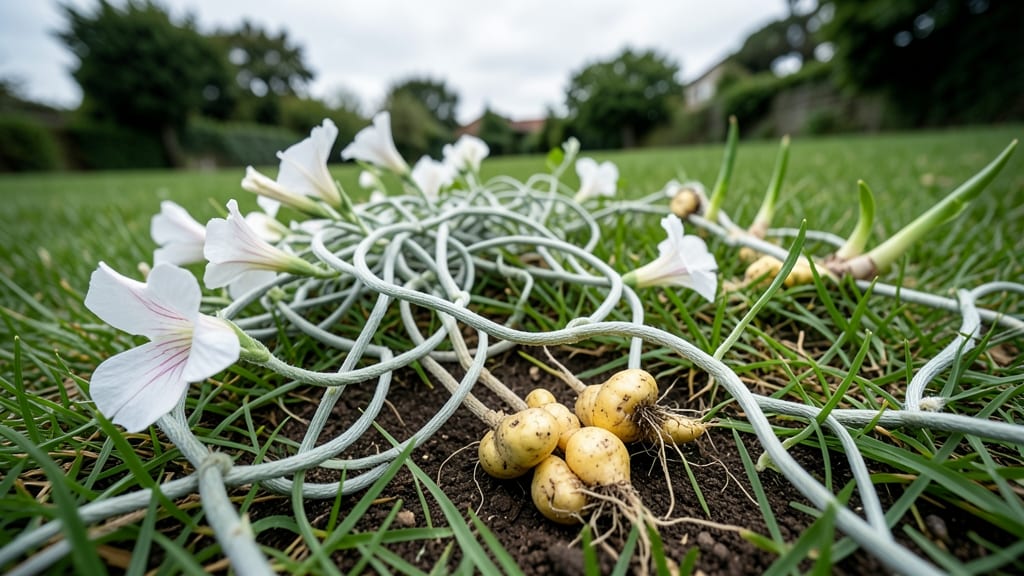
Creeping lawn weeds like crabgrass and nutsedge can turn your pristine yard into an unsightly battleground. These 10 persistent invaders spread aggressively, but with the right organic strategies, you can reclaim your lawn naturally—without harsh chemicals.
Crabgrass: The Fastest Spreading Lawn Invader
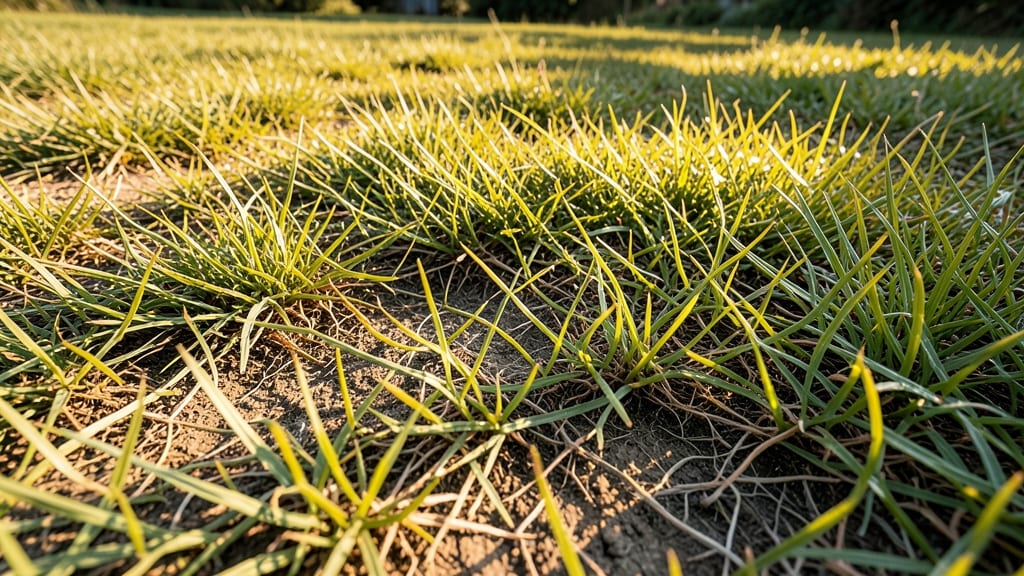
If your lawn looks like a patchwork of grass and golden-green invaders by mid-summer, you’re likely battling crabgrass—the speediest of all creeping lawn weeds. This shallow-rooted menace thrives in thin, stressed grass and spreads aggressively through underground runners, turning your yard into a tangled mess within weeks.
Crabgrass thrives in poor soil conditions, especially compacted or nutrient-deficient areas where grass struggles to grow. Its seed heads appear in late summer, and if left unchecked, it can smother your lawn entirely. The key to control is prevention: apply a corn gluten pre-emergent in early spring to block seeds from germinating, and thicken your grass with proper watering and fertilization.
Homeowners with high-traffic lawns or sandy soil are especially vulnerable, but even well-maintained yards can fall victim if soil health declines. Don’t let it take over—act fast to restore your lawn’s density. 💪
Nutsedge: The Bulb-Like Weed Resistant To Herbicides
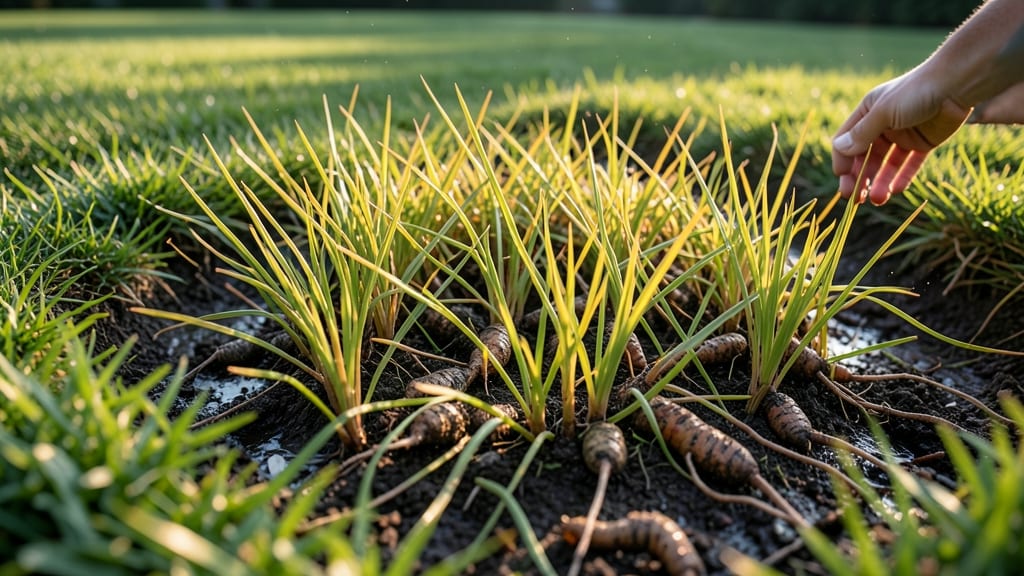
If your lawn looks like it’s being overrun by grass but won’t respond to herbicides, you’re likely dealing with nutsedge—a sneaky weed that grows from underground tubers instead of seeds. Unlike crabgrass, it thrives in moist soil and regenerates even after mowing, making it a persistent challenge for organic gardeners.
To combat nutsedge, focus on manual extraction—dig out the tubers with a trowel or weeding fork, ensuring you remove the entire root system to prevent regrowth. Since it’s often confused for grass, check for its triangular stems and reddish bases, which distinguish it from your lawn. For large patches, consider smothering with thick mulch or cardboard to block sunlight and starve the tubers.
This weed is especially stubborn in warm, damp climates, but its resilience makes it a great candidate for testing organic tools like flame weeding or targeted vinegar sprays. 🌱
Creeping Charlie: The Purple-Stemmed Ground Cover
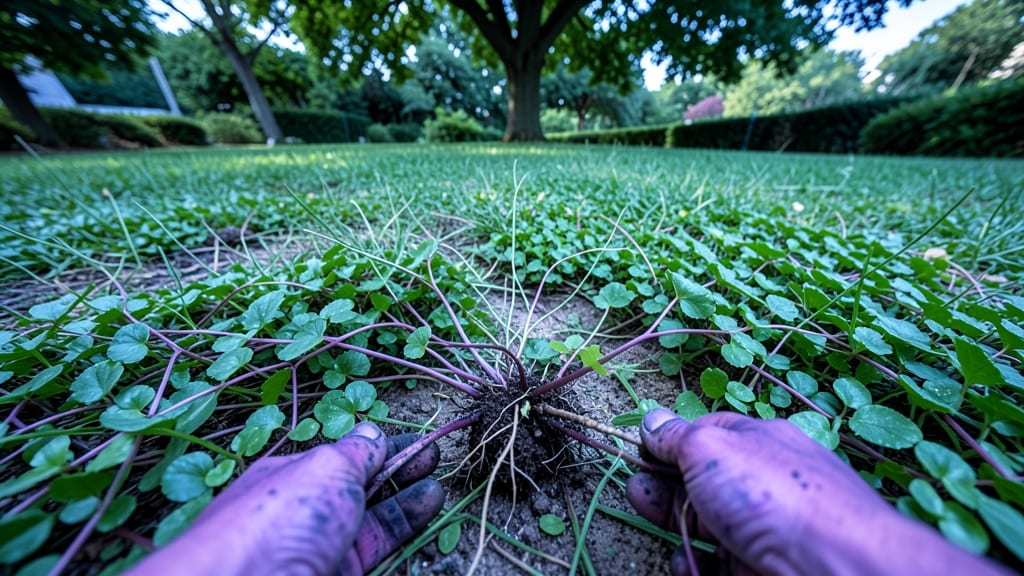
If your lawn looks like a lush green carpet but you keep finding purple-stained hands after pulling weeds, you’ve likely met Creeping Charlie. This shade-loving ground cover thrives under trees and spreads aggressively via stolons, forming dense mats that smother grass.
Unlike other weeds, Creeping Charlie’s purple stems leave a telltale mark when pulled—your secret weapon for spotting it. For organic control, focus on manual removal in early spring or fall, when the soil is moist. Use a sharp spade to cut stolons at least 2 inches deep to prevent regrowth, or smother it with thick layers of mulch or cardboard.
This weed is especially stubborn in heavily shaded lawns, making it a favorite for organic gardeners who prefer natural solutions over chemicals. If you’re dealing with a shaded yard, this is your cue to roll up your sleeves and reclaim that space! 🌿
Wild Violet: The Pretty But Persistent Flowering Weed
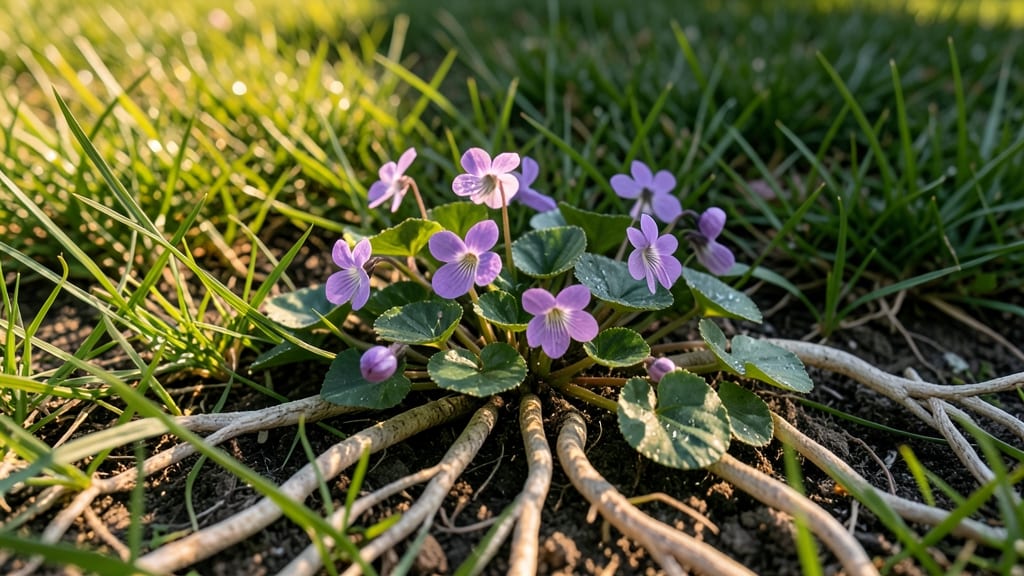
That delicate purple bloom might look like the perfect spring addition, but wild violet is one of the most aggressive lawn invaders—spreading relentlessly through underground rhizomes that can outcompete even healthy grass.
Unlike other weeds, wild violet thrives in both sun and shade, making it nearly impossible to starve out with regular mowing. Its rhizome system can regenerate from tiny fragments left in the soil, while its heart-shaped leaves disguise its true spreading nature. For organic control, a vinegar-based spray (3% acetic acid) applied directly to leaves works best—just avoid spraying on sunny days to prevent grass burn.
This weed is particularly tricky for gardeners with shady lawns or those who appreciate its pretty blooms but hate its persistence. Early intervention is key—once established, wild violet can dominate entire lawn sections. 💚
Dandelion: The Tough Taprooted Lawn Survivor
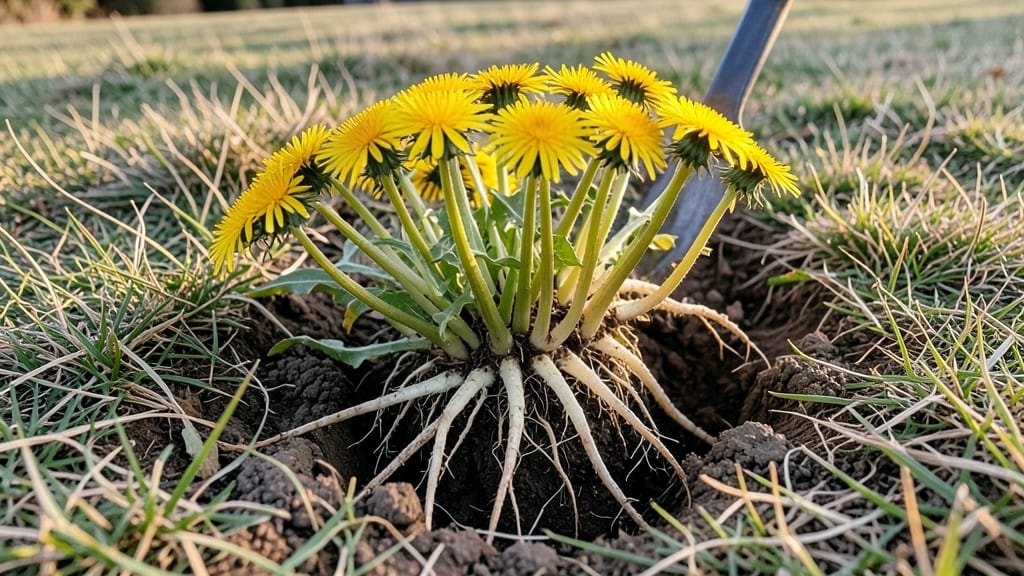
Think of dandelions as nature’s ultimate lawn stress-testers—they thrive where grass gives up. Their deep taproots (up to 15 inches!) make them nearly indestructible in compacted soil, and even a tiny root fragment left behind will regrow into a full plant.
To break their cycle, try a digging fork to loosen the soil and sever those stubborn roots. Pull in early spring before flowering, and wear gloves—those milky sap stains aren’t easy to remove! For stubborn patches, repeat weekly until the soil is weed-free. This method is perfect for testing organic tools before tackling tougher weeds.
Urban gardeners and DIY lawn warriors will love this: dandelions reveal soil compaction issues, making them the perfect early warning system for lawn health. 🌱
Bermudagrass: The Aggressive Warm-Season Lawn Weed
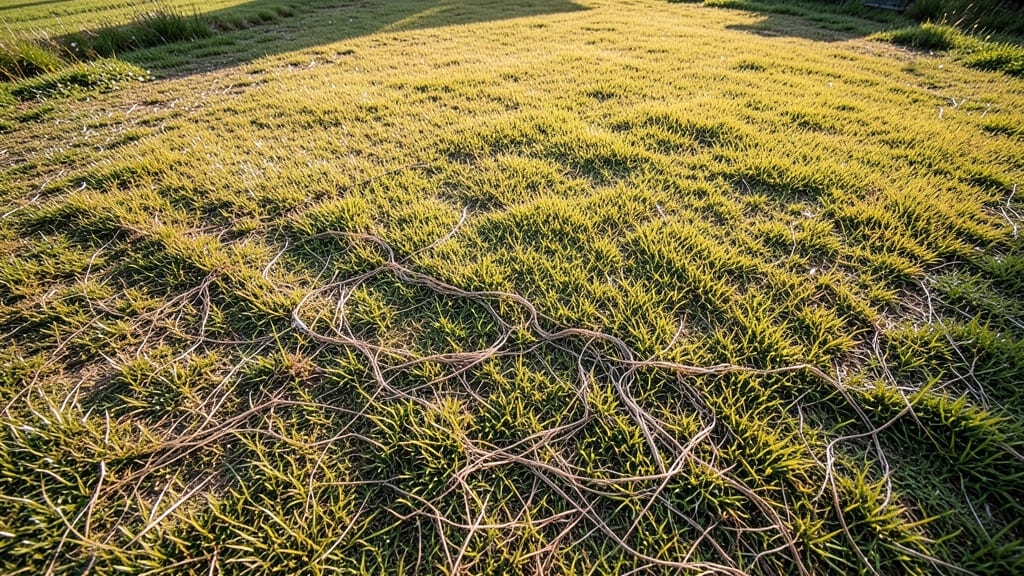
If your lawn is dominated by a thick, golden-green carpet that refuses to stay contained, you might be dealing with Bermudagrass—a warm-season grass that’s often prized as turf but becomes a creeping lawn weed when it escapes control. Unlike other weeds, it spreads aggressively through both stolons (above-ground runners) and rhizomes (underground stems), making it a relentless competitor against cooler-season grasses like fescue or bluegrass.
To manage it organically, focus on pre-emergent control like corn gluten meal, applied in early spring before germination. Mowing high (3-4 inches) weakens its spread, while overseeding with a dense, cool-season grass can outcompete it. For existing patches, hand-pulling or smothering with thick mulch may be necessary—just be prepared for persistence, as even small fragments can regrow.
This weed thrives in full sun and drought, so it’s especially problematic in Southern lawns. If you’re dealing with a mixed grass lawn, Bermudagrass will eventually dominate without intervention. 🌻
Henbit: The Winter-Loving Creeping Weed
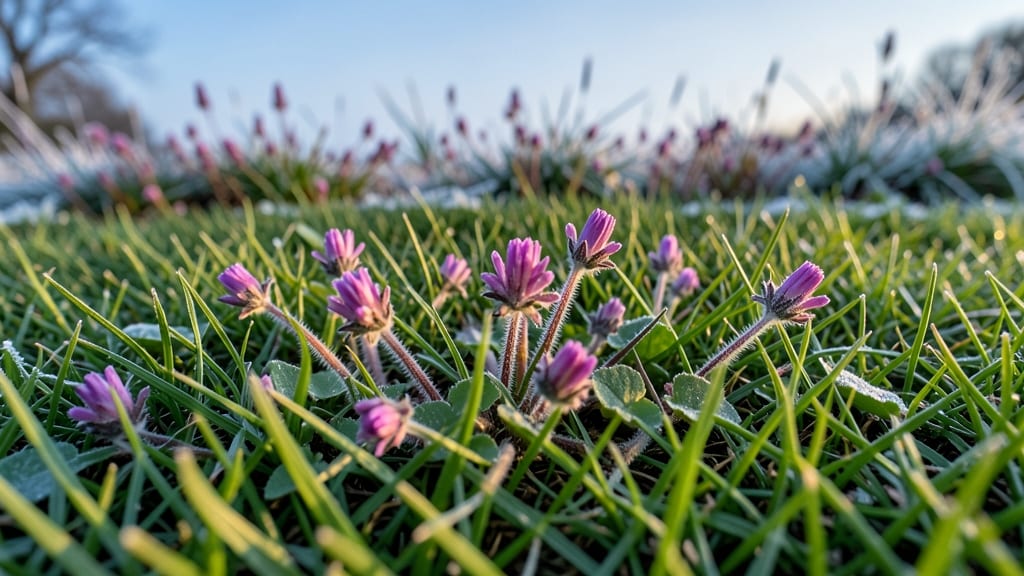
When your lawn looks pristine in summer but sprouts purple flowers in winter, you’re likely dealing with henbit—a cold-hardy mint-family weed that thrives when other plants retreat. Unlike summer weeds, henbit spreads aggressively through square stems (a dead giveaway!) and blooms early, making it a sneaky invader.
Your best defense is hand-pulling before flowering, as seeds spread easily. Focus on young plants with square stems (unlike grass) and pull them at the soil line—roots are shallow but tenacious. For larger patches, smother with cardboard or thick mulch in fall to starve out next year’s growth. This weed’s winter resilience means spring is the ideal time to strike.
Homeowners in cooler climates and gardeners with shaded lawns will recognize henbit’s tenacity. With patience and early intervention, you can keep this winter weed from turning your yard into a purple carpet. 💚
Yellow Nutsedge: The Triangular-Leafed Soil Invader
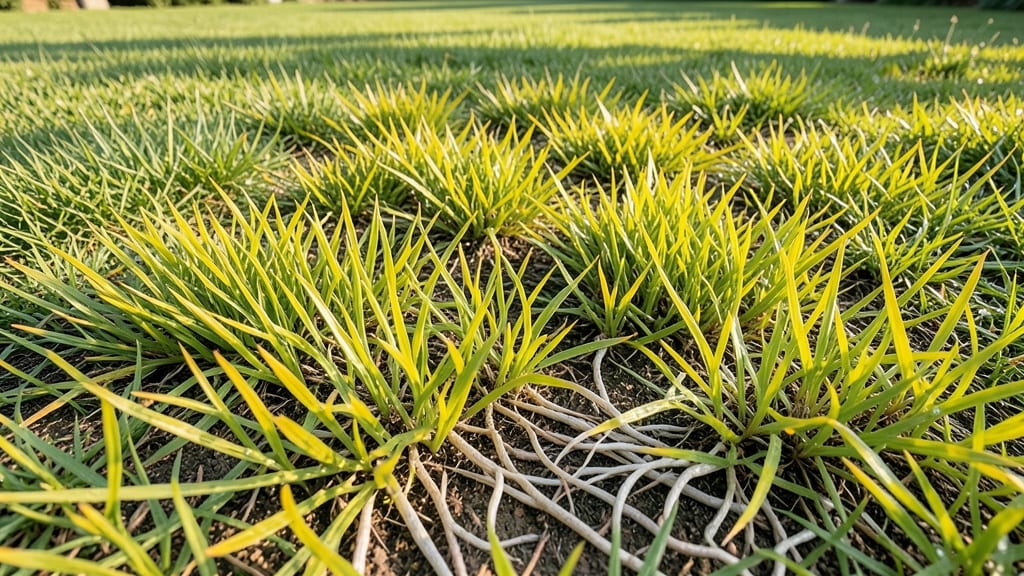
If your lawn has suddenly developed patches of yellow-green grass-like weeds with sharp, triangular leaves, you’re likely dealing with yellow nutsedge—a sneaky invader that thrives in moist soil and spreads faster than you can mow it down.
Unlike its purple-leaved cousin, yellow nutsedge forms dense colonies that resist traditional herbicides and simply mowing. The key to controlling it lies in manual extraction—use a weeding knife or fork to dig out the underground tubers completely. Even a small piece left behind can regrow into a new colony. For large infestations, consider a vinegar-based spray (20-30% acetic acid) applied directly to the leaves, but avoid spraying desirable plants.
This weed is especially stubborn in warm, wet climates and loves areas with poor drainage. Gardeners in humid regions will find yellow nutsedge particularly challenging, but with persistence, you can reclaim your lawn organically. 💪
Clover: The Nitrogen-Fixing Lawn Weed
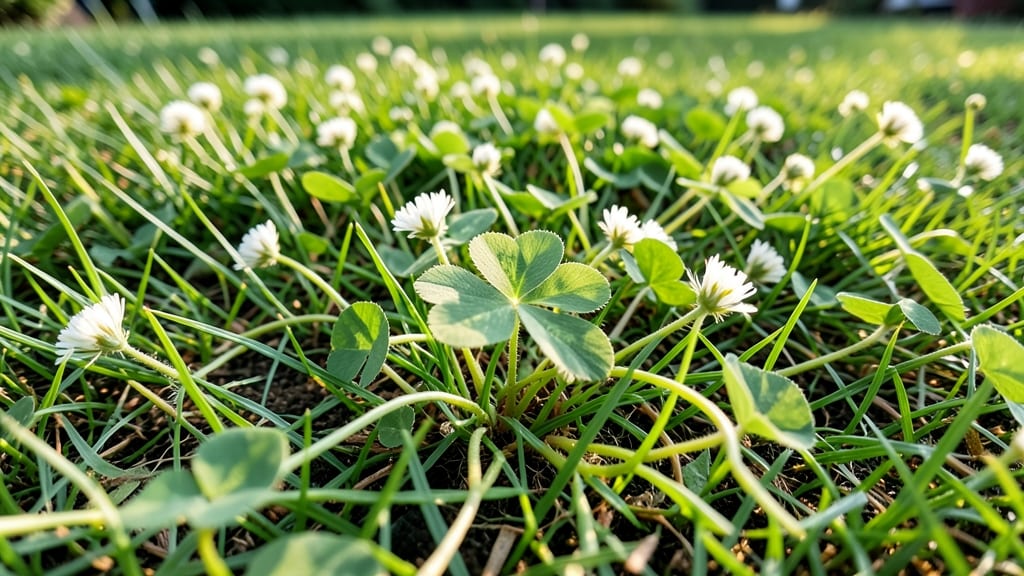
That three-leaf clover popping up in your lawn isn't just a lucky charm—it's a nitrogen-fixing powerhouse that actually improves your soil. While its ability to convert atmospheric nitrogen into usable plant food makes it a gardener's secret weapon, its aggressive stolon growth can quickly turn your lawn into a clover-dominated ecosystem.
To keep clover in check organically, focus on preventing seed spread before it becomes a problem. Mow regularly to cut off flower heads before they set seed, and consider overseeding with dense grass varieties like tall fescue or Kentucky bluegrass to outcompete clover. For existing patches, hand-pulling during moist conditions works best, as the stolons are easier to remove when the soil is soft.
This dual-edged weed benefits gardeners who want nutrient-rich soil but frustrates those seeking a uniform lawn. If you're okay with some clover, embrace it—just keep it contained! 🌿
Bindweed: The Nearly Indestructible Vining Weed

If you’ve ever pulled a weed only to see it sprout back within days, you’ve likely met bindweed—the lawn’s most stubborn adversary. This aggressive vine produces white trumpet-shaped flowers but hides its true menace: underground tubers that can regenerate for years after removal.
To combat bindweed organically, focus on manual extraction—digging out every inch of vine and tuber—while wearing gloves to avoid the plant’s mild skin irritation. Reapply mulch or thicken grass to block sunlight, and repeat monthly during growing seasons. Solarization (covering with clear plastic for 4-6 weeks) can weaken tubers but rarely eradicates them completely.
This weed is especially challenging for gardeners with established lawns**—where deep roots make removal tedious. However, persistence pays off, as bindweed eventually succumbs to consistent pressure. 💪