
Lawn
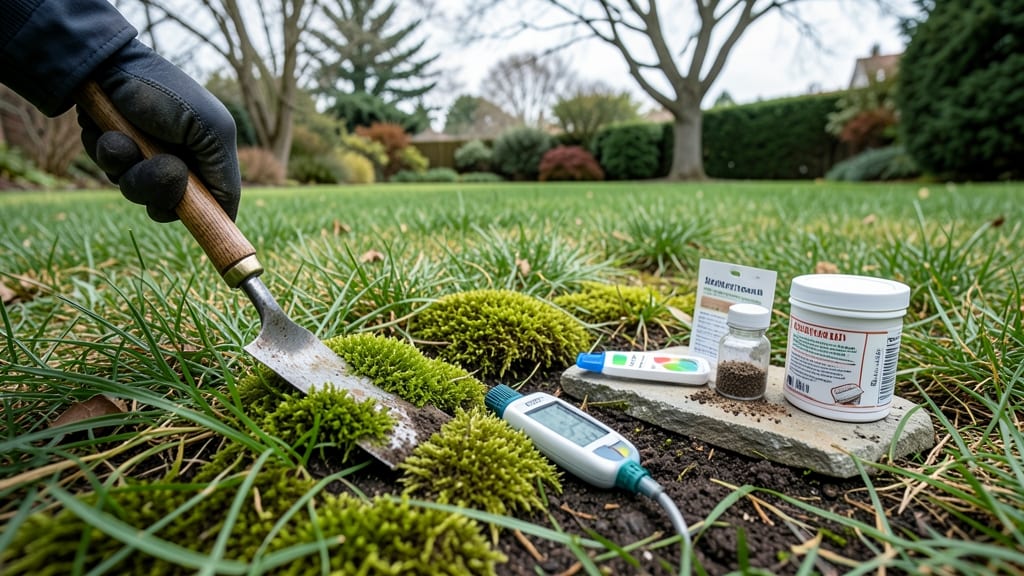
Is moss bad for lawns? It's not inherently harmful but serves as a warning sign for underlying lawn problems like poor drainage, compacted soil, or insufficient sunlight. While moss won't kill grass directly, it can crowd out weak turf, creating thin, patchy areas that leave lawns vulnerable to weeds and erosion.
Moss thrives where grass struggles, often taking over when soil pH drops below 6.0 or when grass roots can't compete due to shade or poor air circulation. 🌱 The real issue isn't the moss itself but what it reveals—your lawn may need better aeration, adjusted mowing heights, or targeted fertilization to restore grass dominance.
Many homeowners find that addressing these root causes eliminates moss naturally within a season.
For immediate results, organic methods like spreading lime (to raise soil pH) or sand (to improve drainage) work well, while chemical treatments provide faster but temporary relief. The key is balancing removal with long-term lawn care to create conditions where grass outcompetes moss naturally.
💡 In This Article
- Why Moss Thrives in Lawns and How It Harms Grass
- Natural and Chemical Moss Removal Methods for Healthy Lawns
Why moss thrives in lawns and how it harms grass
Moss spreads aggressively in lawns because it thrives in conditions where grass struggles—specifically, acidic soil (pH below 6.0), poor drainage, and shady or compacted areas.
Unlike grass, moss doesn't need deep roots or sunlight to survive; it absorbs moisture directly from the air through its leaf-like structures, making it the dominant plant in damp, low-light environments. 🌱 This is why moss often takes over thin or weak grass patches, especially in northern climates where soil naturally stays cooler and wetter.
The real damage occurs when moss forms dense mats. These mats block sunlight and air from reaching grass roots, suffocating them over time. Moss also alters soil chemistry by releasing tannins that further lower pH levels, creating a feedback loop that makes the environment even more hostile for grass.
Studies show that lawns with 20% or more moss coverage experience 30-50% reduced grass growth due to this competition. The texture of moss—soft yet resilient—makes it difficult to remove manually, allowing it to persist even after initial attempts.
What makes moss particularly problematic is its shallow root system. While grass roots grow 4-6 inches deep to access nutrients, moss roots only penetrate 1-2 inches, competing directly with grass for surface-level resources.
This competition becomes especially fierce in autumn and spring, when moss grows rapidly while grass recovers from seasonal stress. Without intervention, moss can transform a once-lush lawn into a patchy, weed-prone area within 2-3 years. 💫
Another key factor is moss's ability to retain moisture. Its dense structure traps water against the soil, creating ideal conditions for fungal growth that further weakens grass. This is why moss often appears in low-lying areas or near sprinkler heads, where water pools.
The combination of these factors—shallow roots, moisture retention, and soil acidification—explains why moss doesn't just coexist with grass but actively displaces it over time.
For homeowners, recognizing these signs early is crucial. A lawn with moss in just 5-10% of areas may still recover with proper care, but once coverage exceeds 15%, the grass often struggles to rebound without targeted intervention.
The good news? Moss responds quickly to environmental changes, making it one of the most reversible lawn issues when addressed correctly. 🌿
Consider this: Moss-free lawns typically have soil pH levels between 6.0 and 7.5, proper drainage, and at least 6 hours of sunlight daily. These conditions allow grass roots to establish deeply, outcompeting moss naturally.
The challenge isn't just removing moss but creating an environment where grass can thrive long-term—a balance most homeowners achieve through a combination of soil testing, aeration, and adjusted mowing practices.